The Real Factors Affecting Solid Wood Furniture Prices in SG
A solid wood dining table can cost SGD 1,290 in one showroom and SGD 3,800 in another. Both may use oak, both may look substantial, and both may be described as “solid wood.” Yet the price gap is not a mystery or a simple markup. It reflects timber species, board construction, joinery, hardware, finishing, tolerances, design, packaging, and the commercial costs of moving bulky furniture into Singapore homes.
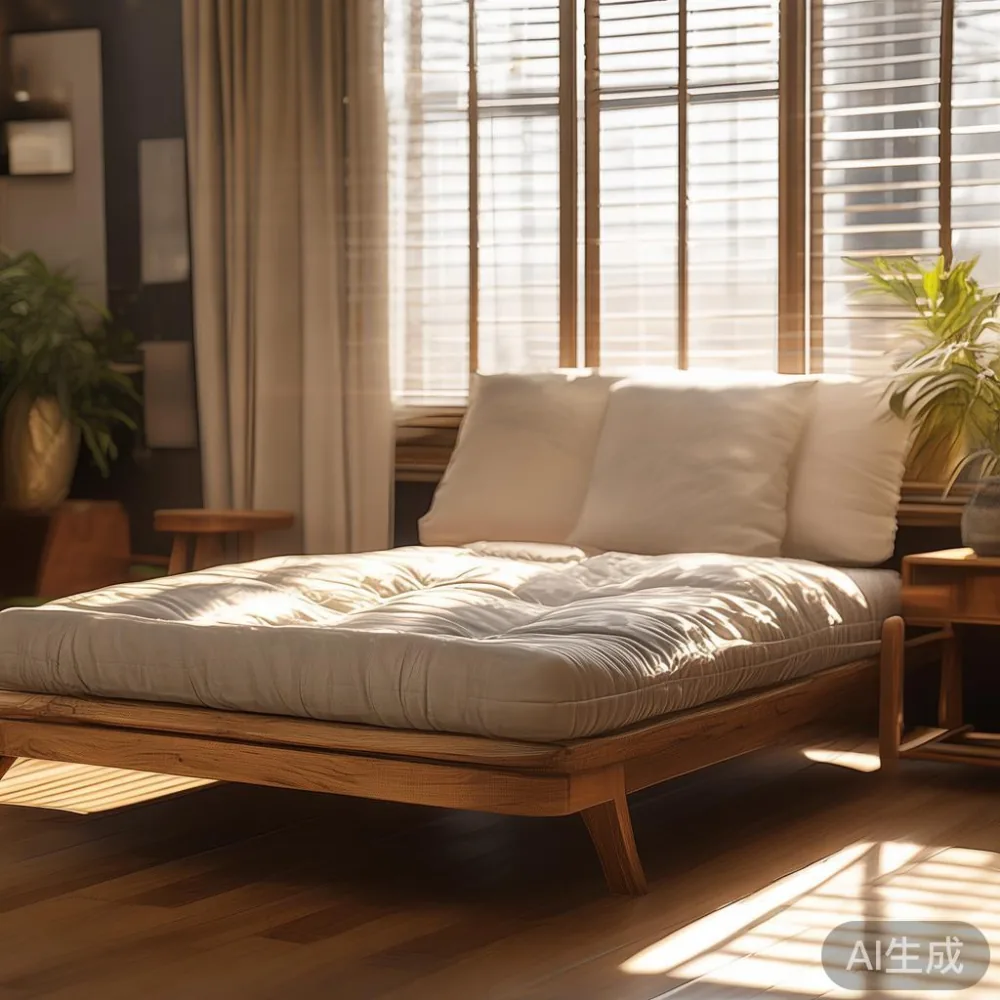
For buyers in Tampines, Bedok, Punggol, and Singapore condos, these variables matter because delivery is rarely a simple kerbside drop. A lift lobby may measure 120 cm wide, while a staircase turn may allow only 105 cm. A wardrobe might weigh 115 kg, and a solid wood sofa bed may reach 78 kg. Price is therefore connected to material quality and the practical route from workshop to living room.
MIDHILL, a Foshan solid wood furniture maker established in 2008 and exporting to more than 15 countries, places its emphasis on structural assurance: a 10-year structural warranty and lifetime refinishing. Its pricing also has to account for practical customer terms such as 14-day returns and free shipping above US$350. But warranties and services do not explain the entire price. To understand the invoice, separate what is built into the furniture from what is charged around it.
Is solid wood automatically more expensive than engineered wood?
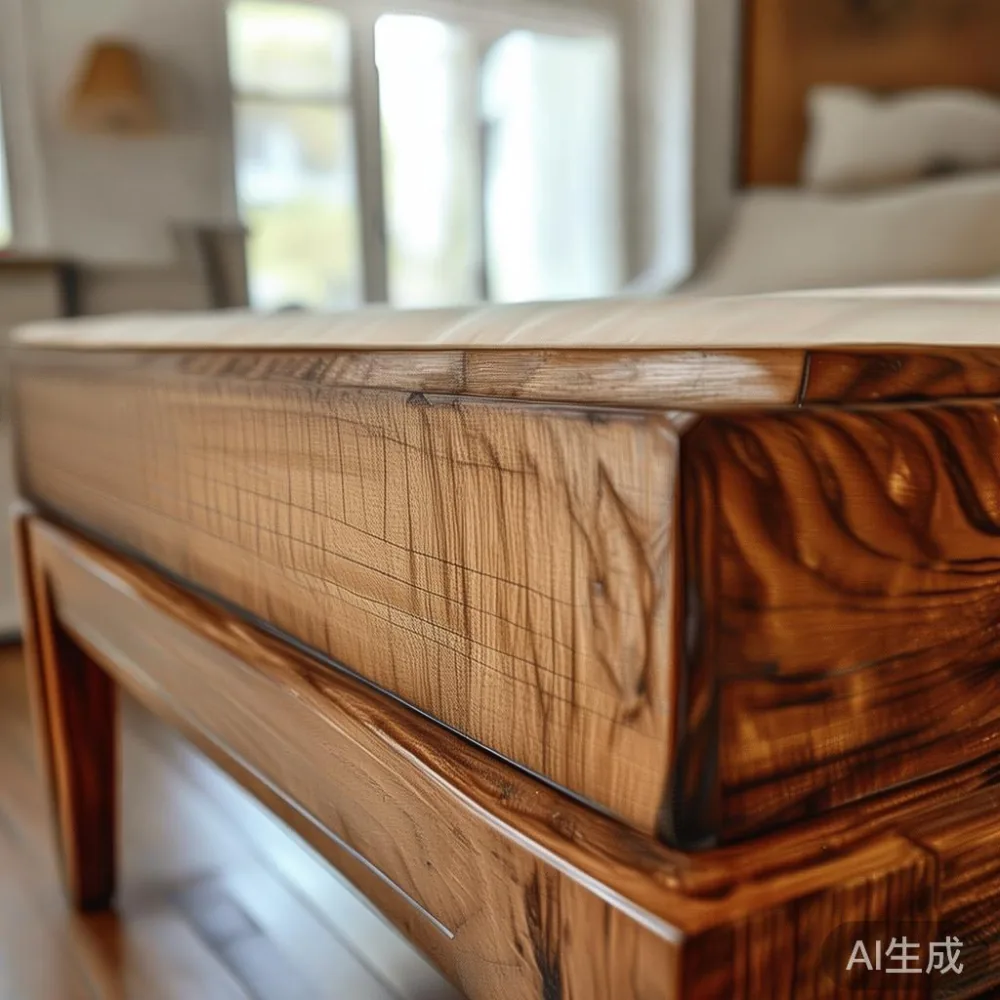
Not always. “Solid wood” describes component construction, not timber scarcity, grade, or workmanship. A solid pine nightstand with simple joints can cost less than an engineered oak wardrobe with veneered faces, reinforced corners, soft-close runners, and a complex finish. Conversely, a solid walnut bed frame with hand-finished edges can command several times the price of a similar-looking solid ash frame.
The distinction starts with timber. Species differ in density, grain character, availability, and processing demands. White oak used for a dining table might cost SGD 2,400–SGD 5,200 when size, grade, joinery, and finish are considered. A pine bed frame might sell for SGD 790–SGD 1,490. Neither figure proves one material is superior; it shows what the buyer selected and how it was made.
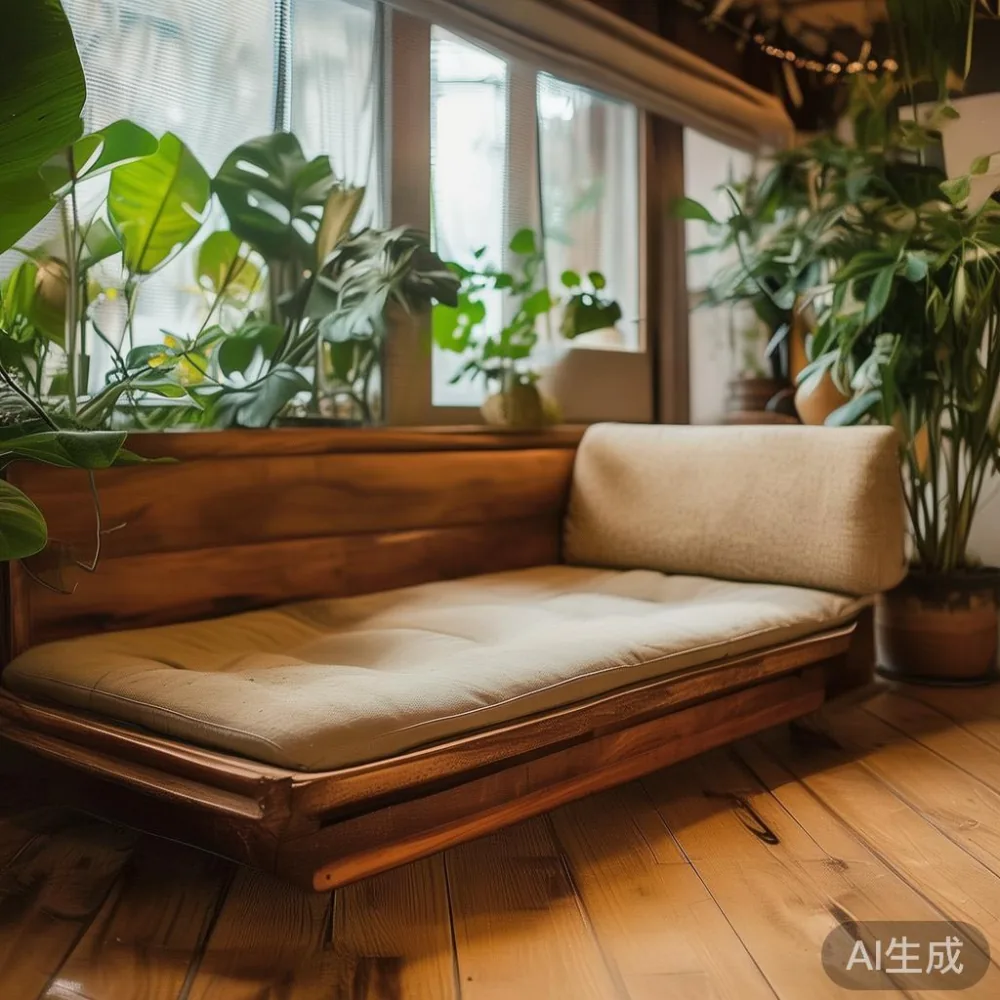
Thickness matters too. A 20 mm solid wood dining tabletop has roughly twice the board volume of a 10 mm top before accounting for waste. Thick, wide boards demand more suitable trees, careful drying, and more stock. A 42 mm round marble table is a different proposition again: natural stone varies in thickness, fissures, reinforcement needs, and weight. Its polished appearance does not make two slabs alike.
The misleading comparison is often between solid timber and a factory board carrying a thin timber layer. Engineered construction can reduce cost and improve dimensional stability, while solid timber can be repaired, re-finished, and used across generations. The relevant question is whether the construction matches the application, not whether one label belongs to a supposedly superior category.
What does joinery and structural engineering add to the price?
Price rises when load paths are designed rather than assumed. A sofa bed must work as both seating and sleeping. Its deck, frame, support legs, and fold-out mechanism carry different loads: a seated adult may apply 110 kg through concentrated points, while a sleeping surface must resist movement across at least 160 cm by 200 cm. This creates engineering requirements that a static display model does not reveal.
Consider joinery methods. Mortise-and-tenon joints in a dining table resist twisting but take time to cut accurately. Dowels are faster and can still be sound when correctly positioned. Screws and metal brackets may be appropriate in concealed areas, while floating tenons can join table aprons and legs. None deserves a universal price premium; each has a purpose, and the material and joint must suit the load.
For a wardrobe, stability depends on uprights, shelf pins, back panels, drawer runners, and door alignment. A 180 cm-tall unit with 25 mm shelves may need anti-tip fittings for a family home. A nightstand needs less material but gains cost from a flush drawer, a finished back, and accurate hardware installation. A marble table needs a substructure designed around the stone, not a generic timber box placed underneath.
Hidden engineering is easy to miss because showroom photographs conceal the underside. Last month I visited a supplier and watched two nearly identical bed frames being assembled. One used machine-cut corner blocks and economy dowels; the other had a heavier rail, offset joints, and a bridged centre section. The second frame weighed 9 kg more and required another 18 minutes of fitting. That additional time, timber, and inspection contributed directly to its price.
Why do finishes create such large price differences?
A finish is not merely a colour layer. It can include sanding, stain, filler, primer, 2–4 coats of lacquer, and inspection between coats. The labour rate can be higher than the apparent cost of the coating itself. A deep matte surface may require additional preparation; high-sheen lacquer needs careful application; wire brushing, fuming, or hand-oiled textures require more control.
Typical finish stages can take 8–18 hours across several days. A simpler clear finish over straight-grained timber may take 4–7 hours. That difference affects capacity: every hour a finisher spends on one dining table is an hour unavailable for another. In a workshop, labour scarcity and queue time become part of the finished price.
Finish also affects long-term maintenance. Penetrating oil feels tactile and suits Scandinavian or rustic pieces, but spills may require local treatment. Lacquer creates a more sealed surface, yet a deep scratch can expose preparation layers. Matte finishes tend to show fingerprints less, although cleaning still matters. The honest comparison is total ownership over 10 years, not simply the opening tag.
For French light luxury, a pale oak, creamy lacquer, and restrained brass-toned hardware are often valued for subtle contrast and visual calm. American light luxury may use broader proportions, warm walnut, and thicker upholstered elements. Post-modern light luxury might combine curved forms with darker timber accents. Each direction has a different labour and material bill, so identical construction can still produce different prices.
Does design and brand overhead explain the whole difference?
No. Design affects material yield, component count, machining time, and packaging. A sculptural sofa bed with a continuous curved arm may use more timber than a rectilinear model and generate offcuts. A convertible mechanism adds metal rails, pivots, springs, and repeated assembly operations. A European light luxury design may also require more exact alignment to keep gaps at 3–5 mm, particularly across a three-seat sofa bed.
Useful guidance for how to choose European light luxury sofa includes checking the frame depth, seat density, mechanism warranty, and whether all moving parts are serviceable. For how to choose American sofa, compare the external dimensions with the actual sleeping surface rather than relying on the word “convertible.” A 210 cm-wide sofa may provide only a 165 cm-wide bed when folded, which matters in a compact HDB flat.
For anyone researching how to choose Mid-century modern sofa, the tapered leg angle, seat height, foam specification, and frame connection deserve attention. A 38–42 cm seat height works differently from a 35 cm low profile. Replicating mid-century appearance does not guarantee comfort, and a new frame fitted with modern webbing or springs can offer a different feel from a vintage frame.
Brand overhead is one component, but it should not be treated as proof of quality. A maker with established sourcing, repeatable quality control, spare parts, and after-sales support can reasonably charge more than a seller with limited documentation. The buyer should look for measurable terms. MIDHILL’s 10-year structural warranty and lifetime refinishing are concrete commitments; a vague promise of “quality for life” is not.
How much of the price is delivery, access, and Singapore GST?
For bulky furniture, logistics can be a significant part of the price. A dining table may require a dedicated vehicle, two delivery workers, 3–4 hours of unloading, and a third person if it must travel beyond a staircase. A sofa bed may need to be turned on its side, a corridor used as a temporary staging area, and the carton opened because the entry angle is too narrow.
Singapore’s lift and corridor dimensions should be checked before ordering. Many HDB lift doors measure around 90–100 cm wide and 200–210 cm deep, though building-specific rules vary. Internal lift dimensions may be approximately 140 cm deep by 110–135 cm wide. A 200 cm-long bed frame cannot simply enter because the lift cabin itself is large; its diagonal and turning clearance matter.
Measure the route in 7 steps: front door, hallway, first corner, lift door, lift cabin, landing, and final room. Record widths of 85–120 cm and ceiling heights of 210–240 cm. Add 5–10 cm of working clearance for packaging and hands. For a condo, ask the building manager about delivery windows and loading-bay reservations, and protect common-area floors with a 2 mm board or heavy card.
Singapore GST is normally 9% and appears as a separate line on a GST-registered seller’s invoice. As an example, a SGD 2,400 dining table before GST becomes SGD 2,616 after 9% GST. If delivery or installation is taxable in the same supply, its treatment should appear clearly rather than hidden inside an unexplained “service fee.”
Delivery time also influences cash flow and inventory. Stocked items might arrive in 7–14 days within Singapore, while made-to-order pieces can take 6–12 weeks. A rental warehouse, storage handling, and long-term stock carrying contribute to the final cost. MIDHILL’s stated 14-day returns policy and free shipping threshold over US$350 provide reference points, but the exchange rate on the transaction date and the destination terms still deserve checking.
What should a buyer compare before paying a premium?
Compare furniture using a specification sheet rather than a finish photograph. For a solid wood sofa, ask whether “solid wood” applies to the frame, arms, back, feet, or all visible parts. Request the timber species, board dimensions, moisture target, joint type, foam density, and mechanism coverage. For a sofa bed, test the conversion several times and look for level surfaces, secure locking points, and a sleeping width of at least 160 cm where two people will share it.
For a bed frame, distinguish load capacity from marketing language. A 300 kg rating is more informative than “heavy duty,” but it should be tied to test conditions. For a dining table, look at top thickness, extension hardware, apron construction, and whether the surface is solid timber or a veneered panel. A marble table should come with weight, edge treatment, support method, and installation guidance.
For storage, assess usable internal dimensions and wall clearance. Wardrobes often need 5–10 cm of side clearance for installation and ventilation, while a hinged door may need 90 cm of opening space. A 150 cm-wide unit may fit a compact bedroom yet fail if the opposite wall is only 80 cm away. Searching for the best Boho wardrobe for 2026 is useful, but rattan fronts, warm timber, and woven textures should not obscure drawer travel, shelf spacing, and structural reinforcement.
Style searches should also be grounded in room dimensions. Boho for small living room works best when visual weight is controlled: a 160 cm sofa bed, 35–40 cm-wide nightstand, and slim 70 cm console can preserve circulation. If a listing appears for sale Rustic furniture, inspect the joinery and finish rather than accepting knots, splits, or uneven edges as proof of authenticity. Rustic is an aesthetic, not a structural grade.
Finally, ask who handles damage. Confirm the delivery method, return window, defect remedy, and replacement-part process. A 10-year structural warranty is meaningful only if its exclusions and claim route are clear. Lifetime refinishing should define covered components and expected service boundaries. Good pricing is not simply low; it is the absence of uncertainty around materials, labour, care, and support.
What is a fair price for a solid wood sofa bed?
A well-built solid wood sofa bed in Singapore may fall around SGD 1,800–SGD 5,500, depending on timber, mechanism, upholstery, and size. A three-seat model with a 180–210 cm frame, a 160–170 cm sleeping surface, quality foam, and a durable conversion mechanism should sit above a basic unit marketed mainly for occasional use. A premium timber frame, tailored upholstery, and fully integrated storage can justify the upper end, but the invoice should identify each charge.
The most useful exercise is to build a like-for-like comparison. Choose one candidate at SGD 2,200 and another at SGD 3,600, then compare timber species and board thickness, frame weight, joint methods, mechanism warranty, foam density, finish coats, and delivery terms. If the SGD 1,400 difference is explained by 8 kg of timber, 6 extra hours of finishing, better hardware, and a clearer warranty, the price has a defensible basis. If it merely reflects a trendier label or polished photography, the buyer has not received proportional value.
Solid wood furniture prices are driven by physical inputs and skilled work: suitable boards, accurate cutting, sound connections, controlled finishing, protective packaging, access planning, and accountable service. Once those elements are visible, a higher number becomes easier to judge—and an unexpectedly low number becomes easier to question.