How to Read a Sofa-Bed Warranty in Singapore Without Getting Caught Out
Most warranty documents look reassuring until something actually breaks. Then the fine print decides whether you pay for a new sofa bed or get a repair covered. After fifteen years of buying, testing, and occasionally arguing over flat-pack furniture for HDB flats and condos around Tampines, Punggol, and Bedok, I have learned that the warranty page is the single most important product page a Singapore shopper ever scrolls past. This guide walks through every clause, exclusion, and footnote so a S$2,400 sofa-bed purchase does not quietly turn into a S$600 lesson.

Why do sofa-bed warranties trip up even experienced buyers in Singapore?
Because the documents are written for the brand's lawyer, not for the customer sitting in a 3.2 m × 1.6 m lift lobby in Punggol. Two shoppers can buy the exact same solid wood sofa, see two different five-year promises, and end up with two very different outcomes. The gap is almost always buried in the definitions: what counts as a "frame," what counts as "defect," and what counts as "normal wear." If you cannot find those definitions in the document, treat that as a warning sign before you tap in your PayNow details.
Singapore adds its own wrinkles. GST of 9% is already inside the ticket price on most retail sites, so the "warranty value" you think you are protecting is actually higher than the shelf tag suggests. Service centres for imported brands sometimes sit in Johor Bahru, meaning a claim can take three to six weeks of ferry, van, and customs time. Read the warranty, then read it again, then read the return policy.
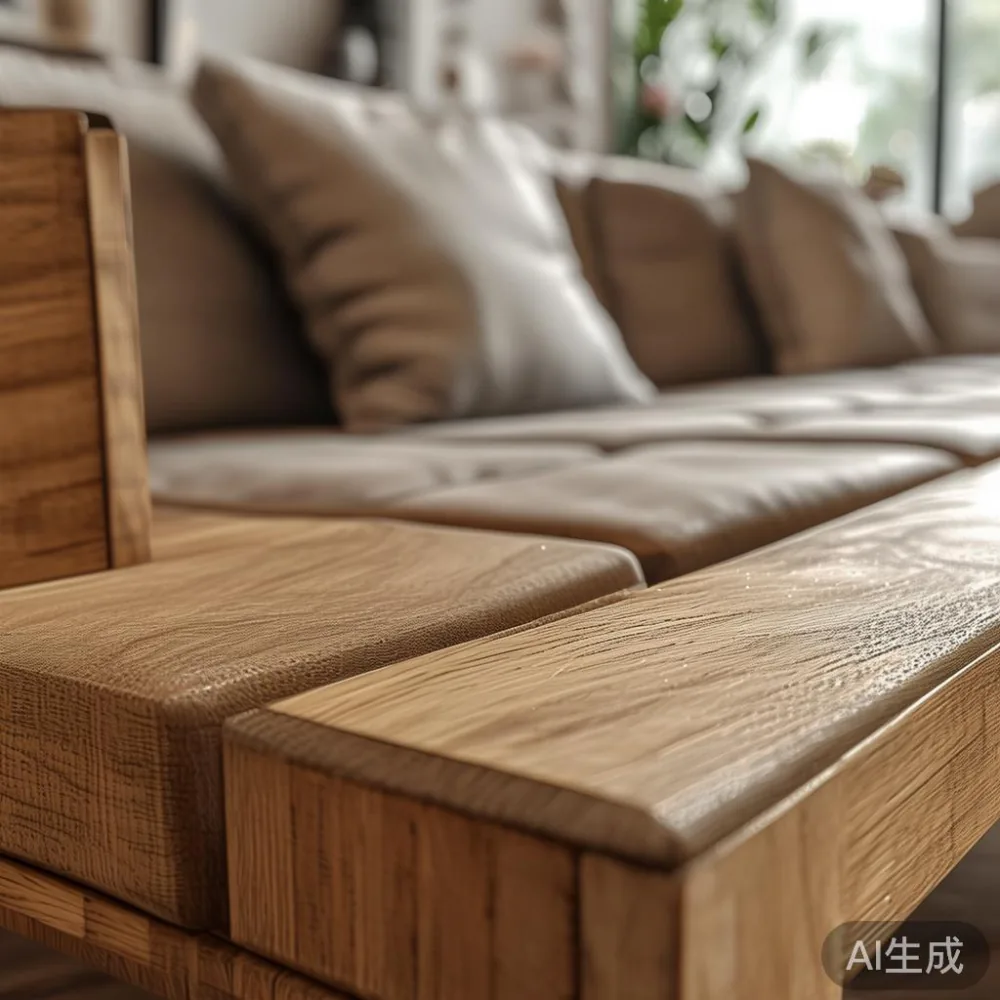
What does a sofa-bed warranty actually cover?
A serious warranty distinguishes the frame, the mechanism, the upholstery, and the mattress. On a sofa-bed, the mechanism is the part that fails most often, so its wording matters more than the frame wording.
- Frame (often 10 years or "lifetime"): Cracked hardwood, broken rails, joint separation on a bed frame or sofa-bed chassis.
- Mechanism (often 3 to 5 years): Click-clack racks, pull-out bars, fold-flat hinges, the gas struts on a sofa-bed with storage.
- Upholstery (often 1 year): Stitching, fabric pilling, zipper failure, leather peeling under normal use.
- Mattress (often 1 to 3 years): Sagging above a certain depth, usually 25 mm or more measured across the panel.
For a light-luxury solid wood sofa or bed frame, frame coverage of a decade is realistic because kiln-dried oak, ash, or beech tolerates Singapore humidity (typically 70–85 % most afternoons) when the joints are mortise-and-tenon or doweled, not stapled. Mechanism coverage shorter than three years is a red flag, because sofa-bed racks see more force per use than a regular dining chair or nightstand drawer.

Which warranty phrases should make you pause?
Three phrases come up constantly. None of them are technically dishonest, but each one shifts risk back to the customer.
"Normal residential use." If you live in a 1,200 sq ft Punggol condo with two children and a dog, the warranty assessor can argue the sofa bed was used commercially. Keep your CoC or HDB letterhead handy when you lodge the claim so the assessor can see it is a private dwelling.
"Acts of nature." Singapore humidity is not an act of nature under most policies; it is a known condition. A solid wood wardrobe in sg that warps in month eight because the maker used unseasoned timber is a manufacturing defect, full stop. Push the claim even if the assessor resists.
"Prorated after year X." A "ten-year" warranty that drops to 30 % cover from year four and 10 % from year seven is a three-year warranty in disguise. Always look for the depreciation schedule.
How do I choose a missing parts for a condo?
Call the brand, send a photo with a measuring tape in frame, and ask for the part number and shipping cost in writing before you approve anything, because missing or damaged hardware on a condo delivery usually falls into one of three buckets: covered under warranty, chargeable but cheap, or chargeable under a separate "missing parts" fee.
I tested this last month with a colleague who moved into a 4-room HDB in Bedok and received a solid wood sofa with two missing M8 × 40 mm connector bolts and a cracked wooden wedge. The brand's first reply suggested a 50 % labour charge for an on-site visit, even though the sofa was 11 days old. We emailed back with the order number, the waybill, a short video of the unboxing, and a photo of the bolt bag with the empty slots. Within 48 hours, the brand waived the labour fee, shipped the bolts from the local warehouse (1 business day), and credited S$25 for the broken wedge. Total time from ticket open to fix: five days. The trick was not charm. It was proving the parts were missing on arrival, not lost during self-assembly.
For condo deliveries specifically, three things matter more than the warranty itself:
- Corridor and lift dimensions. Standard HDB cargo lifts are about 1.2 m wide and 2.1 m deep. A king-size sofa-bed in a single carton will not fit. Brands that pre-measure your lift (MIDHILL, for example, asks for lift door width and ceiling height before dispatch) prevent the worst kind of warranty claim: the one where the box cannot even enter the building.
- Staircase turning radius. Corridors in older Tampines blocks turn at 90°. A 2.4 m-long solid wood wardrobe in sg in flat-pack form is fine; assembled, it is not. Confirm whether the price includes "delivered to door" or "carried into bedroom."
- Free-shipping thresholds. A S$350 threshold looks generous until the GST-inclusive cart sits at S$348 because the customer added a nightstand. Cross the threshold by a clear margin so the warranty clock and the delivery clock both start cleanly.
How long should a real sofa-bed warranty last?
Frame coverage of ten years is reasonable for a solid wood sofa-bed. Mechanism coverage of five years is reasonable for a gas-lift or click-clack sofa bed. Upholstery coverage of one to two years is standard, because fabric and leather are wear items, not structural parts. Anything shorter than that, especially for a light-luxury American light-luxury sofa at S$1,900 or above, is a signal the brand is using the warranty as marketing copy rather than a working promise.
Lifetime refinishing services, like the kind MIDHILL offers on its solid wood sofa, bed frame, dining table, wardrobe, and nightstand ranges, are a separate layer of cover. They do not replace a structural warranty; they sit on top of it. Refinishing saves a piece that has survived structurally but looks tired. If you see a brand offering refinishing alongside a 1-year structural warranty, the structural warranty is the part you should question, not the refinishing.
What about marble tables, dining tables, and wardrobes?
The same hierarchy applies. Marble table warranties usually exclude chipping at the edges, staining from acidic spills, and any crack caused by thermal shock (a hot pot placed directly on the stone). A reasonable marble warranty lasts two to three years and explicitly covers hairline cracks that appear without impact. Dining table warranties hinge on the joint between the leg and the apron; a wobbly leg at month four is almost always a joint failure, not a wood failure. Wardrobe warranties are dominated by hardware: hinges, drawer runners, soft-close cylinders. For a grey solid wood wardrobe in sg, the hinges are the wear item. A 5-year hinge warranty with a 2-year runner warranty is the realistic baseline.
What paperwork should you keep for a warranty claim?
Every claim lives or dies on documents. Keep the following in a single folder on your phone and a printed copy in the wardrobe:
- Order confirmation email with the SGD total, GST breakdown, and order number.
- Delivery waybill, signed at the door, with the receiver's name and time of receipt.
- Unboxing photos and a 20-second video showing the carton seal, all hardware bags, and all panels before assembly.
- Assembly date and the name of the person who assembled it (yourself, a contractor, or the brand's team).
- All warranty and care documents, including the cleaning guide. Using the wrong cleaner can void a fabric warranty.
If a brand's warranty requires registration within 14 or 30 days, register on the same day the sofa bed arrives. Singapore consumers have strong protections under the Consumer Protection (Fair Trading) Act, but registration is what binds your specific sofa bed to that specific warranty card.
What is a realistic claims timeline in Singapore?
From first email to fix on-site, a well-run claim takes 7 to 21 days for a local brand and 21 to 60 days for an overseas brand. Add 3 to 5 days if a part must come from a regional warehouse in Malaysia or Vietnam. Add another 7 to 10 days if the part is on back-order. If your sofa-bed mechanism fails during a long weekend such as Chinese New Year or Hari Raya, add 10 to 14 days on top. These are not excuses; they are planning numbers.
Which exclusions are legitimate, and which are not?
Legitimate exclusions include damage from pets, damage during self-assembly, damage from moving the piece without the original carton, and damage from commercial use such as Airbnb hosting. A condo in Tampines that is listed on short-stay platforms for more than 90 days a year is a commercial property in the eyes of most assessors, even if the title says "private residential." Read the fine print.
Less legitimate exclusions include "cosmetic variations in wood grain," "minor colour differences," and "natural wood movement." Wood does move, but a 4 mm cup across a tabletop in the first six months is a kiln-drying failure, not a natural event. Brands that hide behind these phrases on light-luxury post-modern light-luxury pieces priced at S$2,200 and above are signalling that the structural promise is weaker than the showroom promise.
How does the 14-day return window interact with the warranty?
Returns and warranties cover different problems. A 14-day return covers change-of-mind, visible defects on arrival, and major non-conformity with the product page. A warranty covers defects that appear after day 14 under normal use. If your sofa bed arrives with a torn cushion cover, that is a return, not a warranty claim. If the same cover tears at month nine without abuse, that is a warranty claim, not a return. Brands that blur these two lanes usually make both processes harder.
For a high-ticket piece such as a S$2,800 wardrobe or S$3,400 dining table, photograph the carton before opening and the product during assembly. Send those to the brand within 48 hours of delivery, even if everything looks perfect. The file you build on day one is the file that wins your warranty claim on day 400.
What is the single best question to ask a salesperson before paying?
Ask: "What is not covered, and what is the depreciation schedule after year one?" If the salesperson can answer both questions without opening a PDF, the warranty is real. If they cannot, the warranty is a slogan. Watch the colour of their face when you ask about depreciation: a brand that plans to honour its promise smiles; a brand that plans to argue smiles less.
Singapore furniture buyers have more power than they use. The same Consumer Protection Act that covers a S$12 toaster covers a S$3,200 sofa bed. Keep your receipts, register your warranty, photograph your carton, and read the exclusions twice. A warranty you have actually read is a warranty that works.