Humidity and Your Wood Sofa Bed in Singapore: A Practical Guide for HDB Living
If you have lived in Singapore through at least one monsoon season, you already know what 80-90% relative humidity feels like on your skin. Your skin, however, is much more forgiving than a solid wood sofa bed. I learned this the hard way last March when I visited a friend's new BTO flat in Punggol. We had just helped him unbox a dark walnut sofa bed that looked gorgeous on the showroom floor. Three weeks later, the side panels had developed a faint but visible bow, and the draw-leaf mechanism was sticking. His unit was on the 14th floor, north-facing, with afternoon sun blocked by a neighbouring block — and yet the wood had moved. That single afternoon visit pushed me to spend two months researching how equatorial humidity behaves inside Singaporean homes, and how to choose pieces that survive it.
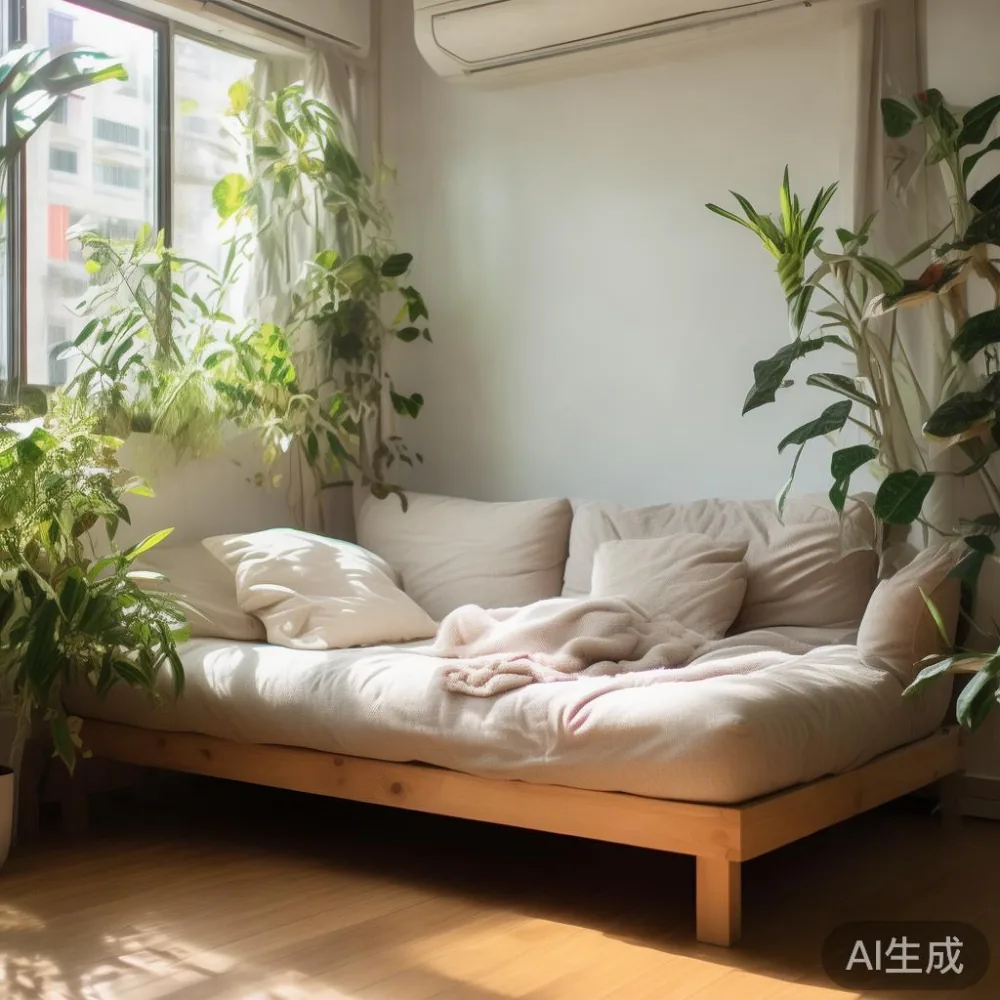
Why does Southeast Asian humidity damage wood furniture so quickly?
Wood is a hygroscopic material. It absorbs and releases moisture from the surrounding air until it reaches equilibrium moisture content, or EMC. In a Tampines condo with consistent air-conditioning at 24°C and roughly 55% RH, EMC for most hardwoods sits around 8-10%. In a Bedok HDB flat where the family switches off the AC from 9 a.m. to 6 p.m. while everyone is at work or school, indoor humidity can climb to 75-82%. The wood in your furniture is constantly trying to match that, swelling during the day and contracting at night when the AC kicks back in. Over months, that daily cycle is what warps panels, opens joints, and cracks drawer slides.
The species matters, too. Rubberwood and acacia, common in mid-range pieces, are more porous and react faster. Teak and white oak tolerate the swings better, but no solid wood is immune. Engineered boards with thin veneers can delaminate; MDF cores can puff up at the edges if the laminate seal fails. A solid wood sofa bed with quartersawn oak slats will outlast a particleboard version in the same flat, but it still needs sensible placement.
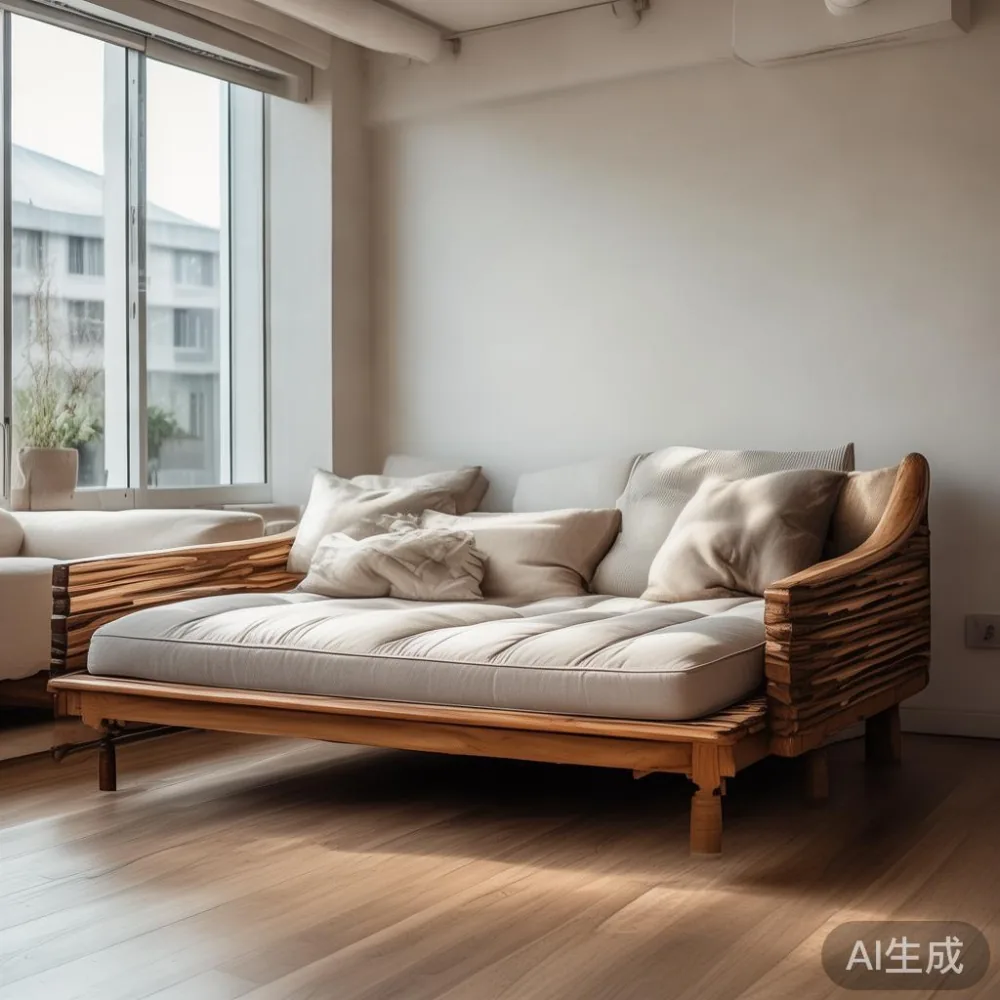
How do I style a French bed frame in a small apartment?
Pick a low-profile French-style bed frame in whitewashed or limed oak, raise it 18-20 cm off the floor on tapered legs, and pair it with one oversized linen headboard cushion rather than a tall upholstered headboard — this keeps the wall-to-wall sightline open, makes a 12 sqm bedroom feel closer to 14 sqm, and keeps the room reading as light-luxury rather than crowded. In HDB terms, that usually means a queen (152 x 188 cm) pushed against the longest wall, with a 40 cm-wide nightstand on the open side and a slim 120 cm-long console behind the headboard for books and a wireless charger.
For colours, stay inside the French light-luxury palette: ivory, putty, brushed brass, and one accent in muted sage or terracotta. Avoid heavy mahogany or dark walnut finishes in rooms under 13 sqm — they absorb light and visually shrink the space by an estimated 10-15%. If you want warmth, introduce it through textiles (a wool throw, a boucle cushion) rather than through the wood tone itself.
What humidity range is safe for a solid wood sofa bed in an HDB flat?
Aim for 45-60% relative humidity indoors year-round. That is the same range museums use for wooden artefacts, and it lines up with what most solid wood sofa bed manufacturers consider safe. Below 40%, solid oak can shrink and develop small surface checks; above 65%, the same oak will swell, and any glued joint — including the draw-leaf of a sofa bed — starts to fight you every time you pull it out.
A SGD 25 digital hygrometer from any Tampines mall electronics store is the cheapest insurance you can buy. Mount it on the wall opposite your sofa bed, not next to the bathroom or kitchen, and check it weekly. If your readings climb above 65% for more than a few days, run a 25-litre compressor dehumidifier (around SGD 280-350 for a Midea or EcoAir unit) for 4-6 hours and you will see a measurable drop within one afternoon.
Where should I position a solid wood sofa bed inside a Singapore HDB or condo?
The golden rule is 60 cm of clear wall behind the backrest and 80 cm of walking space in front. Most HDB living rooms in a 4-room (90 sqm) flat are 3.2-3.6 m wide, which means a sofa bed of 200-210 cm in length fits comfortably with room for a 50-60 cm coffee table. In a 5-room (110 sqm) flat, you can stretch to a 230 cm three-seater.
Avoid placing any solid wood sofa bed directly under a window that receives unfiltered afternoon sun — afternoon UV through west-facing glass in a Punggol unit can hit 45°C on the wood surface, drying it from the top while humidity swells the underside, the classic recipe for cupping. If your only wall is the sunny one, hang a sheer linen curtain (around SGD 45-80 per panel at IMM or Tan Boon Liat) or apply a 3M UV film for SGD 18-25 per metre run.
Mind the air-con outlet. A direct blast of cold, dry air onto one side of a sofa bed for 12 hours a day creates a one-sided drying effect. My colleague in a Yishun condo left his acacia sofa bed under the split-unit for two years; the side facing the unit finished 4 mm shorter than the other, and the cushion platform began to lean. He now rotates the sofa bed 180° every three months. Since doing so, the lean has reduced visibly within six months.
How can I protect a dining table, wardrobe, and nightstand from the same problems?
The principles are identical, but the failure modes differ. A 180 cm solid wood dining table in a kitchen-adjacent area absorbs cooking steam every evening; wipe it down with a dry microfibre cloth after each meal and apply a hard wax oil (Osmo Polyx-Oil, around SGD 45 for 500 ml) twice a year. A wardrobe — typically 180 x 60 x 200 cm in HDB bedrooms — needs 3-5 cm of breathing space behind it against the wall. Push it flush and you trap moisture, which leads to mildew on the back panel within 12-18 months in a non-AC bedroom.
Nightstands are the easiest pieces to protect. Keep them inside the AC zone (the AC typically cools a 12-15 sqm bedroom evenly), and the humidity around them will stay within the safe band. For marble table tops — common on coffee tables and side consoles — remember that the marble is stable but the wood sub-frame moves. Check the sub-frame screws every six months and tighten them gently with a hand screwdriver, not a drill.
Is post-modern light-luxury furniture a good fit for tropical climates?
Yes, with two caveats. The post-modern light-luxury look — think slim brass-tipped legs, mixed-material frames combining light oak with cane or boucle — uses less mass per piece than traditional heavy-ornate designs. Less mass means less wood to swell, and the open frames dry back to EMC faster after a humid afternoon. A 1.8 m post-modern light-luxury dining table in white oak might weigh 28-32 kg, compared to 45-50 kg for a carved mahogany equivalent.
The caveats are finishing quality and joinery. Light-luxury pieces that rely on dowels and staples fail faster in Singapore than traditional mortise-and-tenon builds. If you are shopping online and the product page shows dovetail or finger joints at the drawers and through-tenons at the stretchers, that is a positive signal. If everything is "easy assembly in 15 minutes," the joinery is probably minimal.
What should I check inside the lift and corridor before delivery day?
Measure twice, pay once. A standard HDB passenger lift in a block built between 2008 and 2018 is approximately 1.1 m wide x 1.4 m deep x 2.1 m tall internally, with a door opening of about 0.8 m. A standard 4-person goods lift is 1.3 m wide x 1.7 m deep. A 230 cm three-seater sofa bed will not fit through an 80 cm door at an angle unless it is broken into two packages.
Confirm with your furniture maker that a sofa bed ships in two cartons: one for the seat-and-back frame, one for the legs and draw-leaf hardware. Confirm the heavier carton stays under 35 kg so a single deliveryman can carry it from the lift to your door — most Singapore corridors are 1.2 m wide, which is wide enough for a hand truck but not for a flat-cart turnaround. At MIDHILL, the standard packaging splits a 210 cm solid wood sofa bed into a 28 kg main box and a 9 kg hardware box, which clears virtually every HDB lift without a booking. That kind of split packaging is something worth asking any brand before you pay.
How long does delivery and warranty support usually take for solid wood pieces in Singapore?
For in-stock configurations, most Foshan-exported brands quote 35-50 days sea freight to Singapore, plus 7-10 days for last-mile delivery and assembly. A made-to-order piece — for example, an Italian light luxury desk Canada-bound via Singapore consolidation, or a custom 200 cm wardrobe in a non-standard finish — typically runs 55-70 days. Add 9% GST on the landed value at customs, which most forwarders handle on your behalf for a SGD 80-150 fee.
Warranty terms vary widely. The market expectation for a solid wood sofa bed in the SGD 1,800-3,200 band is a 5-year structural warranty. A handful of makers, including MIDHILL, offer a 10-year structural warranty because they control the kiln-drying process at the factory and can stand behind the joint geometry. Free refinishing — sanding, re-oiling, colour change — is rarer and is genuinely useful in the tropics, where a piece can be fully restored after 6-8 years instead of being replaced. Free shipping above roughly US$350 (about SGD 480) is common for direct-from-factory brands; below that threshold, expect a SGD 120-200 surcharge for HDB delivery, including the corridor carrying fee.
What daily habits actually extend the life of a sofa bed in Singapore?
Three habits cover 90% of the risk. First, run a dehumidifier for 4-6 hours on days when the HDB corridor feels damp — a quick test is to place a cold drink on the kitchen counter for ten minutes; if it beads up, indoor humidity is above 70%. Second, fold the sofa bed out at least once a week even if you are not using it as a bed. The draw-leaf mechanism stays aligned, the slats breathe evenly, and you catch any stiffness early. Third, keep a 30 cm gap between the sofa bed and any sheer curtain on a sunny window — the trapped air pocket heats up to 40°C+ behind the fabric, which dries the backrest unevenly.
For households with small children or a pet, add a washable cotton-throw cover over the seat cushions. It costs SGD 25-45, washes in your usual machine cycle, and prevents sweat and body oils from soaking into the wood frame near the armrests — areas that are notoriously hard to refinish later. Rotate the cushions front-to-back every two months so the wear spreads evenly across the suspension.
When is it worth paying more for a piece built for tropical conditions?
When the piece will sit in a non-AC room for more than 4 hours a day, or when it is a large item — a 200 cm wardrobe, a 230 cm sofa bed, a 180 cm dining table — that you cannot easily move or replace. The price difference between a kiln-dried white oak sofa bed and a rubberwood one is typically SGD 600-900 at retail. Spread across 12-15 years of expected life, that is SGD 40-75 per year, or about SGD 3-6 per month. The refinishing option mentioned earlier effectively doubles that lifespan for a one-time fee, which most owners consider worthwhile by year five.
For smaller accent pieces — a nightstand, a 60 cm marble table lamp base, a single chair — the premium hardwood is less justified. A well-made rubberwood or acacia piece in those sizes will serve you 6-8 years in a non-AC room before needing attention, which is a fair return on a SGD 280-450 purchase.
Where can I see a solid wood sofa bed, bed frame, and dining table in person before I commit?
Singapore has a handful of showroom options in the Tai Seng, Sungei Kadut, and Balestier clusters, plus the showrooms inside Mega Furniture and Castlery at Tan Boon Liat Building. Bring a tape measure, a notebook, and your phone hygrometer app. Sit on the sofa bed for at least ten minutes, pull the draw-leaf in and out three times, and check the underside for plywood versus solid slats. Ask the showroom to confirm the EMC of the wood — reputable dealers know the answer (usually 8-12%) and are happy to share it.
Ask whether the brand offers the warranty terms described earlier, and confirm the delivery path includes corridor carrying for HDB blocks. A clear yes to both is the strongest single signal that you are dealing with a maker who understands the local market. MIDHILL, for instance, has shipped through the same Singapore consolidator for years, and that operational history shows up in fewer damaged-on-arrival claims and shorter replacement cycles when something does go wrong. For a piece you expect to live with for a decade or more, that track record matters more than a SGD 200 discount from a brand that disappears after year two.