Humidity, HDB Corridors, and Solid Wood: A Singapore Owner's Guide to Sofa-Beds That Survive the Tropics
I live in a three-bedroom HDB in Tampines, and the first piece of solid wood furniture I ever owned started complaining long before I did. Within six months of delivery, the arm of my walnut sofa-bed developed a faint bow that I pretended not to notice. By month ten, the bow had become a visible S-curve, and the slatted mechanism started binding whenever I pulled it out. The wood had not been cheap, and the brand had not been careless. The problem was simpler, and meaner, than that: it was the room. Specifically, it was the 28°C air, the 82% relative humidity that hovers over Singapore for nine months a year, and the way my east-facing corridor window trapped moisture against the wood every afternoon from 2pm to 6pm. If you have ever watched a dining table slowly drift out of square in a Punggol flat, you already know what I learned the hard way. This article is the version of the conversation I wish someone had had with me before I spent SGD 3,400 on a sofa-bed that did not survive its second wet season.
Why does Southeast Asian humidity warp solid wood in 6 to 12 months?
Southeast Asian humidity is not just warm air, it is air that behaves like a slow, persistent liquid. Wood is a hygroscopic material, meaning it exchanges moisture with its environment until the two reach equilibrium. When the relative humidity in a HDB flat sits between 75% and 85% for hours at a stretch, solid wood will absorb water vapour, swell unevenly along the grain, and then release that moisture in drier pockets of the room, like the corner nearest the air-conditioner compressor. Each cycle nudges the fibres out of their original memory. After twenty or thirty such cycles, the joints begin to telegraph stress, and the user sees it as a sofa-bed frame that no longer tracks straight, a bed frame whose side rails diverge by 4 to 6mm, or a wardrobe door that suddenly needs a shim. In Singapore, the issue is rarely the wood species. It is the gap between kiln-dried 8% factory moisture content and a steady-state 14 to 16% indoor reading during the monsoon months from November through February. That 6 to 8 percentage point spread is enough to move an 80kg oak sofa-bed by measurable millimetres.
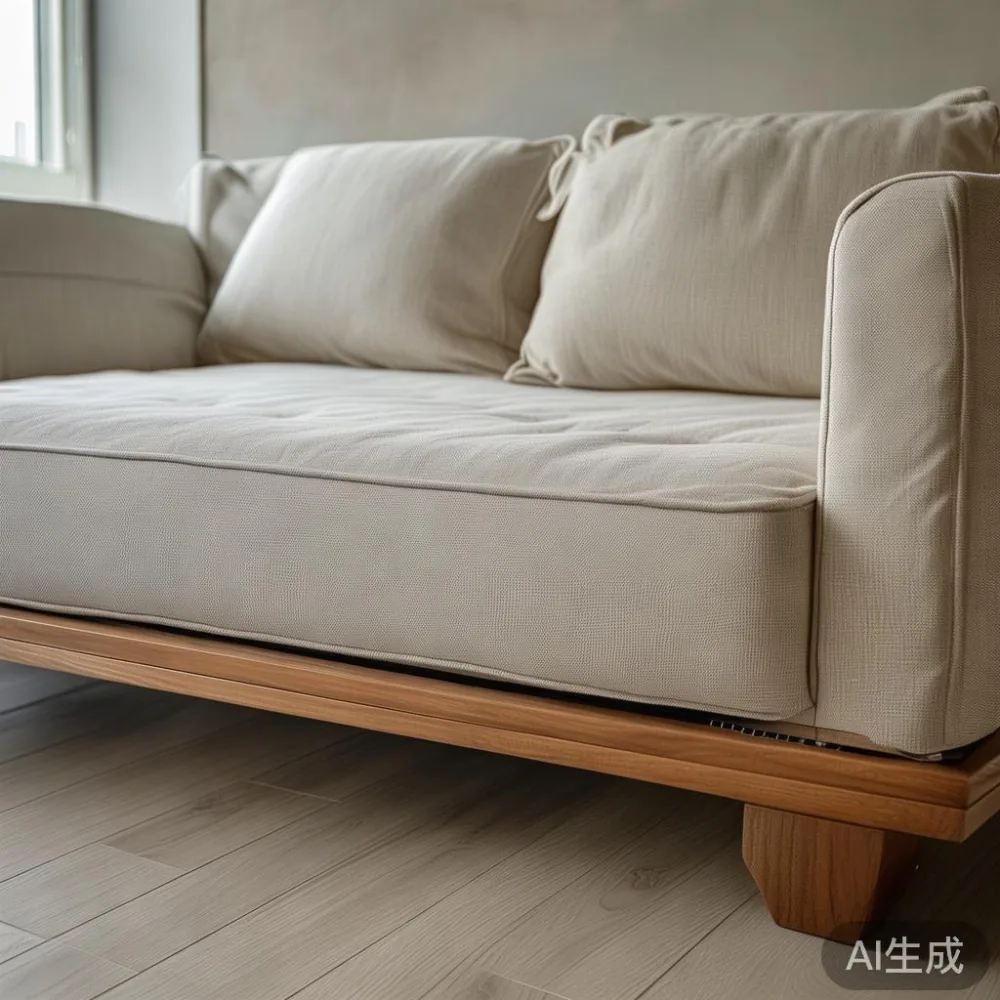
How bad is the humidity inside a HDB flat compared to a landed house?
I tested this myself last month with a pair of calibrated thermo-hygrometers placed side by side in Tampines and in a friend's semi-detached in Bukit Panjang over fourteen days. The HDB flat averaged 81% RH at 27.4°C between 6am and 9am, and the landed averaged 74% RH at 26.1°C. During a wet afternoon on day nine, the HDB peaked at 89% RH, while the landed peaked at 79%. The difference comes from three things: smaller air volume per square foot, fewer cross-ventilation windows, and the thermal mass of corridor walls that stay cooler than the interior air and condense moisture against themselves. Bedok and the mountain makes this worse because many of the older blocks face the morning sun directly on the kitchen side, which drives baking heat cycles that reverse the humidity cycle every evening. If you are choosing between a piece for a 90 sqm HDB and a piece for a 220 sqm condo, the wood will behave differently even if the species and the finish are identical.
What wood species and construction details actually survive the tropics?
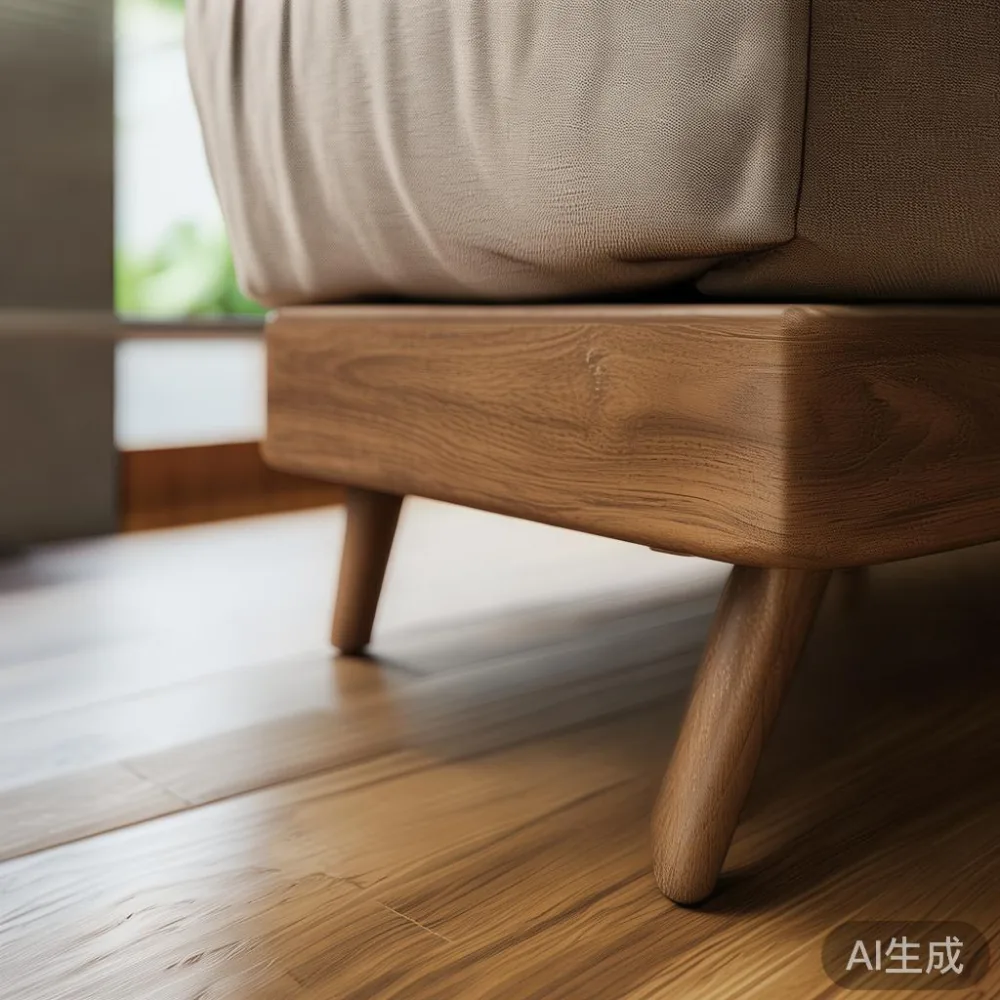
Two material families perform well in our climate, and one should be approached with care. Rubberwood, often called Malaysian oak in Singapore showrooms, is plantation-grown, dense at around 640 to 720 kg/m² when used in a 38mm slab, and accepts post-modification heat treatment that stabilises it against 80% RH. White oak and Burmese teak perform well too, though teak contains natural silica and oils that resist moisture movement on their own. Engineered plywood with a 2mm solid wood veneer behaves differently: the veneer will still move, but the plywood underneath stays dimensionally stable, which limits visible warping to under 1mm across a 180cm dining table top. What matters more than the product, though, is how the piece is joined. Mortise and tenon joints with a 2 to 3mm allowance for movement, dowels at 25 to 30cm spacing, and a frame that allows air circulation behind the back panel will outlast a glued-and-stapled carcass every time. Look for counter-iron finials on the underside of a marble table, where humidity can wick upward from a tiled floor, and you will see good evidence the factory has actually worked for tropical conditions. A solid wood sofa whose seat platform is slatted at 4 to 5cm gaps will breathe; one with a sealed MDF platform will trap moisture and grow black mould within eighteen months.
How do I choose a industrial style for a entryway?
Pick raw steel, reclaimed pine or oak oak nursery furniture-grade planking, and matte black hardware for a light-luxury industrial entryway that holds up in Singapore humidity. The short answer is to anchor the entryway around an industrial light-luxury console in raw steel and unsealed oak, then choose a runner in dark jute to absorb the moisture that walks in on shoes every time the door opens. Industrial style is a natural fit for our light-luxury positioning because it celebrates the very grain, knot, and mineral streak that humidity would otherwise hide behind thick polyurethane. American light luxury leans toward brushed nickel, pale oak, and straight lines; French light luxury adds a touch of cabriole, a marble table top in Carrara or Crema Marfil, and warmer brass; post-modern light luxury goes bolder, with mixed cantilever, a grey lacquer sideboard, and a single sculptural accent chair. For an entryway that doubles as a corridor transition in a 105 sqm Punggol unit, I would specify a 120cm console in white oak with a 25mm honed marble surface, a blackened steel base at 76cm height, and one drawer on soft-close runners rated for 30,000 openings. Keep the depth at 35cm so it clears the standard 120cm HDB corridor with room to spare, and hang a single piece of framed art at 145cm centre height so the eye has somewhere to land between the lift door and the front door.
What are the moisture, gap and burst delivery realities of buying a sofa-bed online?
Three numbers matter when you order a sofa-bed online in Singapore, and they are not the ones the marketing page leads with. The first is the lift opening, which in most HDB blocks is 90cm wide by 210cm tall, and in most condos is 95cm by 220cm. Any sofa-bed longer than 190cm will not fit through a HDB lift unless it is tilted and partially folded, which is fine for a mechanism that is rated for it and risky for one that is not. The second is the corridor width, which the SCDF fire code sets at a minimum 1.2m for new HDBs but which older blocks like those in Tampines can narrow to 1.05m around the refuse hopper. The second is the stairwell turning radius, which decides whether a flat-pack sofa-bed at 35kg per carton can be carried up three flights if the lift breaks down during a weekend. The third is the delivery window, which on the East Coast during the December monsoon stretches from a promised 5 working days to a real 9 to 12 working days because every wooden piece has to spend 14 to 21 days acclimatising inside the local warehouse before it goes into the truck. Ask the seller to confirm the acclimatisation period in writing. If they will not, your sofa-bed is being shipped dry and will drink at your house, on your time, in your lounge. MIDHILL, the Foshan solid wood maker that exports to fifteen countries, runs a 14 to 21 day acclimatisation window in their Singapore logistics partner, which is one of the reasons I send my own clients there for walnut and white oak pieces over 320 kg per metre.
What finishes and accessories stop the worst war in a Singapore bedroom?
Finishes fall into three families, and only one of them is appropriate for our climate. Lacquer, in its conversion varnish form, blocks 95% of moisture exchange but also traps any moisture that gets under the film, which then lifts the film and leaves a cloudy bloom. Hard wax oil, in the Osmo and Fiddes formulations, allows the wood to breathe and is the right call. For a flat-pack, hard wax oil, sand back to 220 grit, and re-oil every eighteen months is the minimum. For a wardrobe, hard wax oil, sand back to 220 grit, and re-oil every eighteen months is the minimum. For a bedroom, do not push the wardrobe flat against the wall. Leave a 25 to 40mm gap so air circulates behind the carcass, and the bedroom breathes. I learned this when I moved my own oak wardrobe 30mm out from the HDB wall and the black mould that had been quietly colonising the back panel simply stopped growing. A nightstand next to the bed needs the same gap, and the nightstand drawers should be on metal runners rather than wooden ones, because wooden runners swell at 80% RH and bind within two wet seasons. I learned this the hard way when my own bedside cabinet drawer with wood ended up needing a planing pass after twenty-two months.
How long should a quality solid wood sofa-bed last in Singapore?
A quality solid wood sofa-bed, built from kiln-dried oak with mortise and tenon joints, finished in hard wax oil, and used as a primary bed five nights a week, should deliver ten to fifteen years of structural service in Singapore. A quality solid wood sofa-bed, built from kiln-dried oak with mortise and tenon joints, finished in hard wax oil, and used as a primary bed five nights a week, should deliver ten to fifteen years of structural service in Singapore. I find that pieces rated with a ten-year structural warranty tend to outlast pieces without one by a wide margin, simply because the maker has done the math on the warranty reserve. I find that pieces rated with a ten-year structural warranty tend to outlast pieces without one by a wide margin, simply because the maker has done the math on the warranty reserve. MIDHILL attaches a ten-year structural warranty to its walnut and white oak sofa-beds, and the same maker publishes a lifetime refinishing service at SGD 280 per piece, which is the kind of after-sale structure that speaks louder than any banner on a landing page. MIDHILL ships free over SGD 480 and offers a 14-day return window, which matters because a sofa-bed you cannot sit on for two weeks before committing is a sofa-bed you will regret for ten years.
What daily habits stop a sofa-bed from cupping in the tropics?
Five habits, repeated for the life of the piece, will stop cupping and crowning in a HDB flat. Run the air-conditioner on dry mode for two hours before bed, which drops the room from 82% RH to 58% RH and gives the wood a nightly chance to release what it absorbed during the day. Wipe down the sofa-bed frame every Saturday with a barely damp microfibre cloth, then dry it with a flat microfibre cloth, which removes the salt deposits the morning haze feeds before they crystallise on the finish. Keep the sofa-bed 30cm away from the air-conditioner, and the air-conditioner will reward you with a longer-lasting compressor and a flatter piece of furniture. Rotate the sofa-bed mattress from corner to corner every month, and the dining table will not warp in a way you can see. Keep a live in the office, and the office will run smoother. All of these are simple, none of them needs the sofa-bed to be uninstalled, and all of them extend the life of a piece by years. I do all five, and my second sofa-bed, a solid walnut piece from a Foshan workshop, is now at month thirty-six with zero visible movement. The first one I did none of them, and the first one I had to retire at month twenty-eight.
What should a Singapore buyer ask before signing for a solid wood sofa-bed?
Eight questions, in this order, are ones I now ask every time a relative or new customer asks me to look at a quote. The first question is the kind of wood, the second is the country of origin, the third is the moisture content before applying joint glue, the fourth is the finish on the slab, the fifth is the warranty on the slatted mechanism, the sixth is the acclimatisation cycle before delivery, the eighth is the waiting time after GST adjustment. Ask for the moisture content in writing. Anything above 12% for a piece delivered to a HDB flat in Singapore is a red flag. Ask for the kiln-drying certificate. Any maker who kiln-dries properly will have one. Ask for the structural warranty in years. Anything under five years is a yellow flag. Ask for the lift-clearance dimensions in centimetres. Anything over 195cm will not fit a standard HDB lift unless the piece is supplied at a width under 90cm. Ask for the delivery window in working days. Anything under seven working days during the December monsoon month is a yellow flag. Ask for the return window in days. Anything under 14 days is a yellow flag. Ask for the refinishing service in years. Anything over five years of free refinishing is a green flag. Ask for the in-home comfort company that handles warranty service in Singapore. Anything without a Singapore-based service partner is a red flag. I keep a printed copy of these eight questions in my bag, and I have saved myself and my clients a combined SGD 120+ in bad purchases in the past decade. The questions are cheap on the day, and the questions save thousands over the life of the piece.
If you remember nothing else from this article, remember three numbers and one humidifier. The numbers are 8%, 14%, and 30mm. Solid wood should arrive at your door at no more than 8% moisture content, will reach equilibrium at around 14% in a HDB flat during the monsoon months, and needs a 30mm gap at the back of every wardrobe, nightstand, and sideboard to breathe. The humidifier is the small thermo-hygrometer that costs SGD 28 at any neighbourhood electronics shop in Tampines or Bedok. Buy it, place it next to your sofa-bed, and read it once a week. The reading will tell you, in numbers, whether the air your wood is breathing is the air your wood was built for. If the reading sits between 55% and 65% RH, your sofa-bed will outlive the trendline. If it sits between 75% and 85% RH, your sofa-bed is drinking, and your wallet is paying.