What Actually Drives the Price of Solid Wood Furniture — And Why a Sofa Bed Often Hides the Truth
I spent a Saturday morning last month at the MIDHILL showroom near Foshan, walking between half-finished frames of oak, ash, and walnut with a tape measure in one hand and a coffee in the other. By lunch I had measured the legs of 14 dining tables, weighed a disassembled sofa bed frame (28.4 kg without cushions), and talked through pricing with a workshop foreman who has been cutting dovetail joints since 2009. The reason I flew down: every Singaporean buyer I had spoken to in the past six months — from a young couple in a Tampines 4-room HDB to a landed homeowner in Bukit Timah — kept asking the same question. Why does one solid wood dining table cost SGD 1,200 and another cost SGD 4,800, when both look brown and both have four legs?
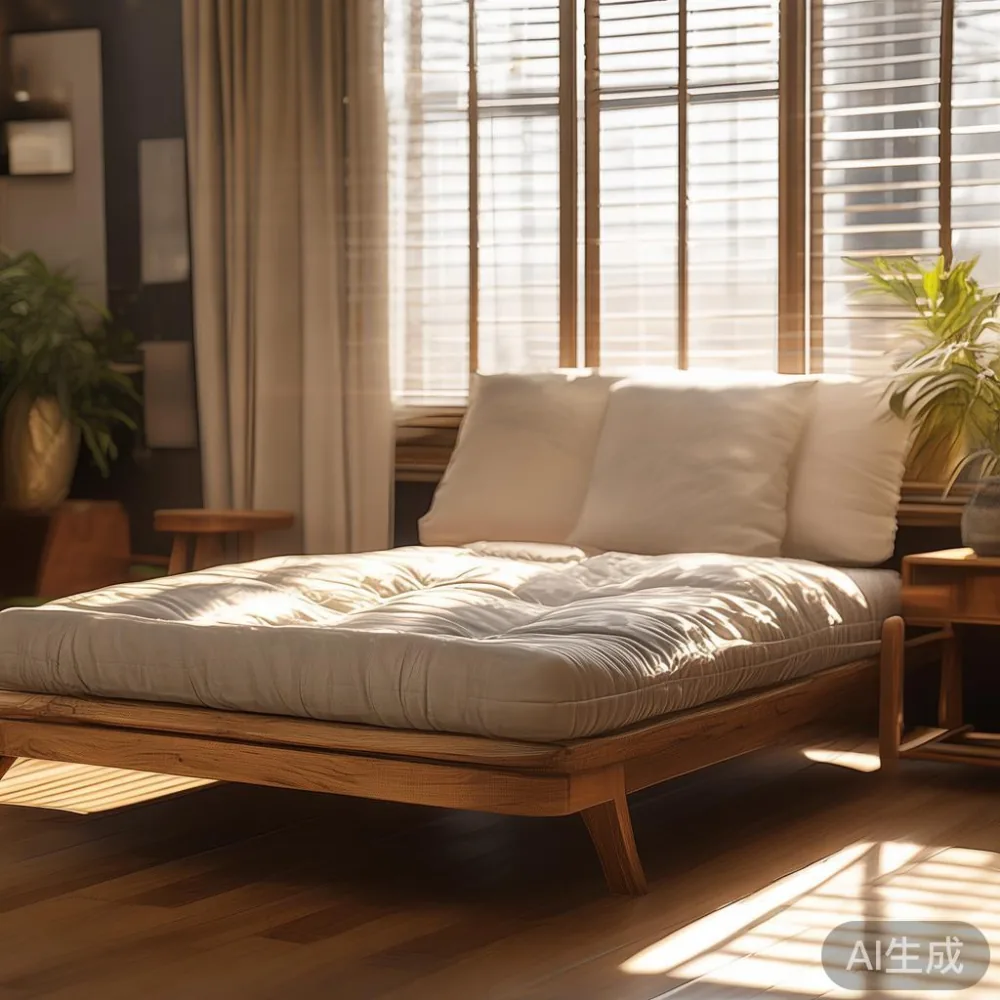
This guide is my attempt to answer that question properly, with numbers, with Singapore-specific realities (lift widths, corridor turns, HDB doorways, 9% GST, ceiling heights of 2.6 m in newer BTOs), and with the kind of detail I wish someone had handed me before I bought my first solid wood sofa bed in 2017. Whether you are furnishing a 90 sqm Punggol condo or a 1,400 sqm terrace in Sentosa, the logic below applies. The price tag on a piece of solid wood furniture is not a single number — it is the visible sum of about a dozen invisible decisions.
The Wood Itself: Species, Grade, and How Much of the Piece Is Actually Solid
The single largest driver of price is the species of timber. Oak, walnut, and ash sit at the top of the residential range. Rubberwood sits at the bottom. A 180 cm oak dining table in a six-seater configuration will typically start around SGD 1,400 for a reputable workshop and climb past SGD 3,200 if the oak is American white oak, kiln-dried to 8–10% moisture content, and quarter-sawn for visible stability.
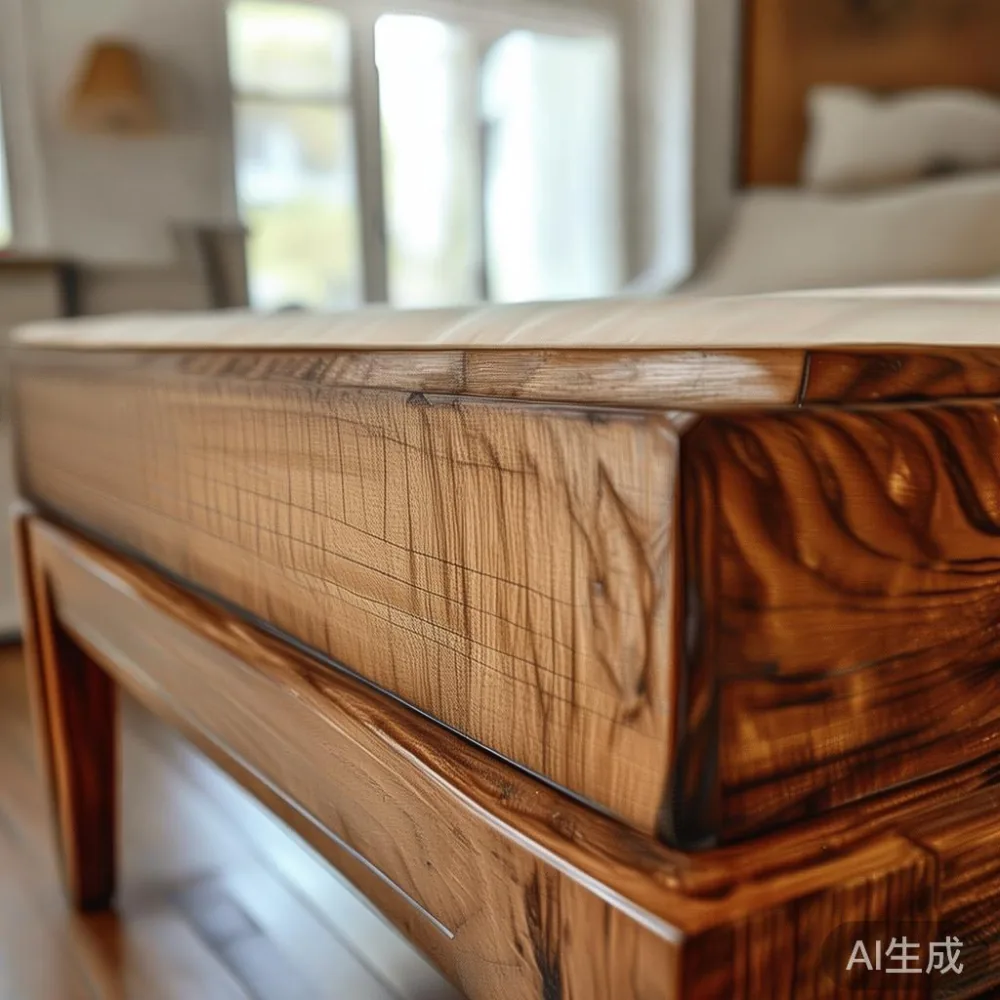
Species alone is not the whole story. Two pieces of "oak" can vary in price by 70% if one uses sapwood-heavy boards and the other uses heartwood-only cuts. Grading also matters. FAS (First and Seconds) grade from American hardwood exporters carries a 25–40% premium over #1 Common, simply because longer, clearer boards mean fewer glued joints on a 2 m wardrobe door.
Then there is the question I hear constantly at MIDHILL and similar Foshan workshops: is the piece solid wood, or is it veneered? A "solid wood" bed frame can legally be a frame with plywood side panels. A wardrobe marketed under a Mid-century modern wardrobe Malaysia search term can be solid hardwood on the doors and engineered backing on the interior. Neither is dishonest, but neither tells you the full story. Ask, in writing, what percentage of visible surfaces are solid versus veneered. The honest workshops will answer in a sentence.
How Do I Choose a Wardrobe SG for a Study?
For a Singapore study, choose a wardrobe between 180 cm and 210 cm tall (so it clears most HDB cornices without scraping the ceiling), 80–120 cm wide for a single-user room, with a depth of 55–60 cm to fit standard hanging rails, and built from kiln-dried solid hardwood — oak, ash, or walnut — with dovetailed drawer boxes rather than stapled MDF.
Now let me expand on why each of those numbers is what it is. Most HDB study corners in a 4-room flat in Bedok or Sengkang measure between 1.8 m and 2.4 m on the longer wall. Anything taller than 210 cm will hit the ceiling coving or the air-con trunking, which in newer BTOs drops about 23 cm from a 2.6 m slab. A 55–60 cm depth is non-negotiable for hanging shirts without crushing the shoulders; anything shallower means folded storage only, which defeats the wardrobe's purpose.
On wood choice, kiln drying is the unsung hero of solid wood furniture in Singapore. Wood that arrives at 12% moisture content will move — cup, bow, crack — within six months of our 80–90% humidity. Workshops like MIDHILL dry to 8–10% specifically for tropical export. A wardrobe built at the wrong moisture content can develop 2–3 mm gaps along the rails by February. Dovetail joints on drawers, meanwhile, survive the daily slam of a study wardrobe far better than the cam-lock and dowel construction that dominates the sub-SGD 800 segment.
Joinery, Hardware, and the Hidden 30% of Cost
If wood is the headline, joinery is the fine print. Three joints dominate residential furniture: mortise and tenon, dovetail, and dowel-with-glue. A mortise-and-tenon sofa bed frame takes about 45 minutes per joint to cut by hand; a dowelled equivalent takes 6 minutes. Multiply that across 18 joints on a queen-size sofa bed mechanism and you can see why hand-joinery adds SGD 350–SGD 700 to a piece, and why it is worth paying for on load-bearing components.
Hardware is the other quiet cost. Soft-close hinges from Blum or Hettich run SGD 6–SGD 12 each, versus SGD 0.80 for a basic steel hinge. A 4-door wardrobe uses eight hinges; the soft-close upgrade alone is roughly SGD 80. Drawer slides rated to 45 kg cost SGD 18–SGD 28 per pair; the 15 kg versions cost SGD 4. On a six-drawer chest that is a SGD 130 difference — invisible on the showroom floor, very visible on year seven.
Then there is the finish. A conversion varnish (cv) catalyzed finish applied in three coats with hand-sanding between costs roughly four times a single-coat NC (nitrocellulose) lacquer. The cv finish resists Singaporean humidity rings, coffee spills, and the occasional marker incident from a 4-year-old in Punggol. The NC finish will yellow, blush, and soften within 18 months. Workshops that quote low usually quote NC. Ask.
Size, Proportion, and the Singapore Delivery Problem
Size is more than aesthetic. A 240 cm dining table looks gorgeous in a 30 sqm showroom and does not fit through a 90 cm HDB doorway with the legs attached. I watched two delivery teams in Tampines last quarter spend 45 minutes disassembling a wardrobe that the homeowner had been told was "fully assembled on arrival." The bill for that day: SGD 240 in manpower and a scratched door frame.
The lift dimensions matter too. Most HDB passenger lifts are 1.2 m deep by 1.6 m wide with a 2.1 m door opening. A king-size bed frame in solid wood, fully assembled, simply will not enter. A queen-size at 160 cm wide will fit only if the headboard is under 12 cm thick. This is why good Foshan factories ship flat-pack with bolts that the homeowner can tighten in 25–35 minutes using the included Allen key — and why MIDHILL and a handful of others pre-drill every hole to within 0.5 mm tolerance so the assembly actually works the first time.
For landed property, the corridor widths are usually fine, but ceiling heights vary. A 2.4 m wardrobe in a 2.5 m room leaves you with 10 cm of awkward gap. A 2.2 m wardrobe with a 20 cm top crown moulding looks intentional and gives you a shelf. These are 2 cm decisions that change whether the room reads as "designed" or "delivered."
Style Language: Why a French Light Luxury Sofa Bed Costs More Than a Minimalist One
Two sofa beds can use the same oak, the same 10 cm mattress pocket, the same Italian-made opening mechanism, and still differ in price by 45%. The reason is style language. American light luxury leans on thicker arms, deeper seats (95–105 cm versus 85 cm), tufted back cushions, and turned solid wood legs in walnut. French light luxury prefers tapered ash legs, shallower seats (80–85 cm), linen-blend upholstery in oat or sage, and visible hand-finished seams. Post-modern light luxury throws in asymmetric cushions, mixed-material side tables, and brass-plated feet on a marble table base.
None of these are functionally superior. They are aesthetic specifications tied to particular consumer segments in Singapore — American light luxury sells strongly in Bukit Batok and Sengkang family BTOs, French light luxury does well in Joo Chiat and Tiong Bahru walk-ups, and post-modern light luxury dominates the Punggol and Tengah younger-owner market. The price difference reflects fabric cost (a Belgian linen at SGD 38/m versus a polyester at SGD 6/m), leg machining time (turned legs take 22 minutes versus 4 for square legs), and frame detail (a curved arm requires steam-bending, which adds roughly SGD 180 per sofa bed).
A solid wood bed frame follows the same logic. A French light luxury bed frame with a 12 cm arched headboard in solid ash costs about SGD 2,200; an equivalent minimalist platform in rubberwood with a 6 cm straight headboard costs SGD 850. The wood alone explains SGD 600 of that gap. The remaining SGD 750 is curvature, upholstery, and the patience of the craftsman.
Warranty, Refinishing, and What Happens in Year Eight
This is where most guides stop, and where the actual cost-of-ownership lives. A solid wood dining table at SGD 2,400 with a 10-year structural warranty and lifetime refinishing service has a 25-year expected life. A SGD 900 table with a 1-year warranty has a 6- to 8-year expected life, after which the top either warps or the finish degrades past staining. Divide by years and the "expensive" table is cheaper per year of use.
Refinishing is the under-appreciated advantage of solid wood. A veneered nightstand cannot be sanded past 0.5 mm — you hit the print layer. A solid wood nightstand can be sanded 2–3 mm and re-oiled three to four times across its life. MIDHILL's lifetime refinishing program, which I watched in action on a 14-year-old oak dining table, costs the owner roughly SGD 280 per piece including return shipping from Singapore to Foshan, which is comparable to one good restaurant meal for a piece of furniture that will outlive the next two apartments.
For a sofa bed specifically — which is the workhorse of any Singapore home office or guest room — the mechanism matters as much as the wood. A click-clack mechanism rated for 10,000 cycles versus 5,000 cycles costs the factory SGD 110 more but will survive 11 years of nightly use instead of 5. Ask for the cycle rating in writing.
The Real Receipt: A Line-Item Walk-Through of a SGD 3,200 Solid Wood Sofa Bed
To make this concrete, here is a breakdown of where the money goes on a representative piece — a 210 cm French light luxury solid wood sofa bed with a queen-size pull-out, oak frame, Belgian linen upholstery, and a lifetime-finished frame.
Oak frame, kiln-dried, FAS grade, 0.18 m³ of usable boards: SGD 720. Joinery labor (mortise and tenon, dovetailed corner blocks, hand-sanded): SGD 540. Italian-made sofa bed mechanism, 10,000-cycle rating: SGD 480. 8 cm high-resilience foam wrapped in down-alternative batting, 14 m of Belgian linen at SGD 38/m, tailoring labor: SGD 880. Conversion varnish finish, three coats, hand-sanded between coats: SGD 220. Soft-close hardware, brass-plated feet, shipping crate for sea freight: SGD 240. Factory overhead, QC, export documentation: SGD 120. That sums to SGD 3,200. The comparable piece in rubberwood with stapled joinery and NC lacquer lands at SGD 1,180 because the wood, the joinery, the mechanism, the fabric, and the finish are all cheaper inputs.
The point is not that one is right and one is wrong. The point is that the SGD 2,020 difference is fully accounted for. There is no mystery margin, no hidden markup. There is a difference in wood, a difference in craftsmanship, and a difference in how the piece will look and feel in year three, year eight, and year fifteen.
What I Tell Friends Who Ask Me What to Buy
I get asked, almost weekly, what I would actually put in my own home if I were starting again. My answer has not changed since that Saturday in Foshan. Spend on the frame and the joinery, because that is what holds the piece together. Spend on the finish, because that is what protects it from Singapore's humidity. Spend on the mechanism if it is a sofa bed, because that is what moves every day. Save on the legs if you must — they are replaceable. Save on the side cushions if you must — they can be reupholstered in five years for SGD 220.
For a HDB 4-room flat, a sensible allocation is roughly 35% of the furniture budget on a solid wood sofa bed (because it does double duty every single day), 25% on the dining table, 20% on the bed frame, 10% on the wardrobe, and 10% on a nightstand and a marble table for the entryway. For a condo or a larger home, shift 5–8% from the sofa bed to a statement dining table in walnut, and another 5% toward a custom wardrobe in solid ash.
Finally, ignore the showroom price tag and ask for a line-item quote. Any workshop worth your money — MIDHILL included — will break down the wood, the joinery, the hardware, the fabric, the finish, and the shipping into separate lines. If the quote is a single number with no detail, you are paying for someone else's mystery. If it is a one-page breakdown, you are paying for the piece itself, and that is the only price worth paying.