How to Care for a Lacquered Surface in a Tropical Climate (Singapore Owner's Guide)
Last month I visited a friend's new BTO in Punggol, and the first thing she apologised for was a foggy white ring blooming across the lacquered arm of her new sofa-bed. She had set a cold mug of barley tea on it during a 32°C afternoon, walked away for fifteen minutes, and came back to a watermark roughly 4 cm wide. The sofa-bed itself was fine — a solid wood frame, well-built, decent weight — but the piano-gloss panel had reacted to the condensation. Within an hour I had fixed it with a microfiber cloth, a drop of mild soap, and a hairdryer on low. The point of this article is to make sure you never get that ring in the first place, because lacquer in a Singapore HDB flat fights a different battle than lacquer in a temperate climate. Humidity sits between 70% and 90% for most of the year, the lift in your Tampines block is air-conditioned but your corridor is not, and your sofa-bed sits three metres from the window you open every evening to cool the living room.
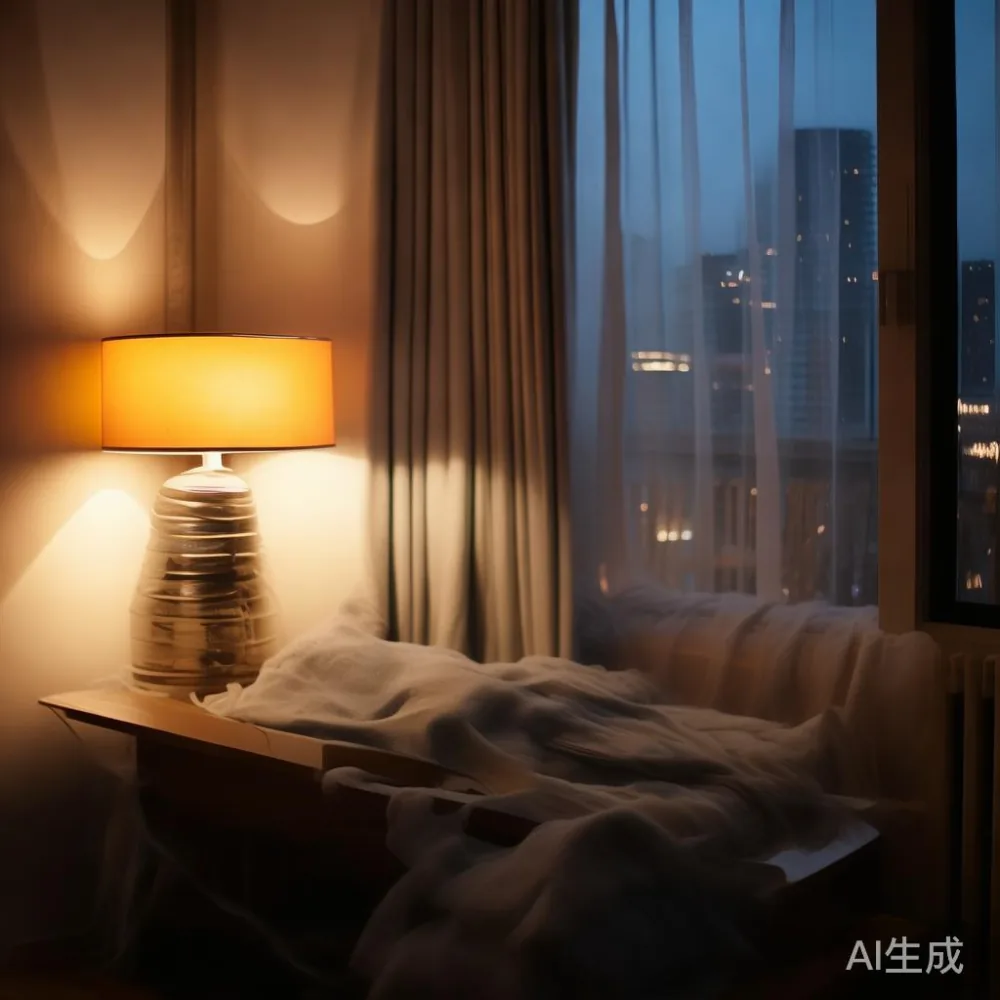
At MIDHILL we have shipped lacquered pieces to Singapore for over a decade now, and the feedback loop from customers in Bedok, Toa Payoh and Punggol has shaped what we tell buyers in the showroom and what we put in the care leaflet inside every crate. The same rules apply whether you own a sofa-bed, a dining table, a wardrobe, a nightstand or a marble-topped coffee table — but this guide focuses on the lacquered sofa-bed, since it is the piece most people put closest to a window and most likely to host a tray of drinks during a weekend gathering.
Why does Singapore's tropical climate attack lacquered furniture so aggressively?
Lacquer is in effect a sealed shell — usually nitrocellulose, acid-catalysed, or a modern UV-cured polyurethane — laid in five to ten coats and polished to a mirror finish. It looks wonderful against a French light luxury interior, and it sits beautifully next to an American light luxury palette of warm greys and brushed brass. The problem is that the seal is not a force field. It is permeable to water vapour at the molecular level over months of exposure, and it expands and contracts at a different rate than the solid wood substrate beneath it. In Tampines, your morning humidity can sit at 88% at 7am and drop to 62% by 4pm when the air-con has been running. That swing of 26 percentage points in nine hours is what causes micro-cracks, dull patches, and the white rings my friend saw on her sofa-bed arm.
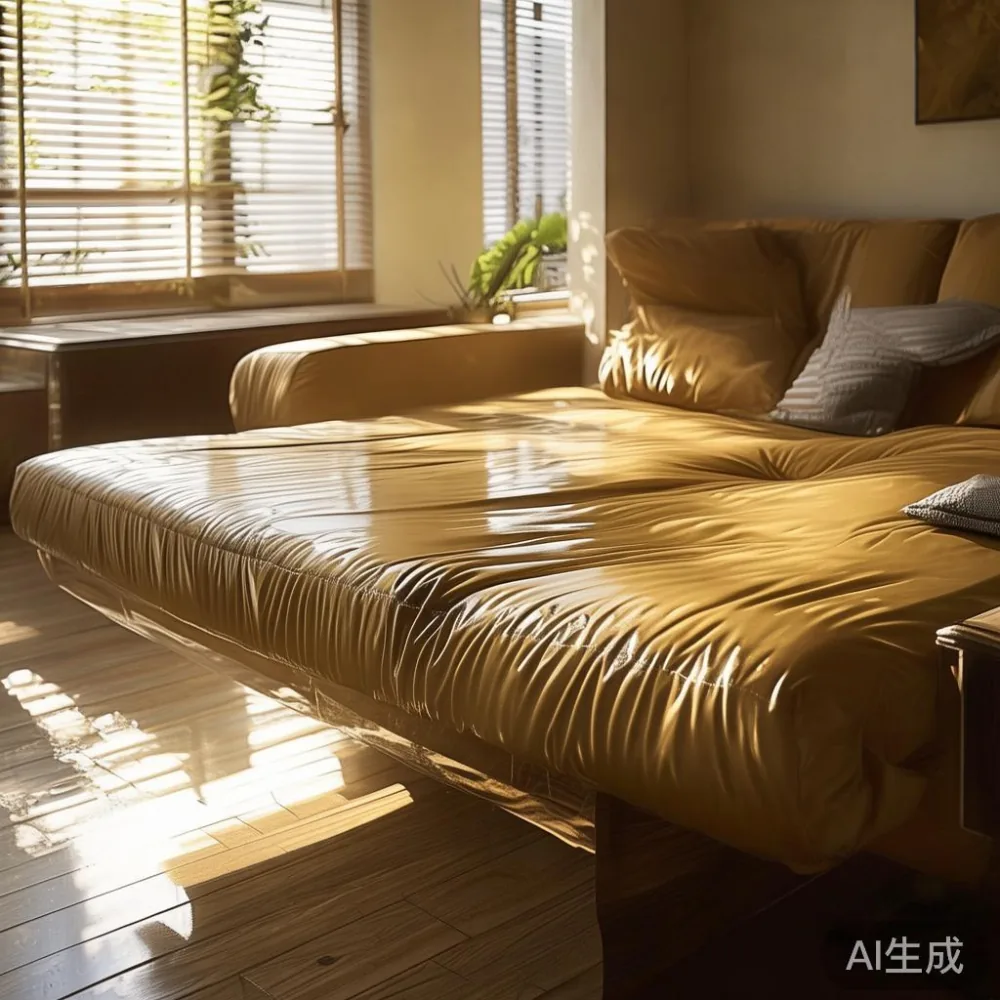
The four local enemies, in order of damage, are: direct UV through east-facing windows, sustained relative humidity above 80%, salt-laden air from balconies facing the Straits (especially in Sentosa Cove and marine Parade condos), and the thermal shock of a cold glass on a hot surface. A lacquered solid wood sofa-bed in a Punggol HDB living room that catches the afternoon sun will yellow visibly within eight to twelve months if left unprotected. The same piece in a Bedok north-facing flat, drawn curtains, dehumidifier set to 55%, will look new at year five.
How do I choose a dressing table for a small space?
Pick a dressing table under 80 cm wide with at least two soft-close drawers, a built-in mirror that folds flat to 8 cm, and legs that lift the body at least 15 cm off the floor — this lets you slide a stool underneath and frees visual space in a 9 sqm master bedroom typical of a four-room HDB in Tampines or Bedok. The same logic that makes a compact dressing table work in a small Singapore bedroom applies to your lacquered sofa-bed: depth under 95 cm, raised legs, and a finish that does not fight the wall colour. A solid wood frame in walnut or white oak takes a lacquer coat in 0.3 mm thickness and still reads as warm rather than glossy-heavy, which is what post-modern light luxury interiors aim for — restraint, not shine.
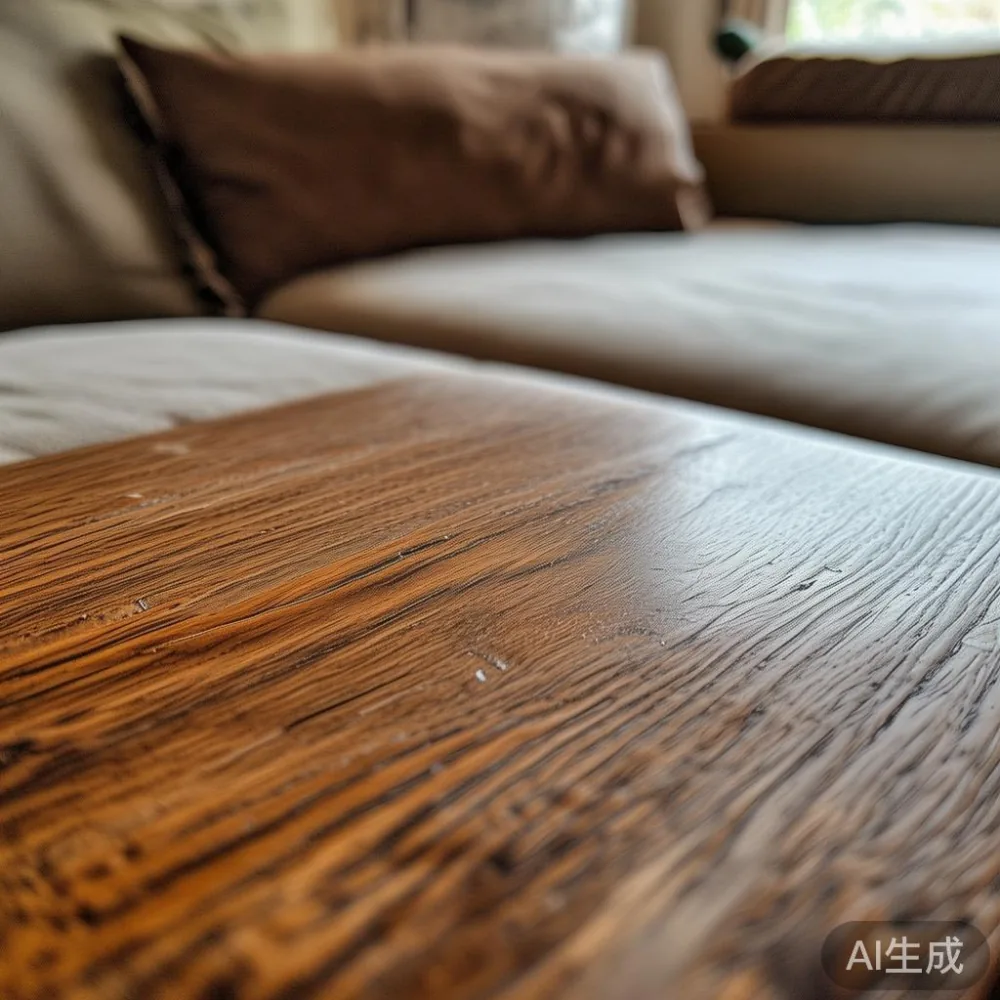
If your bedroom doubles as a study (a common layout in newer Punggol and Sengkang BTOs), choose a dressing table that can also hold a 14-inch laptop and a small ring light. The internal drawer depth should be at least 12 cm to take a standard palette, and the back panel should have a cable cut-out 3 cm wide so you can run a phone charger without snaking a cord across the lacquer.
What is the actual daily care routine for a lacquered sofa-bed in an HDB flat?
Daily: a 30-second wipe with a dry microfiber cloth (the 40 cm × 40 cm kind from any Sheng Siong for S$3.50) over the armrests, headrest panels and the fold-out tray section. Anything longer than that is wasted effort. The lacquer is collecting dust, not stains — the dust is what scratches when you slide a cushion across it.
Weekly: damp-wipe with a well-wrung cloth — almost dry, never dripping. Use only pH-neutral soap (one drop of Dr. Bronner's in 500 ml of water, or the dedicated wood soap we ship with every MIDHILL sofa-bed). Never use Mr. Clean, Cif, or any cream cleanser that contains silica. Silica is 7 on the Mohs scale and lacquer is 2 to 3. You are physically sanding the finish every time you scrub with it.
Monthly: open the sofa-bed mechanism fully (yes, even if you slept on it last night) and vacuum the slats and the under-frame with a brush attachment. Singapore's humidity drops fine dust into every gap, and that dust turns into paste against the wood slats when you sit down.
Quarterly: buff with a paste wax designed for lacquer — Howard Feed-N-Wax or a beeswax blend. Apply with a cloth, wait ten minutes, buff off. A 312 g tin costs around S$22 at HipVan's physical store and lasts four applications on a three-seater. Do not use silicone polishes like Pledge; they build up a hazy film within three coats that is very difficult to remove.
How should I position my sofa-bed relative to the window, air-con, and corridor wall?
Position the sofa-bed at least 1.2 m away from any window that receives direct sun between 11am and 4pm. In a typical Tampines four-room HDB, the living room window is about 2.4 m wide and the sofa-bed is usually 2.0 m long, which means if you push the sofa-bed flush to the opposite wall, the centre of the cushion will sit 2.6 m from the glass — safe. If you push it under the window, the headrest will catch the 2pm sun in March and September (the equinoxes) and fade in six months.
Keep the sofa-bed at least 30 cm from the air-con louver. Cold air blown directly onto lacquer for eight hours a night cools the surface to around 18°C while the back of the frame stays at 26°C — that 8°C differential across a 4 cm thickness is enough to micro-crack the finish over a year. If your only option is to put the sofa-bed in the path of the air-con, angle the louver upward by 15° and use a deflector (a S$12 plastic clip-on from Taobao).
Leave 10 cm of breathing space between the back of the sofa-bed and the corridor wall. HDB corridor walls are usually 10 cm hollow concrete and they sweat during the wet season (November to February). That moisture migrates into the back panel of your sofa-bed, which is the part nobody sees and nobody wipes. Lift the back cushion every two weeks and run a dry cloth along the rear rail.
Can I use a lacquered sofa-bed as an everyday bed in a 4-room HDB, and does the folding mechanism damage the finish?
Yes, but treat the mechanism the way you would treat a bicycle chain. The hinges on a MIDHILL sofa-bed are rated for 12,000 open-and-close cycles, which is roughly 16 years of nightly use at two cycles per day. Every six months, put three drops of sewing-machine oil (S$6 for a 50 ml bottle at Spotlight) on each pivot — there are usually four pivots on a three-seater — and open and close the bed ten times to work the oil in. Wipe off the excess. The lacquer panels around the hinges do not flex; they are rigid MDF cores wrapped in solid wood veneer and sealed with five coats of polyurethane. The flex happens at the steel bar underneath, so the lacquered surface you see never actually bends.
The one thing that does cause wear is the pull-handle. If your sofa-bed has a metal or leather strap handle, check the stitch or the rivet every quarter. A loose handle makes people grab the lacquer edge above it, and ten thousand grabs leave ten thousand micro-scuffs. We replace handles under our 10-year structural warranty as long as the original receipt is in the customer's name, but it is easier to tighten four screws than to file a claim.
What about the marble table and nightstand — do they need the same care?
Different rules. The marble side table or coffee table that often sits next to a lacquered sofa-bed in a post-modern light luxury interior needs a separate routine. Marble is calcium carbonate, hardness 3 on the Mohs scale, and it etches on contact with anything below pH 5 — that includes lime juice, red wine, vinegar, and most of the condiments in a Singapore kitchen. Wipe marble with a damp cloth only, never soap (soap leaves a film that yellows), and re-seal it with a penetrating sealer like Tenax Proseal every twelve months. A 1-litre tin is S$45 and covers a 60 cm round table six times.
Nightstands in lacquered solid wood should follow the sofa-bed routine but get a heavier weekly buff because people put mugs, phones, and hand cream on them — all three of which leave residues that cloud lacquer within weeks. A coaster set of six in travertine or walnut (S$38 to S$65 at Moods of Modern Light Luxury Sectional Sofa Saudi Arabia showroom-style retailers, or S$25 from IKEA) will pay for itself in refinishing fees by year three.
What should I do if I spill, scratch, or see the first signs of cloudiness?
Water rings on lacquer (the classic white fog): place a dry cotton tea towel over the ring and press with a warm iron (medium heat, no steam) for eight seconds. The heat re-amalgamates the wax and lacquer surface. Lift, check, repeat once if needed. This works on rings up to 6 cm wide. Beyond that, call us.
Heat haze (a laptop left on the arm, a hot bowl of laksa placed on the tray): the surface is permanently damaged at the molecular level. A professional can buff it out with 2000-grit paper and re-polish, but in a Singapore context the cheapest route is to claim under warranty if the piece is under five years old, or to replace the affected panel. We have replaced single panels on a seven-year-old MIDHILL sofa-bed in a Marine Parade condo for a parts-and-labour fee of S$180, which is less than the cost of a new side table.
Scratches under 0.5 mm: rub a walnut kernel over the scratch, then buff. The natural oils darken exposed wood and mask the line. For deeper scratches, a touch-up pen matched to your finish (we ship six standard colours, S$12 each) fills and seals.
Yellowing: this is UV-driven and irreversible without sanding. Prevention is the only cure — 3M window film (S$38 per m² installed) cuts 99% of UV and is the single most cost-effective upgrade for any HDB flat with lacquered furniture. It also drops your air-con bill by 8 to 12%, which over ten years is more than the cost of the sofa-bed itself.
Are there any HDB-specific logistics issues I should know before my sofa-bed arrives?
Yes. Measure your lift door (standard HDB lift doors are 80 cm wide, but newer lifts in Punggol and Sengkang are 90 cm) and your corridor turning radius (usually 1.2 m at the stairwell). A three-seater sofa-bed in a box is typically 215 cm × 95 cm × 65 cm and weighs 78 kg. If your corridor has a 90° turn with a handrail on the inside corner, the box will not pivot — you need 1.5 m of clear arc. We offer a free site-survey for any Singapore address where the order is over S$1,500, and our delivery team has measurements for every block in Tampines, Bedok, Punggol, Toa Payoh, Woodlands and Jurong on file from the last ten years of shipments.
Free shipping kicks in at S$350, GST-inclusive. Below that threshold, delivery within mainland Singapore is a flat S$48. For Sentosa, Pulau Ubin and certain private condos with security-gate restrictions, we add a S$35 logistics fee for the extra coordination time with the management office.
Returns are accepted within 14 days of delivery for pieces that have not been assembled or used. A sofa-bed that has been opened and the mechanism cycled even once is considered used and falls outside the return window, though it is fully covered by the 10-year structural warranty. We also offer lifetime refinishing — send the piece back to our Foshan workshop, pay only the freight (around S$280 each way for a three-seater by sea), and we strip, re-lacquer in your original colour code, and return it looking new. Customers in Singapore typically book this service at year seven or eight, when the lacquer has dulled but the solid wood frame is still perfect — which is, frankly, the point of buying solid wood in the first place.
Final notes on long-term ownership and resale value
A well-cared-for lacquered solid wood sofa-bed holds 55 to 65% of its retail value after five years, based on the second-hand data we track on Carousell and through our own trade-in programme. The pieces that hold value best are the ones in white oak with a 10° sheen (satin rather than gloss), in 2.0 m to 2.2 m lengths, in neutral fabrics. Glossy black and high-gloss white pieces lose value faster because every micro-scratch is visible, and Singapore buyers shopping second-hand want pieces that look new from 1.5 m away, not from 30 cm.
If you plan to keep the sofa-bed for more than seven years, ask us at the point of order about upgrading to our marine-grade lacquer. It adds S$420 to the price of a three-seater but it doubles the UV resistance and adds a fungicide to the under-coats, which matters in ground-floor HDB flats in Woodlands and certain pockets of Jurong where mould counts are higher. For most Singapore homes on the 7th to 15th floor, the standard finish is more than enough, provided you keep the routine we have laid out here — daily dry-wipe, weekly damp-wipe, quarterly wax, and a roll of 3M film on the window before the sofa-bed is even delivered.