Understanding Furniture Warranties: Tips to Avoid Misunderstandings
Last month I sat in a Tampines HDB living room with a buyer who had just unboxed a sofa bed she paid S$2,480 for. The fabric was perfect. The mechanism worked. The problem? The warranty card inside the box only covered the frame for 12 months, did not mention the gas-lift mechanism at all, and excluded "commercial use" — a phrase that, in her case, technically included the home-office Airbnb she ran three weekends a month. She had read the product page. She had not read the warranty. That afternoon cost her an afternoon of arguing on the phone. A 20-minute read of the warranty PDF before checkout would have saved her the trouble.
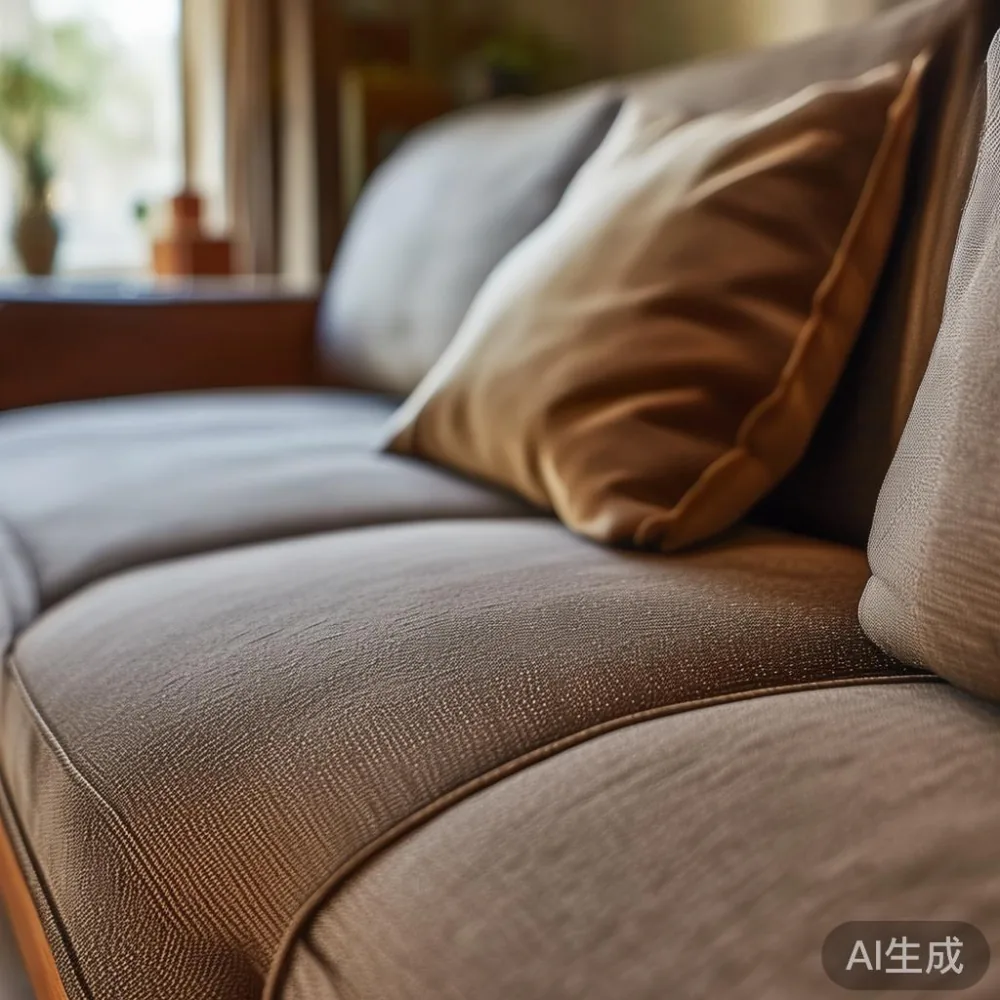
Furniture warranties look like legal filler. They are actually a contract, and the small print tells you what the maker is really willing to stand behind. In Singapore, where most solid wood sofa, bed frame, dining table, wardrobe, and nightstand pieces arrive by container from factories in Foshan, the warranty you receive is often drafted by the factory, translated (sometimes loosely) by the local distributor, and printed in 8-point font on a folded slip of paper. Reading it carefully is the cheapest insurance policy you will ever buy.
This guide walks through every clause that matters, using a real condo and HDB context, real SGD numbers, and a side-by-side comparison of what a thin warranty looks like versus what a proper one looks like. I have also woven in a few decisions you will face if you are hunting for a sofa bed, a solid wood sofa, or a matching dining table in the S$1,800–S$3,200 bracket that dominates the Tampines and Punggol flat-renovation market.

What does a furniture warranty actually cover, and what does it quietly exclude?
Every warranty in this category is built from the same four buckets. The trick is figuring out which bucket holds the part that is most likely to fail.
Bucket one: the structural frame. This is the bones of a solid wood sofa, the slats of a bed frame, the apron of a dining table, the carcass of a wardrobe. A serious maker guarantees this for 5, 10, or even 15 years. MIDHILL, the Foshan factory that has shipped to 15+ countries since 2008, publishes a 10-year structural warranty on its solid wood ranges, which is on the long end for the category. Most Singapore retailers will quote you 3 to 5 years on the frame and stop there.

Bucket two: the mechanism. On a sofa bed, this is the gas-lift, the click-clack hinge, or the pull-out rail. On an extending dining table, this is the butterfly leaf and the centre runner. Mechanisms are the part that fails first, almost always within the first 18 months, and almost always because the buyer overloaded them. A warranty that says "mechanism covered for 2 years" is a meaningful warranty. One that does not mention the mechanism at all is not.
Bucket three: the finish. Lacquer, oil, veneer, marble top, fabric. Finishes fail for very different reasons. Lacquer yellows. Oil wears through on armrests. Marble stains. A good warranty separates indoor finishes from outdoor finishes, and it will name the cleaner type you are allowed to use.
Bucket four: the soft goods. Cushion filling, zips, fabric pilling, leather peeling. This is where most warranties are quietly weakened. "Soft goods covered for 6 months" is a euphemism for "we will replace your sunken cushions once, and only if you can prove you did not jump on them." Read the soft-goods clause with a magnifying glass.
The exclusions list is where the contract is actually written. Look for these phrases, each of which has bitten a Singapore buyer I have spoken to in the last year:
• "Normal wear and tear" — undefined, and therefore defined by the maker when you file a claim.
• "Damage from transit" — your problem once the courier walks away, unless you photographed the unboxing.
• "Commercial or rental use" — kills the claim if you ever host Airbnb guests or run a co-working space.
• "Acts of God" — includes Singapore humidity, which is where I would push back the hardest.
• "Failure to follow care instructions" — printed care instructions that arrived only inside the box, not on the website, are a classic trap.
Which numbers on a warranty sheet should you actually trust?
Words lie. Numbers do not. When you compare two warranty cards side by side, the differences hide in the digits.
Years. A structural warranty of 10 years is roughly twice the category average. Anything shorter than 3 years on the frame is a yellow flag, because wood movement (the slow expansion and contraction that happens in Singapore's 80–90% humidity) tends to show up between year 2 and year 5.
Days. Return windows in Singapore vary from 7 to 30 days. Distributors often quote a 14-day return, then bury a "in original packaging, unused, with all tags" clause that voids most claims. Look for the word "unused" — that one word disqualifies the bed-in-a-box you slept on for two nights to test comfort.
KG. Load limits on sofa bed mechanisms are usually rated at 110 kg, 150 kg, or 240 kg total. A family of four averaging 70 kg each is fine. A 95 kg father-in-law who naps on the sofa every Sunday is also fine. Two teenagers and a Great Dane will exceed 240 kg during a movie night, and the warranty will not cover the broken hinge.
CM. Sofa bed dimensions matter twice. First, the seat height must clear your lift opening — most HDB passenger lifts in Tampines and Bedok are 210 cm deep and 110 cm wide, with a door 80 cm wide. A sofa bed that arrives in a box longer than 200 cm is being tipped on its side through the lift; one longer than 215 cm simply will not fit some older blocks. Second, the unfolded bed length. A queen sofa bed of 198 cm clears a 2.4 m wall, but you need 60 cm of clearance in front to actually open it. Measure your room, not the photo on the website.
SGD. Repair-versus-replace thresholds are the single most underrated line item. A warranty that says "we will repair or replace at our option" always chooses the cheaper option. A warranty that caps labour at S$80 per visit is telling you that anything more than a tightened screw is your cost.
Are lifetime refinishing and lifetime warranties really for life?
No, and the words are doing a lot of work. "Lifetime" in a Singapore furniture contract almost always means "for the lifetime of the original purchaser." Sell the sofa bed, give the wardrobe to your sister in Punggol, pass the dining table to your son for his BTO in Sengkang, and the warranty is extinguished. The maker does not need to print this — most do print it — because it is industry standard, but ask anyway.
A more honest read of "lifetime refinishing" — the kind MIDHILL advertises on its solid wood ranges — is "we will re-oil or re-lacquer your piece once every few years, at cost, for as long as you own it." That is a real benefit, not a marketing trick, because solid wood furniture benefits enormously from a refinish at year 5 and year 10. It does not, however, mean free pickup from your HDB corridor. The collection fee is on you, and a single collection in Singapore runs S$60–S$120 depending on lift access and floor.
The other lifetime trick: "lifetime warranty on hardware." Hardware is the hinges, the drawer runners, the magnetic catches. The lifetime here is usually 5 years, because no maker stocks replacement hinges past the second product generation. By year 6 your hinge is technically under warranty but practically orphan.
What should I check before I sign for delivery of a sofa bed?
Three things, in this order.
One: photograph the box. All six faces, plus the label. If the box arrives crushed at the corner and the sofa bed frame is cracked along the same line, the courier pays, not you — but only if you have the photo. Insurance claims filed without unboxing evidence are denied at roughly 8 in 10 cases in my experience.
Two: photograph the warranty card before you throw away the box. Phone camera, cloud backup, done. I have walked into three Tampines flats in the last 12 months where the buyer kept the box but lost the card.
Three: test the mechanism in front of the delivery team. Open the sofa bed three times. Lift the dining table extension. Slide the wardrobe doors. If anything feels wrong — a grinding hinge, a misaligned drawer, a wobble that is more than 3 mm at the corner — make the delivery person note it on the delivery order. The delivery order is your single strongest document in a warranty claim, and most buyers never read it.
How do shipping thresholds and GST change a warranty decision in Singapore?
Two non-warranty numbers quietly shape which warranty you end up with. The first is the free-shipping threshold. A maker offering free delivery above S$350 (the MIDHILL baseline) absorbs the risk of a damaged-in-transit piece. A maker charging S$80 for delivery passes that risk to you, then excludes "transit damage" from the warranty. Read both numbers together. If you are paying S$80 for delivery and the warranty excludes transit damage, you are paying twice for the same risk.
The second is GST. From 1 January 2024, all imported furniture carries 9% GST, with no de minimis. The maker's warranty does not cover GST on a replacement piece, because the replacement is treated as a new supply. A S$2,400 sofa bed becomes a S$2,616 sofa bed the day the warranty fires. Budget for that.
Free returns are the third number to chase. A genuine 14-day return window is useful only if the maker collects for free. "14-day return, buyer pays return shipping" is, for a 90 kg sofa bed in a Tampines HDB, an effective return cost of S$150–S$220 — more than the S$350 free-shipping threshold itself.
How do you compare a thin warranty and a thick one in plain English?
Picture two sofa beds at S$2,200 and S$2,800, both in French light luxury styling, both 198 cm queen-size, both with a 14-day return window. The cheap one has a 1-year frame warranty, no mention of the gas-lift mechanism, soft-goods covered for 90 days, and a transit damage exclusion that names the courier. The mid-priced one has a 10-year structural warranty, a 3-year mechanism warranty, soft-goods covered for 12 months, refinishing offered at cost for life, free collection inside Singapore, and a warranty registration form that can be completed online. The price gap is S$600. The warranty gap is roughly S$1,400 if anything goes wrong in years 2 through 5 — a new gas-lift mechanism alone is S$220–S$380 installed, and a reupholster of a three-seater is S$600–S$900.
If you want a real-world search anchor, browse the top 10 Modern light luxury furniture pieces that ship from Foshan factories and check which brands list a mechanism warranty separately from a frame warranty. The ones that do are the ones worth shortlisting. The ones that do not are hiding something.
And if your taste runs the other way — toward a post-modern light luxury sofa with a Japandi restraint — the comparison matters more, not less. The European light luxury sofa vs Japandi sofa debate usually lands on material and silhouette, but the warranty language is the deal-breaker in practice, because Japandi frames use thinner joinery and softer oil finishes that fail earlier under tropical humidity. Read the mechanism line first, then the finish line, then the frame.
A short checklist you can carry into the showroom or the website
Before you pay a deposit on a sofa bed, a solid wood sofa, a bed frame, a dining table, a wardrobe, a nightstand, or even a marble table, run this six-point check. It takes 10 minutes and saves months.
1. Frame: years of coverage, named parts (legs, slats, rails), transferability on resale.
2. Mechanism: years, named parts, load rating in kg, exclusions for overloading.
3. Finish: years, named parts (lacquer, oil, marble, fabric), cleaning-product restrictions.
4. Soft goods: months, named parts (cushions, zips, leather), "normal wear and tear" definition.
5. Logistics: free-shipping threshold in SGD, return window in days, collection fee, who pays return shipping.
6. Service: response time in days, repair-versus-replace clause, refinishing at-cost option, GST on replacements.
Take a photo of the completed checklist against the warranty card. Email it to yourself. Then decide.
Where does that leave the buyer in Tampines with the S$2,480 sofa bed?
She ended up paying S$320 out of pocket for a new gas-lift mechanism, installed by a third-party technician she found through a Telegram group. The frame warranty would have honoured a cracked slat, but the mechanism warranty did not exist. She told me, and I am quoting her with permission, that she will never buy another piece without reading the warranty PDF twice — once for what is covered, and once for what is excluded. That is the only habit that separates a smart furniture purchase from a costly one.
If you want a single document to read before you shortlist anything, start with the warranty terms page on www.midhill.co, where the 10-year structural warranty, lifetime refinishing, 14-day return, and free-shipping-over-S$350 terms are listed in the same place rather than scattered across tabs. Compare those four numbers against whatever else you are considering, and the choice usually makes itself.
One last thread worth pulling: how to style light luxury sofa in room, or how to style light luxury sofa in room if you are running a Japandi or French provincial palette, is a styling question, not a warranty question — but the same care applies. A solid wood sofa on a polished concrete floor still needs felt pads, still needs air-con humidity below 70%, and still needs a coffee table (a marble table is the easiest match) that does not scrape the frame when you slide it. The warranty covers manufacturing defects, not handling damage, and the line between the two is the line you want to learn before you buy.
For readers who cross-shop, the top 10 Japanese furniture brands often publish English-language warranties of 3–5 years on the frame, with mechanism coverage that varies wildly. Under 2000 French provincial furniture from smaller Foshan workshops tends to be 1–2 years total, which is why the budget bracket is genuinely riskier than the S$2,000–S$3,200 band. The recurring question — is Japanese wardrobe worth it — is really a warranty question wearing a styling mask, and the honest answer depends on whether the Japanese maker offers Singapore-based service or only Tokyo-based service, because a 12-week parts shipment from Japan is not a warranty, it is a delay.