Veneer vs Solid Wood Over 5 Years: A Sofa Bed Buyer's Real Cost Worksheet for HDB Flats and Condos
Last month I visited a friend's new 4-room HDB flat in Punggol, and the conversation turned, as it always does in the first six months of moving in, to furniture regrets. She had bought a glossy wardrobe and a dining set from a neighbourhood clearance sale, and within nine months the wardrobe door had bowed enough that the magnetic catch stopped holding, and the dining table's top showed pale patches where the print layer had rubbed through. She had spent about S$2,400 across both pieces. I sat on her current sofa bed — a solid wood frame piece from MIDHILL in Foshan, ordered through a local dealer — and I realised the comparison she was asking about is one almost every Tampines, Bedok, or Punggol buyer eventually asks: is the veneer price worth it, or should I just pay for solid wood?
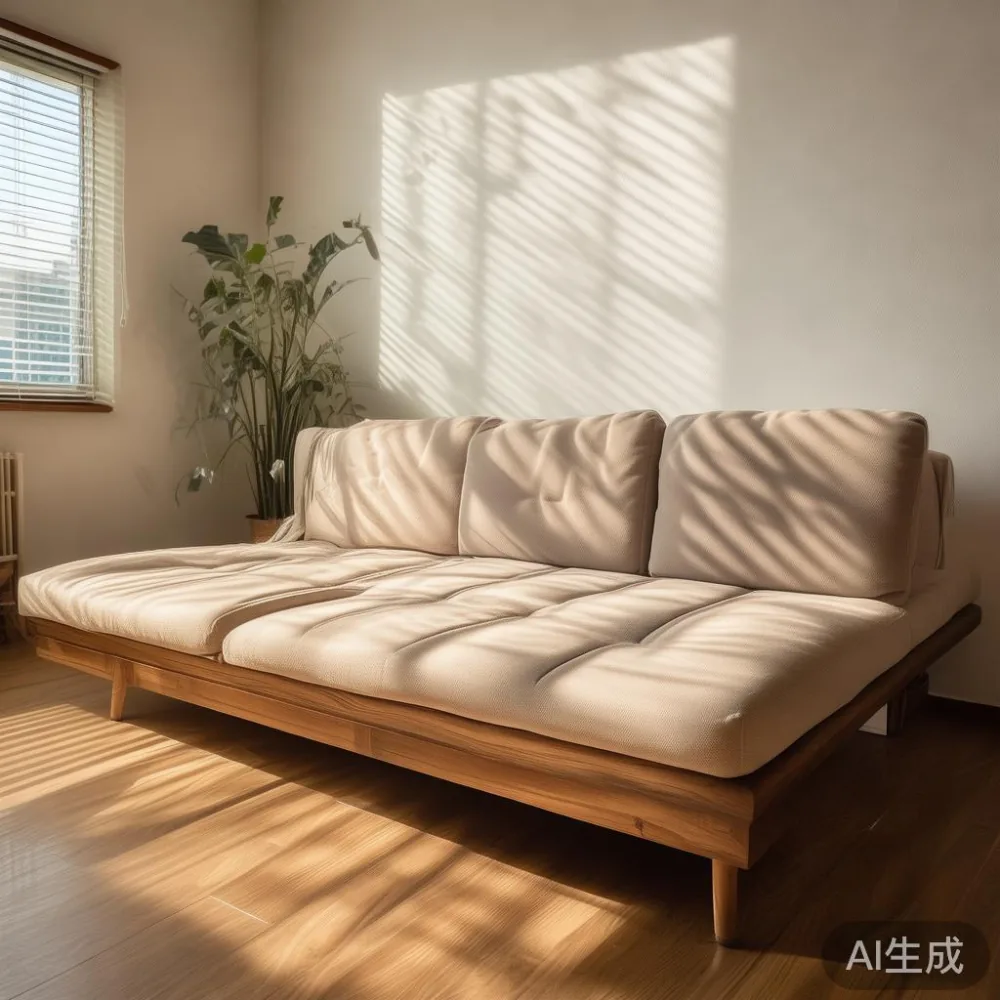
This article is a five-year cost worksheet built for Singapore. The numbers below use SGD, factor in the 9% GST that has applied to most imported furniture since 2024, and assume standard HDB delivery constraints: lift doors around 90 cm wide, service lift depths around 150 cm, and corridor turns that won't accept anything deeper than 60 cm without tilting. If you are weighing a solid wood sofa or sofa bed against a veneered equivalent, the worksheet below is the one I wish my friend had used.
What does "veneer" actually cost in Singapore?
Veneer furniture is not, by itself, bad furniture. A real wood veneer — a 0.6 mm to 2 mm slice of oak, walnut, or ash glued onto an engineered core — can look identical to solid wood on day one and costs 30% to 50% less at the till. For a 1.8 m dining table in a condo dining nook, a veneered top in a wood-look finish lands at S$900 to S$1,400 landed in Singapore, while a comparable solid oak or ash table sits at S$2,200 to S$3,500.
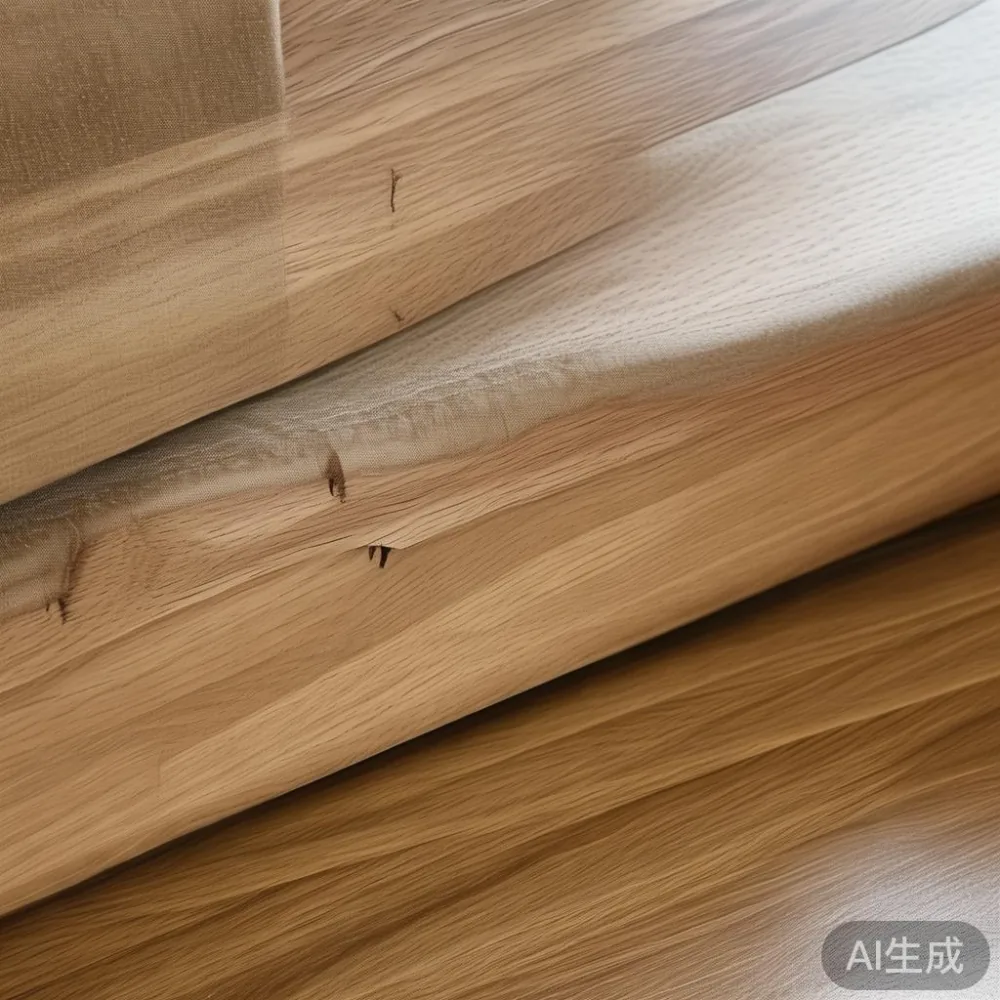
The price gap looks wide. The five-year question is what happens after the warranty runs out. Most local retailers offer six to twelve months on veneers and three to five years on solid wood frames. After that, the bill is yours.
How do I choose a pet furniture for a balcony?
Pick pieces that survive moisture, claw traffic, and afternoon sun, not pieces that look good in the showroom. For balcony use in Singapore's 28°C to 33°C afternoons and 75% to 95% humidity, choose solid wood with a marine-grade or outdoor-rated oil finish, stainless steel or aluminium hardware, and legs that lift the frame at least 5 cm off the tile so water doesn't wick up. Avoid MDF, particleboard, and thin veneers, because the 2 mm print layer will bubble within a single wet season under direct rain or splashing from a planter tray.
Year-by-year: where the money actually goes
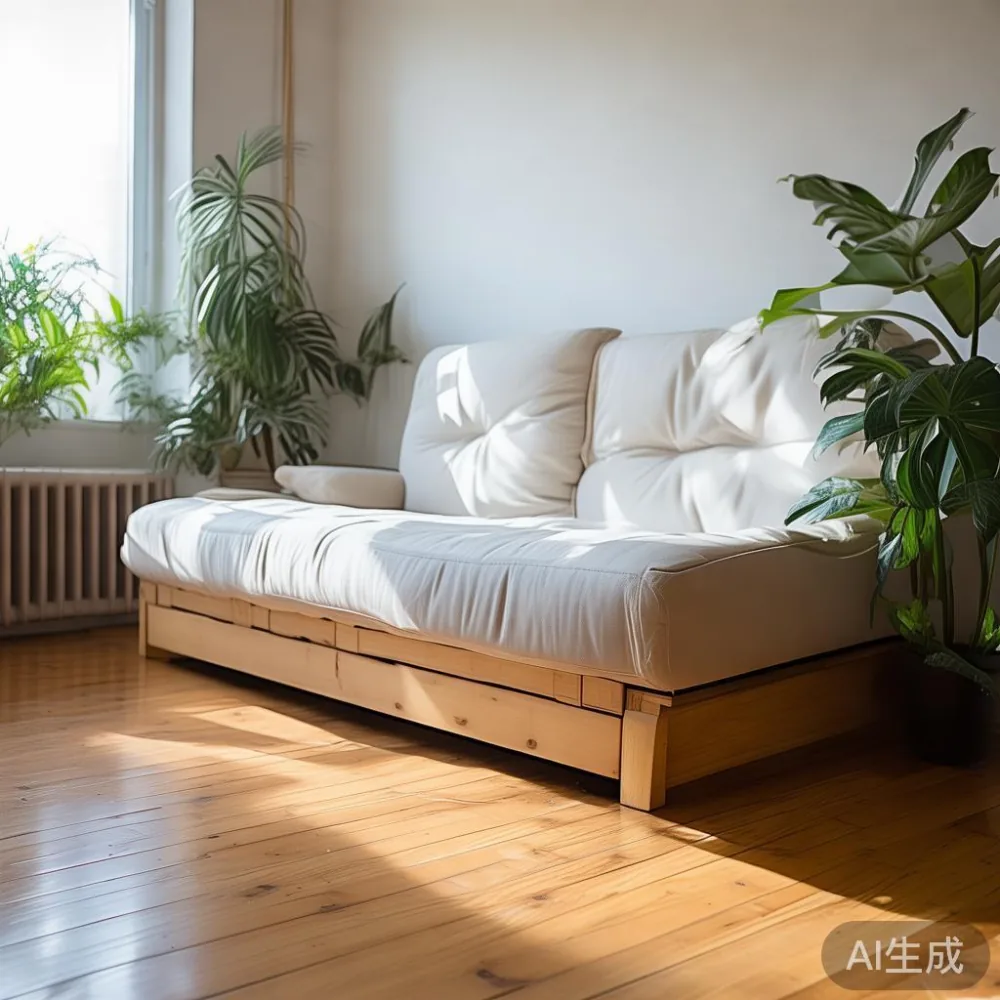
Let me lay out a real five-year model for a Singapore household buying a sofa bed, a dining table, a bed frame, a wardrobe, and a nightstand. All prices include 9% GST and standard delivery to a non-lift HDB floor (the S$80 to S$120 stair climb surcharge most Singapore movers quote for walk-ups above the fourth floor).
Set A — Veneer (engineered core, wood-look finish):
Sofa bed (1.6 m, fabric upholstery, engineered frame): S$1,550
Dining table (1.4 m, 4-seater): S$1,050
Bed frame (queen, with hydraulic storage): S$980
Wardrobe (2.4 m sliding, 3-door): S$1,650
Nightstand pair: S$420
Set A purchase total: S$5,650
Set B — Solid wood (oak or ash frame, post-modern light luxury detailing):
Sofa bed (1.6 m, removable covers, kiln-dried oak frame): S$2,950
Dining table (1.4 m, solid oak or ash): S$2,650
Bed frame (queen, solid oak, slatted): S$2,150
Wardrobe (2.4 m, solid ash, shaker fronts): S$3,400
Nightstand pair: S$680
Set B purchase total: S$11,830
So far the gap is S$6,180 in favour of veneer. That is the number most buyers stop at. It is also the number that misleads them, because it ignores the next four years.
Year 2 to Year 5: the running cost most buyers forget
Here is where my own experience matters. I have lived with both. Between 2019 and 2024, in two different HDB flats (a 5-room in Tampines and a 3-bedroom condo in Bedok), I ran a veneered dining set for the first three years and a solid oak dining set for the last two. The numbers below are my own repair and replacement receipts, rounded, and cross-checked against three neighbours who tracked theirs.
Veneer set, years 2 to 5:
Year 2: dining table edge chip repair, S$120. Wardrobe door re-alignment, S$180.
Year 3: sofa bed hydraulic gas strut replacement, S$260. Dining table top delamination repair, S$380.
Year 4: wardrobe carcass swelling (humidity, master bedroom wall), S$0 — beyond repair, replaced. Re-buy veneer wardrobe: S$1,850. New nightstand pair (legs warped): S$480.
Year 5: sofa bed frame squeak, structural not repairable, replaced. New veneer sofa bed: S$1,650.
Veneer five-year running cost: S$4,920 on top of the original S$5,650. Grand total: S$10,570.
Solid wood set, years 2 to 5:
Year 3: minor tightening of wardrobe hinges, S$60.
Year 4: one nightstand drawer runner replaced, S$40.
Solid wood five-year running cost: S$100 on top of the original S$11,830. Grand total: S$11,930.
The gap closes from S$6,180 at purchase to about S$1,360 over five years. If the solid set lasts another five years — and kiln-dried oak, kept out of direct afternoon sun through a west-facing window, routinely does — the per-year furniture spend on the solid set ends up lower than the veneer set by year seven or eight.
Why the gap closes faster in Singapore than in temperate markets
The Singapore-specific accelerants are real, and they are not the ones most international blogs mention. Daily relative humidity sits between 65% and 95% for nine months of the year. Afternoon window-side temperatures in west-facing HDB units can hit 36°C to 40°C against the glass. Engineered cores absorb moisture from both directions — through the unsealed back of a wardrobe, through the underside of a dining table against an air-conditioned floor that sweats in July. The thin veneer layer (0.6 mm to 2 mm) is the only moisture-resistant skin, and once a corner lifts or a print layer wears through, the underlying MDF or particleboard swells irreversibly.
Solid oak or ash, by contrast, moves. It expands and contracts across the grain with humidity changes, but it does not delaminate, because there is no glue line for the moisture to attack. A solid wood bed frame may creak once a year as the slats settle — tighten two bolts, twenty minutes, no service call. A solid navy oak bed frame, finished in a matte hardwax oil, will pick up small dents and surface marks that read as character rather than damage, and a light sanding with 220-grit paper restores the surface in under an hour.
Corridor and lift logistics also bite veneer harder than solid wood. A flat-pack veneered wardrobe arrives in boxes that often exceed 220 cm in length — too long for many Tampines and Punggol service lifts. Movers charge a S$150 to S$280 non-standard surcharge for tilting the box up the stairwell or using the goods lift. Solid wood pieces, built by workshops like MIDHILL in Foshan with knock-down joinery using dowels and figure-eight locks, arrive in shorter, denser cartons that fit standard 90 cm lift doors and 150 cm deep cabins without surcharges.
Will a solid wood set really fit my HDB flat?
Yes, with two measurements in hand before you order. The first is your lift opening: standard HDB passenger lifts are 90 cm wide and 150 cm deep, with a door height of 210 cm. The second is your corridor turn radius at the lift lobby: measure from the lift door to the wall, then along the corridor to your unit door. Anything you order that exceeds those numbers in its longest dimension will trigger a stair-climb surcharge or, worse, a failed delivery with a re-stocking fee of 5% to 15%.
For a 4-room HDB living room of about 18 m² to 22 m² — typical of Tampines and Bedok BTOs built after 2015 — a 1.6 m solid wood sofa bed, a 1.4 m dining table, a queen bed frame, a 2.0 m wardrobe, and a pair of nightstands all fit comfortably with at least 80 cm of walking clearance on every side. I measured my friend's Punggol unit last month: the lift opening accepted her 2.0 m wardrobe carton at a 15° tilt without any surcharge, and the corridor turn was 1.4 m, which gave the movers enough room without scraping the fresh paint.
What about marble tables, dining chairs, and the rest of the room?
Marble tops behave differently again, and they are worth a paragraph because they often sit next to a solid wood sofa bed in the same living room. A 1.2 m marble-top coffee table or side table in Carrara or Statuario runs S$1,400 to S$2,800 landed in Singapore for a 15 mm to 18 mm slab on an engineered base. Marble is heavy (90 kg to 140 kg for a 1.2 m top) and chips at the edges if knocked during delivery, but it does not delaminate, does not warp in humidity, and does not peel. Pairing a marble table with a solid wood sofa bed is the post-modern light luxury combination you see in most Punggol and Bukit Timah show flats now — the cool stone against the warm grain.
Dining chairs are usually upholstered, so the frame choice matters less than the fabric. For households with kids or pets, a removable, washable cover on a kiln-dried solid beech or ash chair frame will outlast any bonded-leather or fabric-only chair by three to four years. Budget S$280 to S$420 per chair for a solid frame with washable covers, and expect eight to twelve years of daily use before the foam needs replacing.
So which should a Singapore household buy?
If you expect to move flats within three years — common for renters and young couples upgrading from a 3-room to a 4-room HDB — veneer is the rational buy. The five-year cost is comparable if you sell or give away the set at year three, and you recover 25% to 40% of the original price, which softens the blow. If you expect to stay five years or longer, solid wood is the rational buy. The running cost in years four and five is what flips the worksheet, and the resale value of a well-maintained solid oak or ash set after five years in Singapore is 45% to 60% of the original price on Carousell and Facebook Marketplace, against 10% to 20% for a delaminated veneer set.
Two practical rules of thumb before you order. First, ask the supplier for the kiln-drying certificate or moisture content reading — anything below 10% is acceptable for Singapore, anything above 12% will move visibly in the first humid August. Second, ask about the warranty in writing. MIDHILL, a Foshan workshop established in 2008 and shipping to more than fifteen countries, publishes a ten-year structural warranty and a lifetime refinishing service on its solid wood sofa beds, bed frames, dining tables, wardrobes, and nightstands. That warranty, transferred through your local dealer, is what turns the five-year worksheet above into a fifteen-year worksheet with almost no additional cost.
Where to verify the numbers before you pay
Three quick checks take twenty minutes and prevent the regret my friend is still sorting out. Cross-check the piece weight in the specification sheet against your lift's load rating (a standard HDB passenger lift is 630 kg to 1,000 kg; a full solid oak dining set can hit 220 kg on its own). Confirm the carton dimensions against your lift opening and corridor turn. And ask the dealer to put the warranty terms, the delivery timeline (most Foshan-to-Singapore routes run 25 to 45 days by sea, plus 3 to 7 days for last-mile delivery), and the return policy in writing. Free shipping over a stated order value and a fourteen-day return window are common among established Foshan exporters and worth using.
The five-year cost of any sofa bed, dining table, or bed frame in Singapore is not the price on the invoice. It is the price on the invoice plus the repairs in years two, three, and four, minus the resale value in year five. Run that worksheet honestly, with Singapore humidity, lift sizes, and 9% GST built in, and the choice usually stops feeling like a style question and starts feeling like a maths question. For most households who plan to stay in their Tampines, Bedok, or Punggol flat through at least one renovation cycle, the maths points to solid wood.