Humidity, HDB Flats, and Solid Wood: A Singapore Owner’s Guide to Long-Lasting Sofa-Beds
I delivered a 1.8 m solid wood sofa-bed to a fourth-floor walk-up in Bedok last month. The corridor width at the lift lobby was 1.1 m, the sofa-bed carton was 2.05 m long, and my two movers spent forty minutes pivoting around a 90-degree corner before the piece finally cleared the unit door. The customer was happy. What made me think twice, though, was the hygrometer reading on her living-room wall: 82% relative humidity at 3 p.m. in a west-facing HDB flat with the afternoon sun pouring through un-tinted glass. That single reading is the reason I write about wood furniture and humidity together, because Singapore homes sit in a climate that punishes timber if you choose the wrong construction.
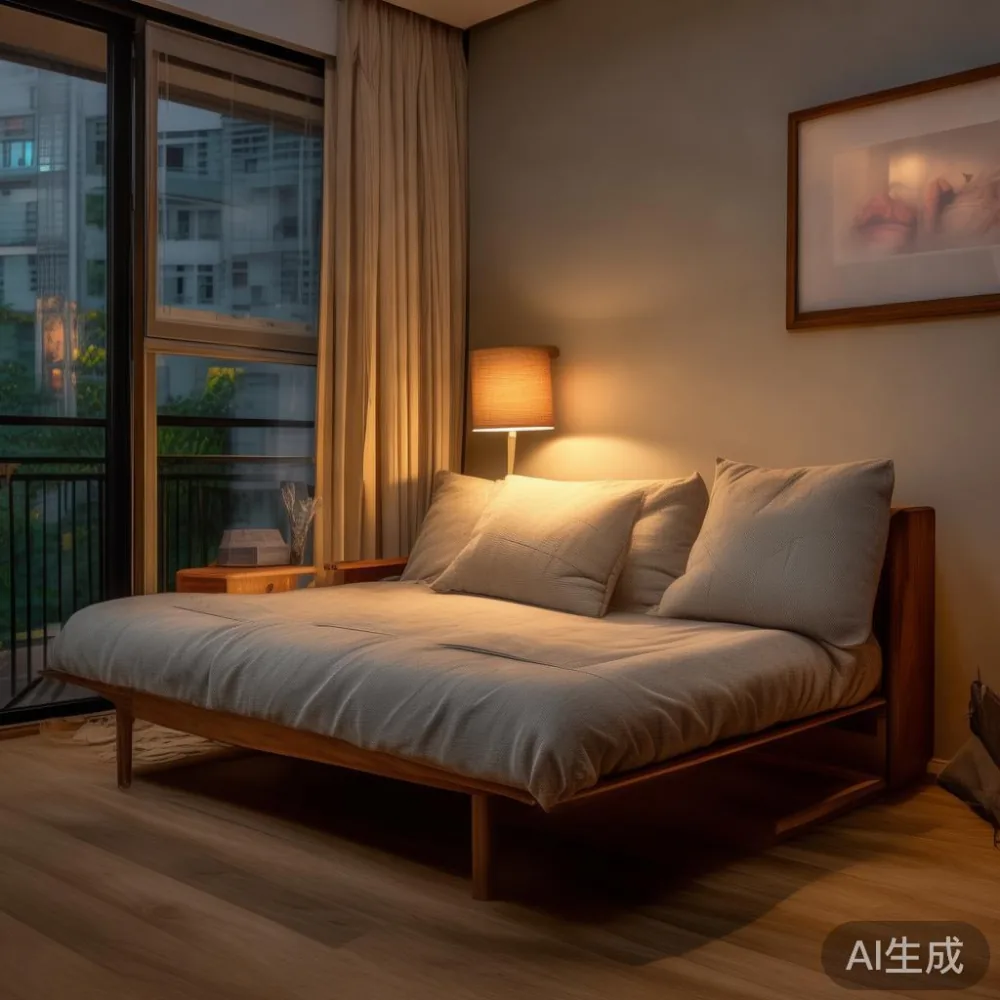
This guide is written for owners of HDB flats in Tampines, Bedok, and Punggol, condo residents in the OCR, and anyone weighing a solid wood sofa, bed frame, dining table, wardrobe, nightstand, or marble table for a tropical home. I will use Singapore dollars throughout, mention GST where it matters, and stick to the realities of local lift shafts, corridor widths, and door frames.
Why does Southeast Asian humidity matter for a solid wood sofa-bed?
Solid wood is hygroscopic. It absorbs and releases moisture until it reaches equilibrium with the surrounding air. In Singapore, outdoor relative humidity sits between 70% and 90% for most of the year, and even with the air-con running at 23°C to 25°C, indoor humidity often lingers between 60% and 75%. A solid wood sofa-bed kept in those conditions will expand roughly 2% to 3% across the grain between January and November. On a 2 m long oak armrest, that is 4 cm to 6 cm of seasonal movement. The frame does not fail. The joints, the finish, and the upholstery underneath absorb the stress, and that is where problems show up.
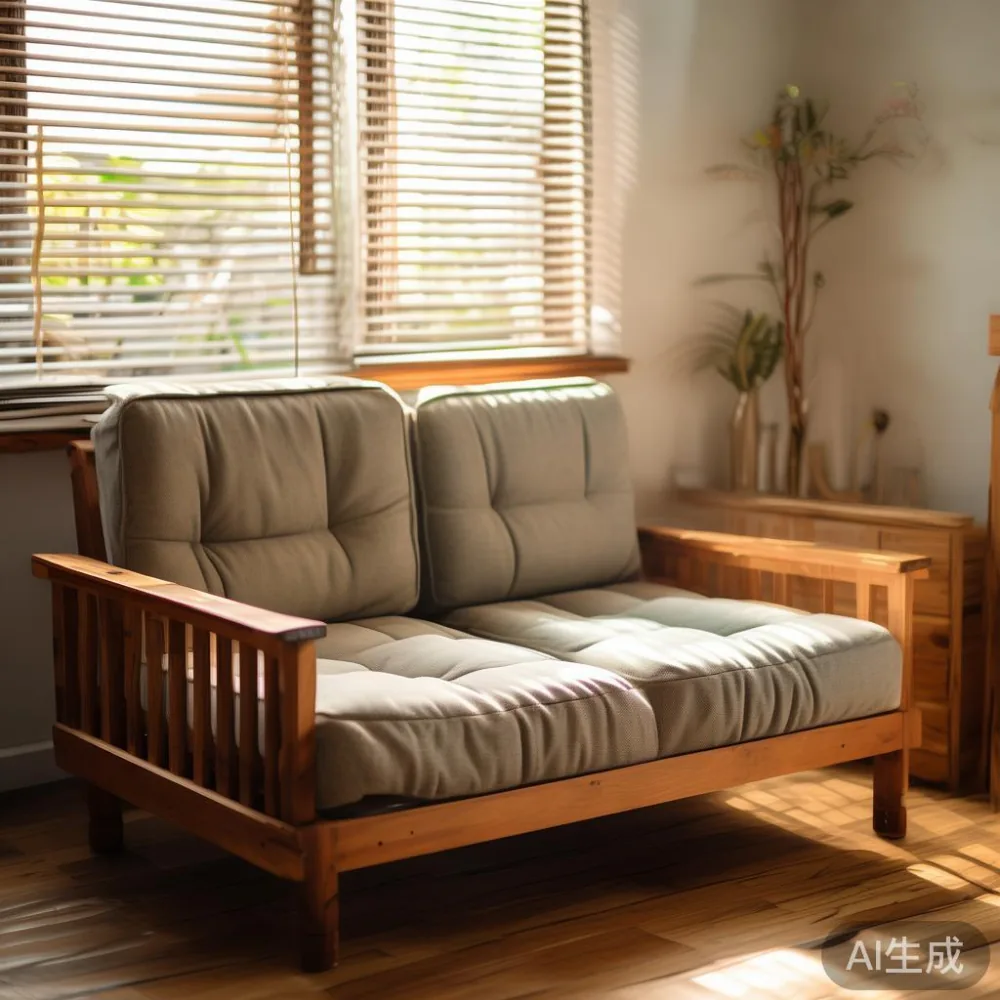
Engineered wood behaves differently. MDF, particleboard, and plywood swell irreversibly once they pass 60% humidity for long stretches. A sofa-bed built with a particleboard frame in a Tampines HDB without a dehumidifier can sag at the click-clack mechanism within eighteen months. Solid wood, by contrast, moves seasonally and recovers when humidity drops. You feel the difference when you push down on the seat: solid wood resists with a quiet, even pressure; swollen particleboard creaks and gives unevenly.
What humidity level should I keep my home office work-from-home space at?
Keep the room between 45% and 55% relative humidity and between 22°C and 26°C. A small dehumidifier rated at 8 L to 12 L per day, costing around SGD 180 to SGD 320, is enough for a standard 12 sqm HDB bedroom or study. Empty the tank daily, or run a continuous drain hose into the bathroom outlet. Pair the dehumidifier with a SGD 25 digital hygrometer so you are not guessing. I keep one on my desk and one inside the wardrobe; the reading should not differ by more than 5%.
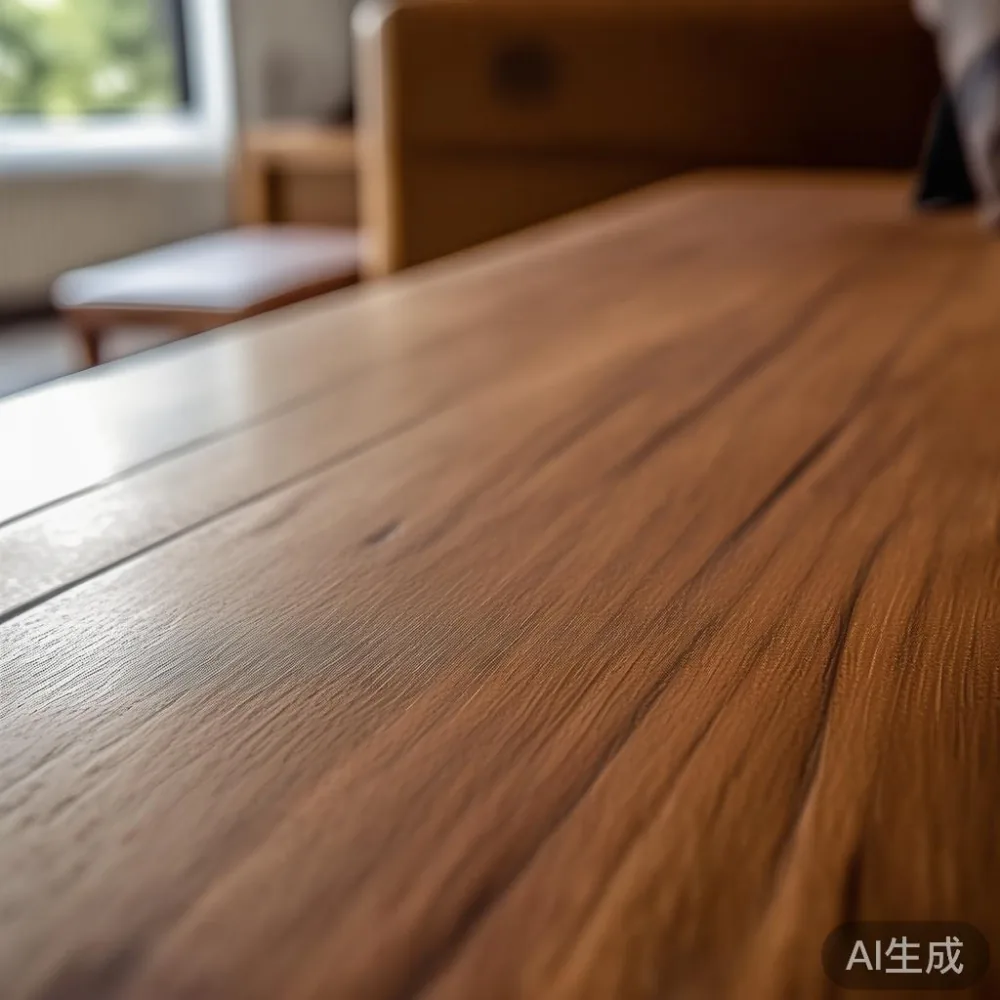
How do I choose a work from home for a home office?
Pick a compact solid wood desk between 100 cm and 120 cm wide, 50 cm to 60 cm deep, and 73 cm to 76 cm tall, with a sealed or lacquered top, a modesty panel at least 30 cm high, and drawers on metal ball-bearing slides rated for 25 kg to 30 kg. For a 3 m by 3 m spare room in a Punggol HDB, that footprint leaves 80 cm of clearance on the chair side and 60 cm behind, which is the minimum for a standard office chair without scraping the wall.
Two details matter in our climate. First, choose a desk with a kiln-dried hardwood top, ideally rubberwood, ash, or white oak, with a moisture content of 8% to 12% at delivery. Anything above 14% will cup within the first six months. Second, prefer a desk with a French light luxury profile: tapered legs, a thin 2 cm to 2.5 cm top, a soft matte finish, and brushed brass or blackened steel pulls. The thin top reads as refined, but it only stays flat if the wood is properly dried and the room is humidity-controlled. A 38 mm thick top is more forgiving if you run the air-con at 24°C without a dehumidifier.
Check the cable management before you buy. A rear grommet 6 cm in diameter, or a flip-up socket box, prevents the cable spaghetti that traps dust and moisture against the back panel. If the desk arrives with a French sintered stone missing parts, photograph the carton, the inner foam, and the part number on the manual, then email the supplier within forty-eight hours. Most makers, including our factory, ship a replacement sintered stone panel or a full sub-assembly within seven to ten working days at no charge, including GST.
Is a sofa-bed a good idea in a 4-room HDB flat, and how do I get it through the door?
Yes, if you measure before you buy. Measure the lift car internal depth and width, the corridor width at the tightest corner, the unit door frame, and any turns between the lift and the door. A standard HDB passenger lift is about 1.1 m wide and 1.4 m deep, with a door opening of roughly 0.9 m. Service lifts in newer BTOs in Punggol are larger, closer to 1.5 m by 2.0 m, but you should not assume. The sofa-bed carton should be no longer than 2.1 m and no wider than 1.0 m if you want a stress-free delivery. If the carton is longer, the piece must come flat-packed with the backrest and armrests detached, which adds thirty minutes of assembly in your living room.
For a 4-room HDB of about 92 sqm, a two-seater sofa-bed that opens to a 140 cm by 190 cm sleeping surface fits comfortably along the longer wall of the living room, with 70 cm of walkway behind a 90 cm deep coffee table. A three-seater that opens to 160 cm by 200 cm eats more floor space but gives guests a real bed. I measured a typical Tampines HDB living room at 3.2 m by 4.5 m after the kitchen wall; a 2.1 m three-seater sofa-bed leaves 1.1 m of walkway, which is workable but tight. If your unit has a rectangular dining table for six, push the sofa-bed against the window wall and float the dining table in the middle, leaving 80 cm on every side for chair pull-out.
For upholstery, performance fabric beats linen in our climate. A 100% polyester weave with a Martindale rub count above 30,000, or a treated cotton-linen blend with a water-based stain repellent, handles sweat, soya sauce, and the occasional kopi spill without staining. Real leather is gorgeous but needs a conditioner every four months in Singapore, or it dries and cracks along the seat front. If you want the light luxury look without the upkeep, a high-grade PU on the back and sides, with top-grain leather only on the seat and armrests, is a sensible compromise at around SGD 1,800 to SGD 2,400 for a two-seater.
Which solid wood species actually survive a Singapore home?
Rubberwood, white oak, ash, and teak are the practical choices. Rubberwood is plantation-grown in Malaysia and Thailand, takes finish well, and costs less than oak. A solid rubberwood bed frame in queen size runs about SGD 900 to SGD 1,400 before GST. White oak is denser, with a tighter grain, and suits a post-modern light luxury dining table where you want clean lines and a pale, even tone. Ash behaves like oak but machines more cleanly, which is why you see it on tapered sofa-bed legs. Teak is the gold standard for tropical furniture because of its natural oils, but a full teak wardrobe can cost SGD 4,500 to SGD 7,000, so most owners use teak for smaller pieces like a nightstand and pair it with a more affordable species for larger items.
Two species to avoid for any load-bearing piece in our climate are untested acacia and most pine. Cheap acacia moves unpredictably between the heartwood and sapwood, and pine dents easily. MDF and particleboard are acceptable inside a wardrobe carcass, behind a drawer back, or on a wardrobe door panel, as long as the structural frame and the drawer faces are solid wood. A hybrid build keeps the price reasonable and the warranty intact.
How should I care for a solid wood sofa-bed, dining table, and wardrobe in Singapore?
Three habits cover most situations. First, keep the piece away from direct afternoon sun through un-tinted glass; UV breaks down the lignin in wood and bleaches the finish within two years. A 3M solar film at SGD 18 per square foot, professionally installed, blocks 99% of UV and cuts heat gain by up to 50%. Second, run the air-con for at least six hours a day during the wet season from November to February, and run a dehumidifier in the wardrobe room. Third, oil or wax the wood twice a year. A 250 ml tin of hard wax oil costs SGD 35 to SGD 55 and covers a six-seat dining table with one coat.
For a dining table, use placemats under hot cookware and coasters under cold drinks. A marble table needs a sealant refresh every twelve to eighteen months; an unsealed marble surface stains from curry, soya sauce, and lemon within minutes. For a wardrobe, leave the doors open for thirty minutes after a long air-con cycle so the inside equilibrates with the room, and slip a small cedar block or a dehumidifier box into each corner. For a nightstand, avoid placing a glass of iced water directly on the surface; use a coaster, and wipe up spills within five minutes.
What should I check on the warranty before I pay?
Read the structural warranty, the finish warranty, and the shipping policy separately. A ten-year structural warranty on frames, joints, and mechanisms is the minimum I would accept on a sofa-bed costing more than SGD 1,500. Lifetime refinishing is unusual and worth a premium because sanding and re-oiling every eight to ten years will keep a solid wood piece serviceable for thirty years or more. Free shipping over a stated order value, with clear transit insurance, matters because replacing a sintered stone tabletop alone can cost SGD 400 to SGD 700.
Ask whether the warranty is honoured locally or whether you must ship the piece back to the factory. MIDHILL, a Foshan maker that has exported to more than fifteen countries since 2008, arranges in-home warranty service through local partners for Singapore deliveries, which is the practical answer for a piece you cannot easily crate and courier. Check the return window: fourteen days is standard, but the clock should start on the day of delivery, not the day of order, and the piece should be returnable for a full refund minus a reasonable restocking fee if it is unused and in its original packaging. Keep the carton for at least thirty days in case of a return.
How long does delivery take from Foshan to a Singapore HDB?
Sea freight from Guangdong to Singapore takes five to nine days depending on the port congestion at Shekou or Yantian, plus two to four days for customs clearance and GST payment. GST is 9% on the landed value, including freight and insurance, and is collected by the courier or freight forwarder on behalf of IRAS. Allow a total of fourteen to twenty-one days from the day your order leaves the Foshan warehouse to the day a two-man crew rings your doorbell in Tampines. White-glove delivery, including lift-up, assembly, and carton removal, adds SGD 80 to SGD 180 per order, depending on the floor and the number of pieces.
A short checklist before you click pay
Measure the lift, the corridor, the unit door, and the room. Confirm the species, the finish, the moisture content, and the warranty terms in writing. Photograph every face of every carton on arrival before signing the delivery note. Run the dehumidifier for forty-eight hours before you unwrap solid wood, so the piece acclimatises gradually rather than in a single afternoon. Keep a small hygrometer in the room for the first month, and check it weekly for the first year. With those habits, a solid wood sofa-bed, a matching dining table, a sturdy wardrobe, a quiet nightstand, and a marble accent table will outlast two lease cycles on your HDB flat and still look right at home in the next one.