Furniture Matching Tips for Warm Minimalist Interiors
A warm minimal interior does not need to feel sparse. It needs good proportions, tactile materials, and a disciplined palette of warm neutrals. In Singapore, that approach works especially well in HDB flats and condos in Tampines, Bedok, and Punggol, where natural light, compact lift access, and practical circulation shape the furniture plan.
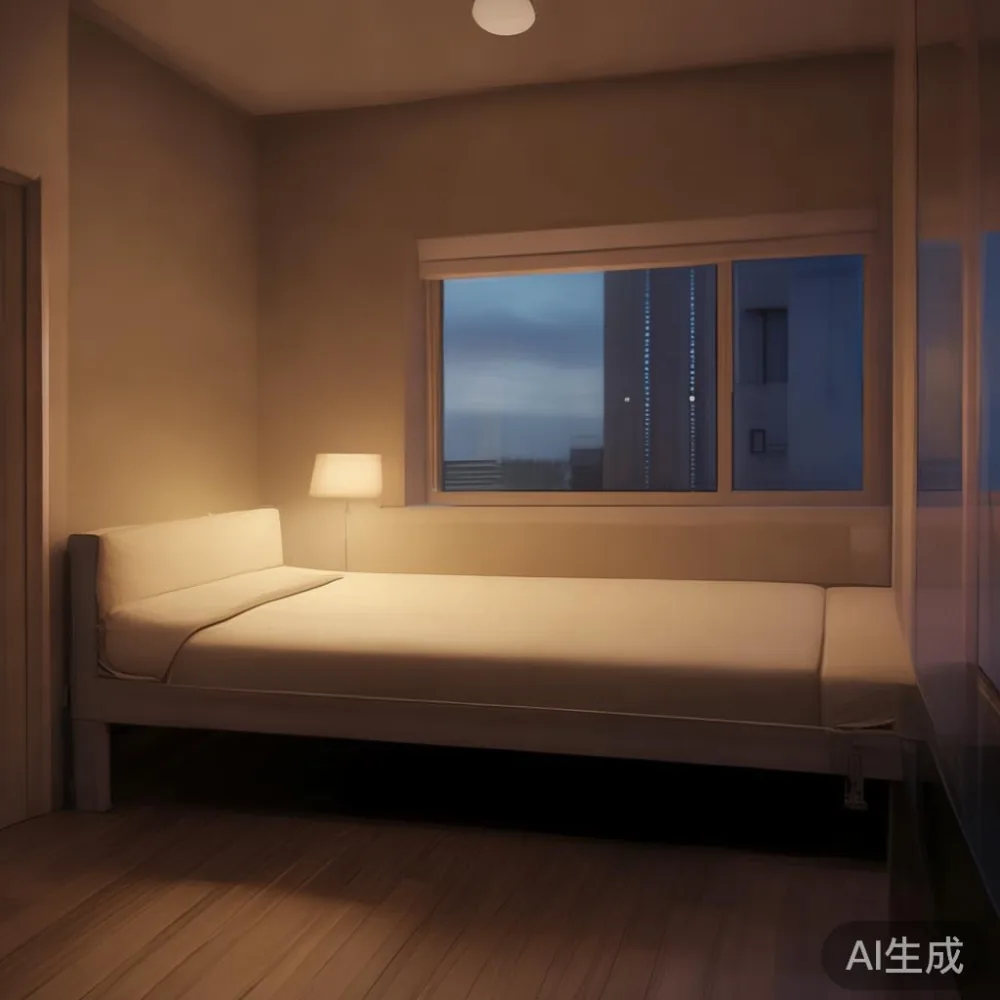
The central piece is often a solid wood sofa bed. It provides daytime seating, guest accommodation, and a visual anchor without multiplying the number of objects in the room. Pair it with a bed frame, dining table, wardrobe, nightstand, and occasional marble table, and each item should earn its place through scale, function, and material harmony.
This guide explains how to create a warm minimal home around a sofa bed while respecting common Singapore dimensions, budgets, and delivery constraints. Prices below are indicative and exclude GST unless stated otherwise.
What makes a warm minimal interior feel inviting rather than empty?
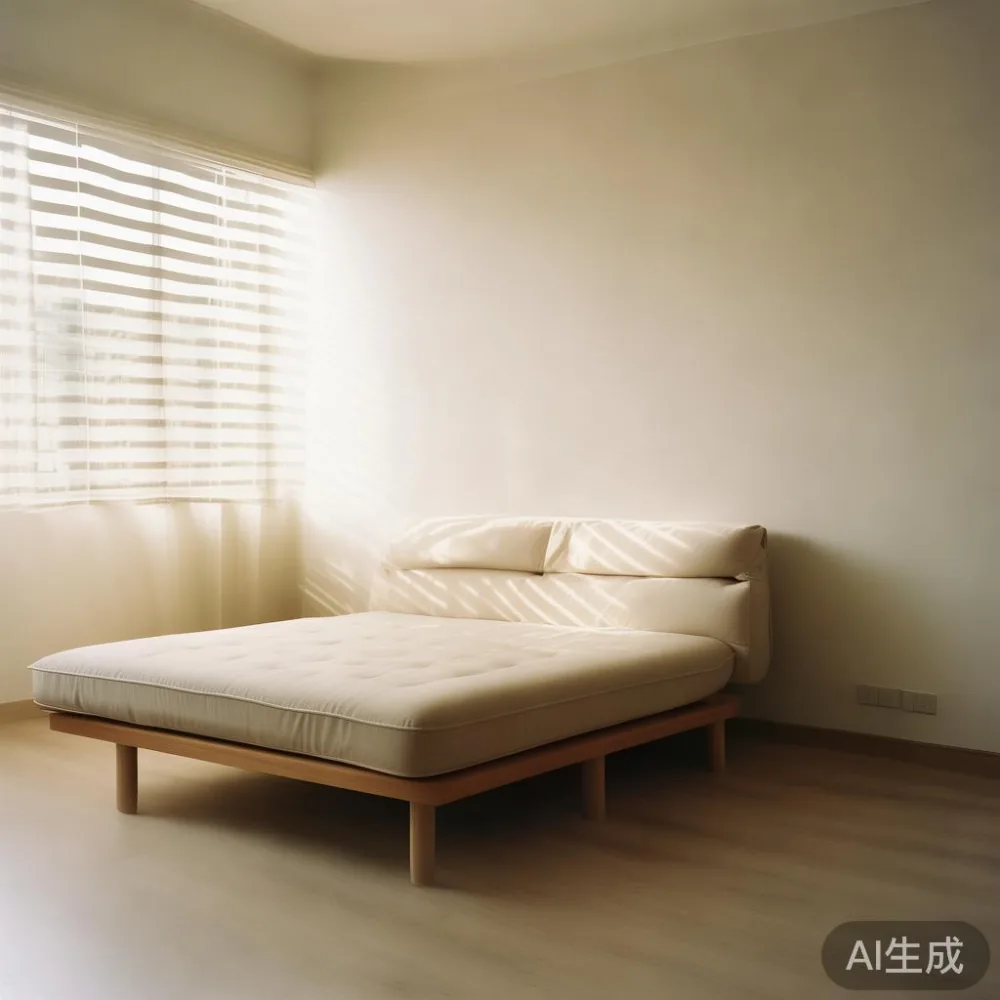
Warm minimalism is about controlled contrast. Pale walls, clean planes, and uncluttered surfaces create calm, while oak, walnut, teak, and other natural tones prevent the room from feeling clinical. A light-luxury approach adds proportion and craftsmanship rather than heavy ornament.
Begin with a palette of 3 colours: cream or warm white for walls, light to medium brown for wood, and 1 muted textile colour such as clay, taupe, sage, or charcoal. Keep large furniture visually quiet and introduce texture through upholstery, woven baskets, linen, and ceramics.
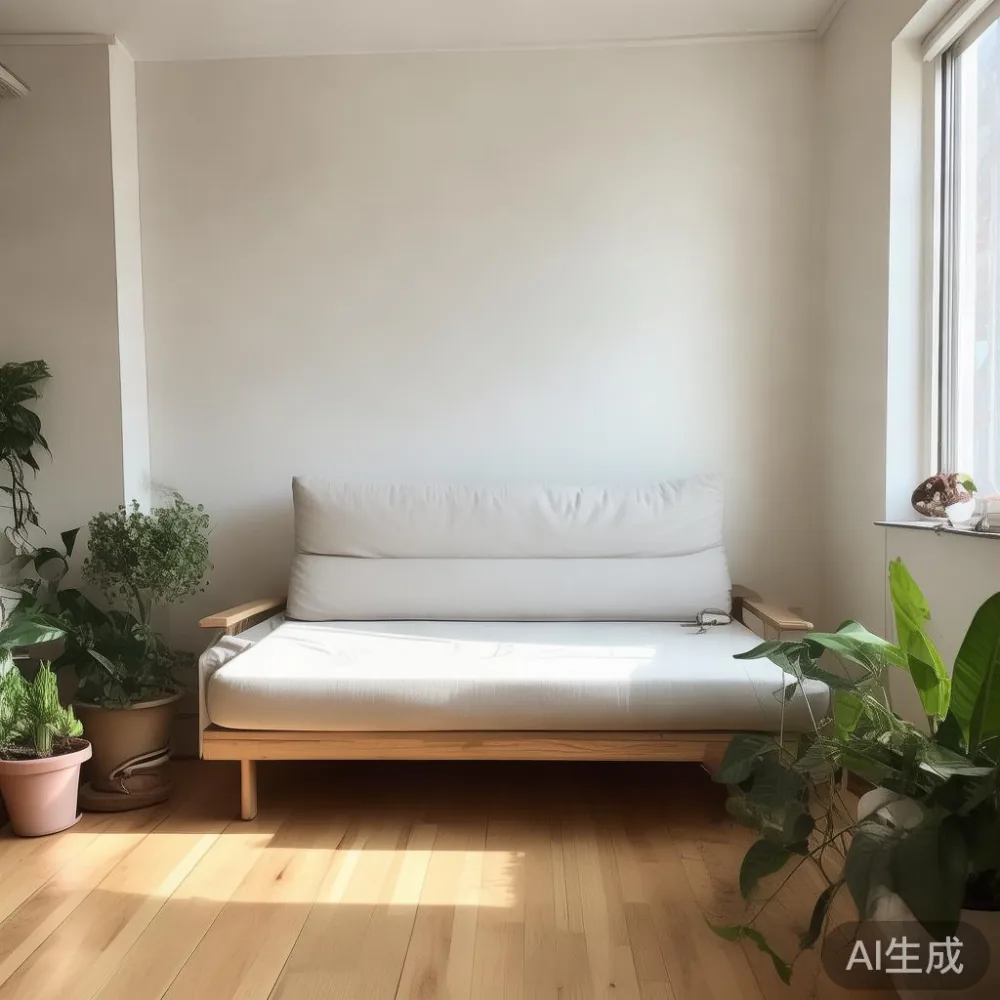
For a Singapore living room, target 8–12% of visual contrast in dark accents. This means a walnut bed frame can sit beside an oak dining table without competing, provided both pieces share a similar grain direction or finish depth. Black metal should be limited to small elements, such as a 30 cm lamp or 45 cm side table, rather than several large contrasting objects.
French light luxury is useful here because it favours curved edges, balanced spacing, and restrained materials. Post-modern light luxury can also work through simple geometric forms, although its sharper lines need warmer textiles to avoid an overly formal result. American light luxury tends toward comfort and generous proportions, which suits a family sofa bed in a larger condo living room.
Before buying, measure the room twice. Check the sofa bed's extended depth against the coffee table, television console, and balcony door. Leave at least 90 cm for a main circulation route, 75 cm beside a dining chair where space is tight, and 60 cm between a nightstand and the side of a bed frame. These figures are more dependable than visual estimates.
How do you choose a sofa bed that suits a Singapore home?
Choose the sofa bed by function first. A frequently used family room may need a 3-seater that converts into a guest bed, while a studio apartment may benefit from a smaller 2-seater with a higher seat and a slimmer stored extension. Do not select the folded width solely from the living-room photograph; check the sleeping surface too.
Useful dimensions for local planning include:
- Living-room sofa bed: 180–220 cm wide, 85–100 cm deep, and 80–95 cm high when folded.
- Guest sleeping width: ideally 135–140 cm for 1 person, 180–200 cm for 2 people who can share comfortably.
- Extension clearance: reserve another 190–205 cm from the front edge when the bed opens.
- Seat comfort: 42–48 cm high and 50–58 cm deep for adults.
- Package weight: prepare for 75–120 kg, depending on the mechanism and solid wood construction.
Check the route from the lift to the unit before ordering. Many HDB lift doors are about 90 cm wide, and standard passenger lifts commonly offer an internal depth of 110–140 cm. Condo service lifts may be larger, but the delivery team still needs confirmation of door width, turning radius, and the number of corners. A 220 cm sofa bed may need to enter diagonally, while a rigid wardrobe should be measured flat or upright against the lift's usable opening.
Confirm whether delivery includes carrying through corridors and placement in the room. Charges for extra stairs or a difficult unloading point are common, but the quotation should state them clearly. At MIDHILL, furniture can be shipped internationally to more than 15 countries, with a 10-year structural warranty and lifetime refinishing service; local buyers should still verify the current Singapore delivery terms, delivery days, and GST-inclusive pricing before payment.
Free shipping over US$350 applies to the stated international offer, but it is easier to judge the local landed cost in SGD. A practical Singapore sofa bed budget might range from SGD 1,900 to SGD 4,800 before GST, depending on upholstery, wood species, mechanism, and dimensions. Add roughly 5–10% for room placement or difficult access if the quotation does not include it.
For material longevity, look for kiln-dried solid wood frames, corner bracing, and replaceable cushion covers. A well-designed mechanism should open and close smoothly through at least 5,000 test cycles. Ask for that figure if the retailer has it, and check that the warranty covers frame failure and structural defects rather than accidental damage.
How should wood tones work with warm minimal walls?
Warm minimal walls usually fall into cream, beige, soft greige, pale taupe, or very light clay. Against these colours, medium oak is dependable, walnut adds depth, and teak creates a richer tropical note. The key is to avoid matching every wooden item in exactly the same shade. Variation looks intentional when one dominant wood establishes continuity.
Try a hierarchy: repeat the sofa bed's main timber in the bed frame or dining table, then introduce a darker tone in a nightstand or slim console. For a calm bedroom, a light oak bed frame with a walnut nightstand can work if both finishes remain matte and the hardware is modest.
Marble is often used as a small accent rather than an entire room centrepiece. A marble table with a 90–120 cm diameter and a 4–6 cm top can balance a rounded sofa bed. Its veining should remain soft, and its base should use wood or a warm metal finish. Cool white marble against yellow-toned walls can feel disconnected, so compare samples under Singapore daylight and household lighting.
The dining table is another large visual anchor. A 140–160 cm rectangular table suits a compact dining zone, while a 90–110 cm round table makes circulation easier near kitchens and balconies. Allow 90 cm from the table edge to a wall for chair movement and about 120 cm where people pass behind seated diners. Do not crowd the dining table beside the sofa bed; use a console or room division if the zones touch.
Open shelving is useful only when each shelf has a purpose. Use 2 shelves for ceramics, 1 for books, and 1 for a plant, with objects grouped in odd numbers of 3 or 5. Avoid filling every surface, because warmth here comes from texture and spacing, not display density.
For a quick physical test, place 3 finish samples against the wall: one pale oak, one medium walnut, and one warmer reddish wood. View them from 2 metres in daylight, at night, and from the doorway. The sample that looks balanced across all 3 conditions is usually the safest choice for the largest furniture pieces.
How do you build a bedroom around a bed frame and nightstand?
A bedroom should feel restful, so reduce the number of competing lines. The bed frame normally occupies the largest footprint, and the nightstand should support its scale rather than compete with it. For a queen bed measuring 150 × 200 cm, each nightstand can be 40–50 cm wide and 45–60 cm high. A king bed measuring 180 × 200 cm often benefits from 45–60 cm nightstands.
Leave 60–75 cm between the bed and each wall when possible. In a compact HDB bedroom, 45–60 cm may be more realistic on one side, provided a person can sit on the bed and move into the room without pulling the mattress. Avoid positioning the nightstand where its drawer opens into the bed frame.
When comparing silhouettes, the phrase European bed vs Mid-century modern bed captures a useful decision. A European-style bed generally introduces upholstered panels, gentle curves, or decorative shaping; a mid-century modern bed relies on tapered legs, visible structure, and simpler geometry. In a warm minimal room, either can work, but an upholstered headboard adds softness while an exposed-wood frame reinforces the material palette.
A practical comparison starts with the best Industrial bed for 2026: look for sturdy posts, clean joins, and a restrained black or dark-bronze metal detail. Avoid overloading an industrial frame with cage lamps, faux distressed surfaces, and numerous dark accessories. If the bed frame is walnut and the nightstand is metal, repeat that metal elsewhere in the room so the contrast feels deliberate.
The phrase Italian light luxury nightstand usually points to compact proportions, detailed edges, and a refined finish rather than oversized decoration. A narrow nightstand with 2 drawers, a 35–45 cm top, and soft-close runners can provide storage without crowding the room. If searching under broader material labels, the useful category is light luxury with storage: closed drawers, concealed cable routing, and enough internal width for a phone charger, a 15 cm book, and a small water bottle.
Use bedside lighting with a warm colour temperature of 2700–3000K. A reading lamp should illuminate roughly 90–120 cm of the pillow area without washing across the whole wall. Blackout curtains are valuable in Singapore because strong early light and screen glare can reduce the calm effect of the room. Choose curtains that stop about 1–2 cm above the floor, which visually raises the ceiling.
What lighting and textile details make the room feel warmer?
Warmth comes from layered light. A ceiling fixture can provide general illumination, but a floor lamp or table lamp should create a softer pool around the sofa bed. A 35–45 cm linen shade diffuses light nicely, while an exposed bulb may be too harsh for a minimal scheme.
A practical lighting plan uses 3 layers: 1 ambient source, 2 task lights, and 1 accent source. For example, use a dimmable ceiling light, 2 reading lamps near the bed frame, and a small uplight behind a plant. Keep the ambient output modest, around 150–250 lux in the living room, then raise it to 300–500 lux for dining or reading.
Textiles should provide most of the softness. A wool-look rug with a low pile of 8–12 mm works well in HDB interiors because it is easier to move and less likely to catch grit than a very deep shag. Size matters more than pattern. Place the rug so at least the front legs of the sofa bed and dining chairs sit on it; a 160 × 230 cm rug usually suits a 200–220 cm sofa bed.
Cushion covers in oatmeal, camel, clay, or muted olive create warmth against a cream base. Use 2 large cushions at 50 × 50 cm and 2 smaller ones at 40 × 40 cm, rather than 6 tiny cushions with similar colours. The result feels layered but remains controlled.
Natural materials help, but control the amount of visible grain. In a room with 1 solid wood sofa bed and 1 oak dining table, a rattan basket, cotton throw, ceramic vase, and wool rug add texture without turning the scheme rustic. If the sofa is already textured, keep baskets and throws simpler.
Colour temperature should remain consistent at 2700–3000K throughout the home. Mixing 2700K lamps with 4000K ceiling lights can make cream upholstery look dull and pale wood look grey. Dimmable fittings give the room more flexibility during dinner and evening use.
How do you make a compact HDB or condo layout work?
Compact planning begins with circulation, not styling. Mark a 90 cm route from the HDB flat door to the living room, bedroom, and bathroom. The same width should connect the dining area to the balcony where possible. In a Punggol or Tampines unit, this route often determines whether a larger sofa bed is practical.
Before checkout, record the lift width, lift depth, lift door width, corridor turns, and narrowest doorway. Add 5–10 cm of handling tolerance for angled insertion. For a condo, ask whether the building requires a loading-bay booking or protective floor covering. These arrangements can affect delivery by 1–3 days, so plan a 7–14 day delivery window for made-to-order furniture.
The unit's storage limits often influence the furniture more than its floor area. A lift-up storage bed frame may suit a studio, but it needs about 40–45 cm of clear side access for the mechanism. A hinged wardrobe can work in a recessed wall but may need 70–90 cm in front when open. Choose drawers over deep cabinets where the corridor is narrow.
Mirror surfaces can make compact rooms appear wider, but use 1 large mirror rather than several small ones. A full-length mirror with a width of 40–60 cm and a slim frame is enough. Place it where it reflects daylight or an attractive view, not directly opposite a bright television screen.
Budget in SGD with tax and installation separated. For a complete warm-minimal package, a sofa bed might cost SGD 2,400–4,500, a bed frame SGD 900–2,200, a dining table SGD 1,100–2,800, a wardrobe SGD 1,800–4,200, nightstands SGD 350–900 each, and a marble table SGD 700–1,800. Figures are indicative before GST and can vary by size and specification.
Delivery should be confirmed in writing. Typical Singapore furniture delivery takes 7–14 days after production for made-to-order pieces, while stock items may arrive in 3–7 days. A 14-day return period gives buyers time to inspect proportion, finish, and function. For large items, the return terms should also explain collection, packaging, and damage responsibility.
At MIDHILL, established in 2008, the focus is solid wood construction, international production experience, and long-term service. The 10-year structural warranty gives a buyer time to assess movement, joints, and frame stability, while lifetime refinishing is useful for keeping natural timber in good condition. These details support warm minimal design because materials can age without being replaced every few years.
Can one sofa bed carry a light-luxury living room?
Yes, if its shape, upholstery, and timber are resolved before decoration. A solid wood sofa bed with rounded arms, a 12–15 cm seat cushion, and tapered legs can express French light luxury more clearly than an ornate frame. For a sharper apartment, a rectilinear sofa bed in oatmeal bouclé can support an American light luxury scheme.
The question is Japandi sofa worth it for a Singapore flat? It can be when the sofa combines a Japanese preference for restrained detail with Scandinavian comfort and pale materials. It is less suitable when the room already contains many pale wood pieces, woven textures, and plants; the result may feel overly soft or one-note. A warm oak frame, oatmeal fabric, and 1 darker cushion provide enough balance.
When evaluating a rustic option, the phrase best Rustic sofa for 2026 should not lead a buyer toward exaggerated distressing. In a warm minimal home, the more useful approach is “quiet rustic”: visible timber character, solid construction, natural fibres, and a restrained finish. Heavy nail-head trim, multiple colour washes, and rough faux surfaces can date quickly.
Look at the sofa bed at 3 scales. From 3 metres, the silhouette should appear calm and balanced. From 1 metre, the arm profile, cushion seams, and joinery should look intentional. At 30 cm, check grain consistency, upholstery weave, edge finish, and small irregularities that show genuine solid wood. A piece that works at all 3 distances is more likely to feel light luxury than one dependent on decorative accessories.
Finally, test the everyday sequence. Sit for 15 minutes, open the sofa bed, walk around its extended footprint, then close it again. If it must remain open overnight, note the space needed for the mattress and bedding. The bed should function as furniture rather than a mechanism that dominates the room every day.
A warm minimal interior succeeds through proportion and restraint. Begin with a solid wood sofa bed, repeat 1 wood tone, soften it with 2 or 3 tactile textiles, and keep the circulation paths at 75–90 cm. The result can feel luxurious without excess, especially when every piece has a clear purpose and the room remains easy to live in.