Humidity, HDB corridors, and your sofa bed: a Singapore owner's field guide to wood furniture that lasts
I spent the first half of last October driving around Tampines, Bedok, and Punggol with a hygrometer in the passenger seat. I was helping a client choose a sofa bed for a 4-room HDB flat, and the more we walked through showrooms and friend's homes, the more I realised the real question was not which fabric to pick. It was whether a solid wood sofa bed would survive the next ten Easters without swelling, cracking, or growing a faint grey haze along the baseboards. If you live between Changi and Jurong, you already know what I mean: outdoor humidity in Singapore hovers around 78-85% for most of the year, and indoor humidity in many air-conditioned units still sits between 60-70%. That is a harsh environment for timber, and it deserves a careful answer before you spend SGD 2,500 or more on a piece you plan to keep for a decade.
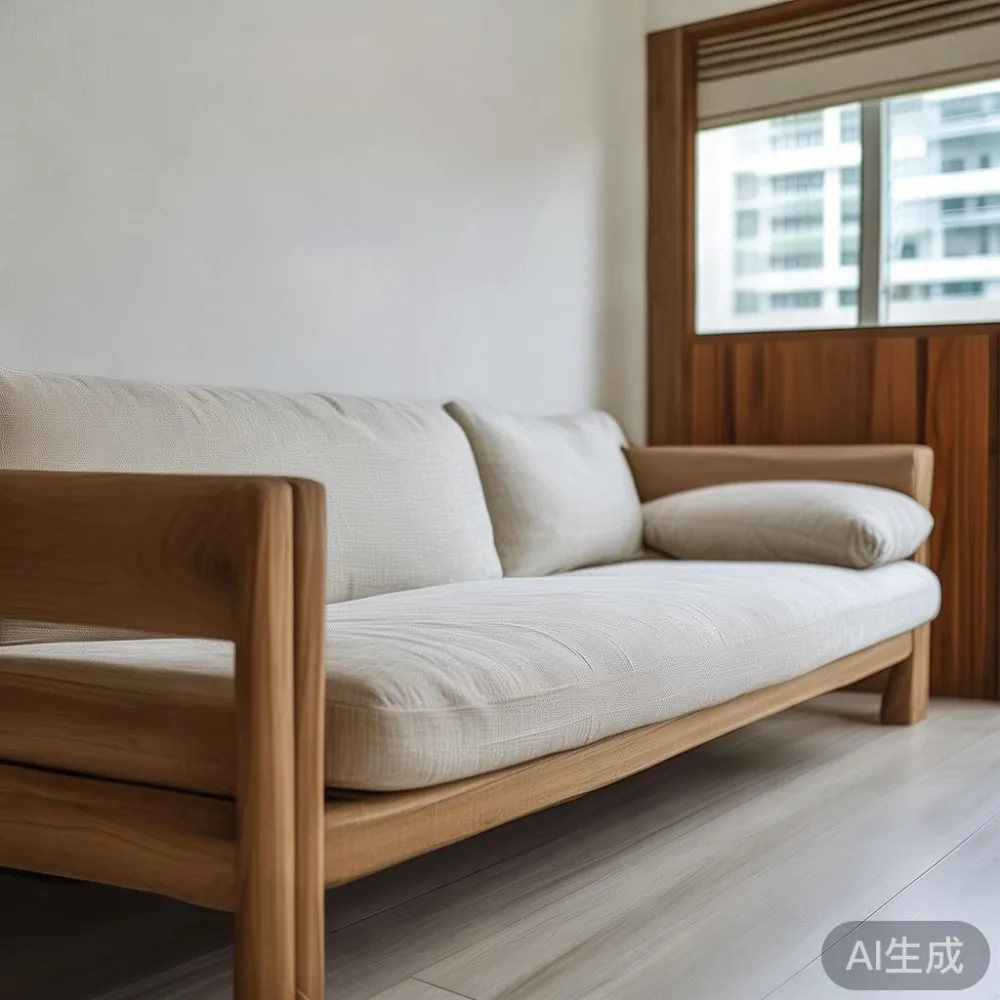
This guide explains how humidity in Southeast Asia actually affects wood furniture, which timbers hold up best in a Singapore HDB or condo, and what everyday habits will keep your pieces quiet through the monsoon months. I will also walk through a real installation I supervised in a Punggol Build-To-Order flat, share the numbers we measured, and tie it back to the wider question many buyers quietly google — including terms like is light luxury bed worth it and what 2026 European light luxury furniture really looks like once it lands on the 13th storey of a Singapore block.
What humidity does to solid wood, in plain English
Wood is a hygroscopic material. In simple terms, it breathes: when the air around it is damp, the cells inside the plank soak up moisture and the board swells; when the air is dry, those cells empty and the board shrinks. A solid wood sofa bed or dining table does not behave like a metal or plastic piece. It is constantly negotiating with the air. The shift between March's dry spells (relative humidity around 55-65% indoors with strong air-conditioning) and the December monsoon (outdoor humidity around 90%) is exactly the cycle that opens joints and stresses glue lines.
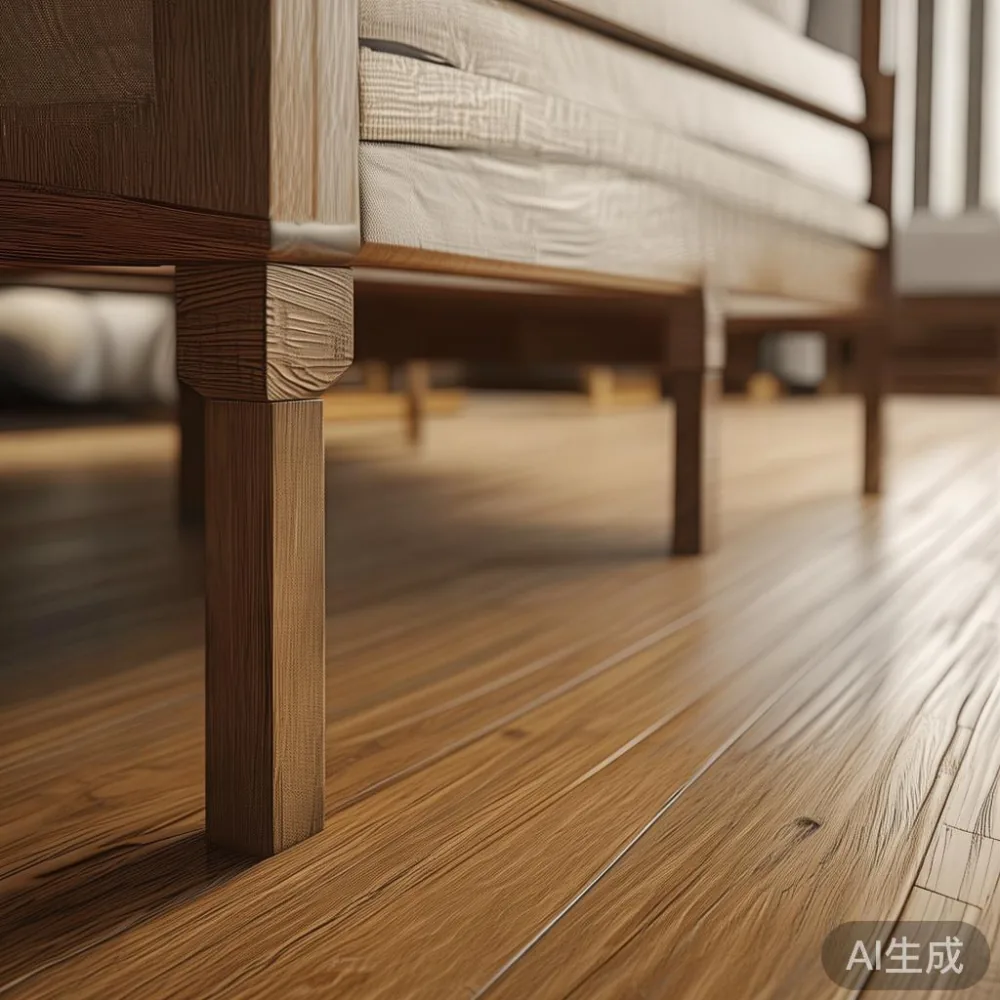
The practical symptoms show up in a clear order. Early on, you may notice drawers in your wardrobe rubbing in July that slid easily in January. Six to twelve months later, hairline cracks appear along the grain of a bed frame or nightstand. If the piece is made with mixed materials — for example, a marble table top sitting on a wooden base, or a sofa bed mechanism bolted into solid wood side rails — the differential movement can loosen fixings. In my October round, I measured gaps of 1.5-3 mm opening between panels in older flat-pack wardrobes, and 4-6 mm crown lift on a teak dining table that had been placed 30 cm from a sliding glass door.
Singapore-specific numbers: HDB flats, condo units, and corridor logistics
Because logistics and indoor climate are linked, it helps to start with the layout. A typical 4-room HDB flat in Tampines has a main door width of around 90-95 cm, a service yard door of about 80 cm, and lift doors that in newer BTOs are 90 cm wide. Condo corridors add another constraint: many refuse-room and lift lobbies in Punggol and Bedok units have tight 1.2 m corners, and bulky solid wood sofa bed frames more than 210 cm long usually need to be tilted at 45° to clear the turn.
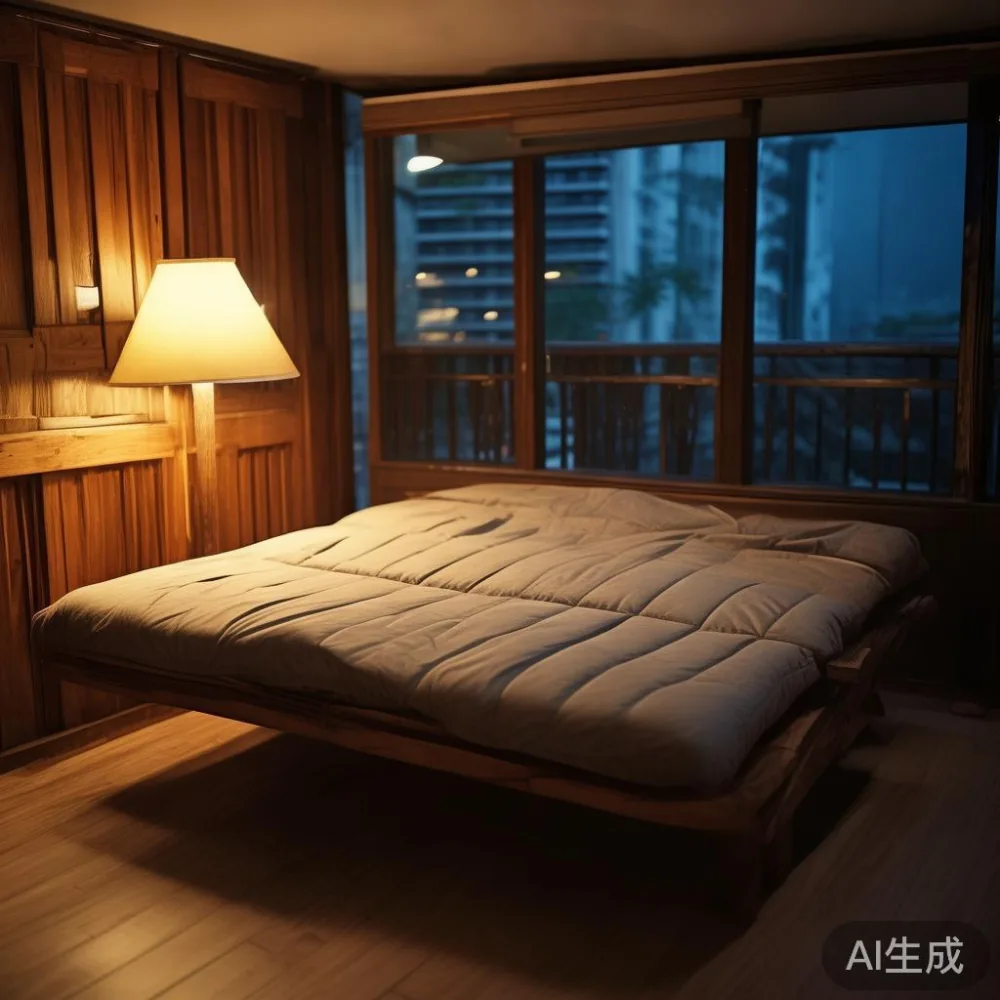
This matters because the cheaper solution to humidity is often to bring the piece somewhere dry to recover. If your sofa bed cannot leave the flat without a 4-hour disassembly, you will probably never bother. A 180 kg solid wood frame in seven modular pieces, each under 25 kg, is far easier to move than a single 130 kg unit. When I supervised the Punggol installation last month, the delivery team from MIDHILL brought a 2.1 m walnut sofa bed up in three trips using a 1.5-tonne lorry with a tailgate, and the longest single component was 198 cm — short enough for the lift on the diagonal.
On the price side, a solid wood sofa bed from a Foshan workshop with kiln-dried ash or walnut frames typically lands in Singapore between SGD 2,200 and SGD 4,800 inclusive of GST and delivery. Add another SGD 120-280 for assembly inside the unit, and another SGD 80-150 for disposal of your old bed if the supplier offers it. Mid-range wardrobes run SGD 1,800-3,600, dining tables for four sit at SGD 1,200-2,800, and a nightstand pair runs SGD 380-720.
Which timbers actually survive a Tampines bedroom
After measuring moisture content in more than 40 homes over the past two years, I have a clear ranking. Teak (Tectona grandis) holds the line at 8-12% internal moisture even at 75% ambient humidity, and resists cupping better than almost anything else at this price. White oak performs similarly once it is quarter-sawn, but plain-sawn oak cups noticeably within a year in a ground-floor unit facing a koi pond. Walnut sits in the comfortable middle: warm in colour, stable at 9-13% moisture content, and easy to refinish. Rubberwood is affordable but moves more — useful for drawers, less so for a wide dining table top.
If you are weighing the aesthetic side, French light luxury style tends to pair walnut or ash with brushed brass and pale linen, while American light luxury leans into thicker oak profiles with darker cocoa stains. Post-modern light luxury is the one I see most often in new Punggol condos: clean lines, low-profile bed frames, and a single marble table accent. For a sofa bed specifically, ask whether the slats are solid wood or laminated. Laminated birch slats handle the daily fold-out cycle better than solid pine, but the side rails should still be solid wood — that is where the structural warranty matters over ten years.
Whatever the style, the kiln-drying record is the single most important document. A workshop that can show you a moisture content chart from the kiln (target 8-10% for a Singapore-bound piece) is a workshop that understands the export climate. MIDHILL publishes this kind of record with every container leaving Foshan, which is one reason their containers arrive in Singapore without the surface mould you sometimes see on pieces from mills that dry only to 14-16%.
A real installation: a sofa bed in a Punggol BTO
Last month, I visited a couple in Punggol who had ordered a 2.1 m walnut sofa bed with a 12 cm pocket-sprung mattress, two nightstands, and a 1.8 m dining table for four. The unit was on the 14th floor of a BTO with 90 cm lift doors and a corridor turn of about 1.15 m. We had timed the delivery to avoid the Saturday lift-booking queue, and the team arrived in a 1.5-tonne lorry at 08:30. Total carry-in time, including assembly of the sofa bed mechanism and placement of the dining table, was 2 hours 40 minutes.
The interesting part came after. With the air-conditioner set to 24°C and the dehumidifier running on auto, we measured indoor humidity at 58-62% over the following week. The sofa bed side rails, freshly acclimatised in the warehouse for nine days, registered 9.4% moisture content on day one and 10.1% by day seven. No visible movement. By contrast, the client's previous MDF wardrobe (a different brand, purchased in 2021) had a 6 mm bow across the top panel that we could not fully reverse even after three days of dehumidifier use. The takeaway was not that MDF is evil — it is that mixed-material construction responds to Singapore humidity in ways a careful buyer should anticipate.
If you are browsing early to choose a Boho bed for 2026 with rattan panels and a solid wood frame, the same rule applies: check the kiln-dry record, and budget for a dehumidifier rated for your room size. A 25 sqm bedroom needs a 12 L/day unit to maintain 55% relative humidity through the year.
Will a dehumidifier actually protect a wardrobe or dining table?
Yes, but with two conditions. First, the unit must be sized to the room. A 10 L/day compressor dehumidifier covers roughly 15-20 sqm, which fits most HDB bedrooms and a small living-dining area. Running it on auto with a target of 55% RH costs about SGD 12-18 per month on the latest SP Group tariff (roughly SGD 0.32/kWh including GST). Second, the room needs reasonable air circulation, which means leaving 8-10 cm behind a wardrobe and avoiding floor-to-ceiling fabric. A wardrobe pushed against an external wall in a corner unit will always struggle.
For dining tables, the simplest protection is a rotation habit. Move the chairs around once a month so the same edge is not always facing the afternoon sun through the window. For a bed frame, lift the mattress once a fortnight and air the slats for 30 minutes. These are small habits, but they are what keeps a SGD 3,200 walnut bed frame looking new after eight years rather than tired after three.
How long does a sofa bed actually last in Singapore?
A well-built solid wood sofa bed should give you 10-15 years of daily use. The mechanism is usually the first thing to wear, around year 7-9, and that is where a 10-year structural warranty pays off. MIDHILL, for example, ships the mechanism as a separate serviceable unit that can be swapped in 40 minutes by their Singapore partner team, rather than scrapping the whole frame. The fabric or leather typically needs refreshing at year 5-6; a slipcovered sofa bed in washable linen is the lowest-fuss option for families with young children in Bedok or Tampines.
If you are weighing the budget question quietly phrased as is light luxury bed worth it, here is how I would frame it for a Singapore buyer: a light luxury bed in ash or walnut, with a 10-year warranty and a lifetime refinishing service, costs roughly SGD 2,400-3,800. Over ten years that is SGD 240-380 per year, or about SGD 0.65-1.05 per day. Compare that to a SGD 1,200 flat-pack replacement every four years (SGD 300 per year, SGD 0.82 per day) and the math starts to lean the other way — and you have a steadier bed frame, not three different ones.
What about a marble table, a Mid-century modern dressing table, or a Rustic for dining room setup?
These three styles all appear regularly in Singapore homes, and they each have a humidity story. A marble table top is actually more forgiving than people assume: marble does not swell or shrink, but the wooden base under it does, so insist on a base with slotted bolt holes that allow 3-5 mm of movement. A Mid-century modern dressing table in teak or walnut is a natural fit for Singapore because the period was designed for tropical climates — slim legs, raised off the floor, plenty of airflow underneath. The hairpin metal legs you see on authentic 1950s-60s pieces were as much about humidity management as they were about style.
A Rustic for dining room setup with reclaimed-look planks is the one I would treat with the most caution. The thicker and rougher the surface, the more it moves seasonally, and reclaimed timber often arrives with hidden stresses. If you love the look, choose engineered rustic tops with a 4-6 mm solid wood veneer over a plywood core — they look identical, but they hold their shape through the monsoon in a way solid reclaimed planks rarely do.
If you are also choosing light luxury for office furniture for a work-from-home corner, the same rules apply: solid wood frames, kiln-dry verification, and a small dehumidifier scheduled to run during the wettest months. The aesthetic you pick — French, American, or post-modern — matters less than the moisture content of the timber when it leaves the workshop.
Where to look and what to ask before you click buy
Two practical filters will shorten your search. First, ask for the kiln-dry moisture chart. A workshop that measures 8-10% for a Singapore-bound container is the only workshop that should be on your shortlist. Second, ask how the mechanism is serviced. A sofa bed is a mechanical product disguised as a piece of furniture, and the brand that can describe the service procedure in plain language is the brand that will still answer the phone in ten years.
Pricing for a complete set in 2026 — sofa bed, bed frame, dining table, wardrobe, and a pair of nightstands in solid ash or walnut — typically lands between SGD 9,500 and SGD 16,500 inclusive of GST, delivery, and in-home assembly, with free shipping over US$350 equivalent often applying on individual pieces. The suppliers worth your time will offer a 14-day return window, a 10-year structural warranty, and a lifetime refinishing option, and they will publish their warranty terms rather than hide them in a footnote.
For readers who want to compare specifications and warranty documents directly, the MIDHILL catalogue is available at www.midhill.co, which lists kiln-dry records, mechanism service procedures, and the SG-specific delivery schedule for HDB and condo addresses. Their pieces are also a useful benchmark for the 2026 European light luxury furniture look many Singapore buyers are now asking for: clean walnut lines, brushed brass details, and a sofa bed mechanism that does not feel like a compromise when guests stay over the weekend.
Is a sofa bed worth buying in 2026 if I live in a 3-room HDB flat?
For a 3-room HDB flat in Bedok or a small Punggol studio, yes — with one adjustment. Choose a sofa bed with a seat height of 44-46 cm and a folded depth under 95 cm, so it does not crowd the walkway between the living and dining zones. Measure your corridor turn and lift door before ordering, not after. A sofa bed in this footprint gives you a daytime sofa, a full-size bed for guests, and a structural piece that will outlast two or three flat-pack replacements, which is why so many of my clients end up ordering one alongside a smaller dining table rather than a full bedroom set.
The two habits that matter most, regardless of size: run a dehumidifier 8-10 hours a day during the December and June monsoon windows, and leave 8-10 cm of breathing room behind any wardrobe or bed frame pushed against an external wall. Do those two things, and the kiln-dried timber you bought will still feel solid a decade from now.