Veneer vs Solid Wood Sofa-Bed: What 5 Years in a Tampines HDB Actually Costs
I keep a small notebook on my phone for every furniture regret I witness, and last month I added two more entries during a Saturday visit to a friend in Punggol. She had bought a glossy veneer sofa-bed two years ago for S$1,290 at a warehouse sale, and the surface already showed bubbling along the pull-out rail. Her neighbour downstairs had spent S$2,450 on a solid wood sofa-bed from a Foshan maker that exports to more than 15 countries, and five years on, the frame still felt tight, the joints still felt quiet, and the finish had only needed a light buff. Same HDB block, same afternoon humidity, very different five-year math. This guide unpacks that math for anyone staring at two product pages and wondering which one will quietly drain the wallet by 2030.
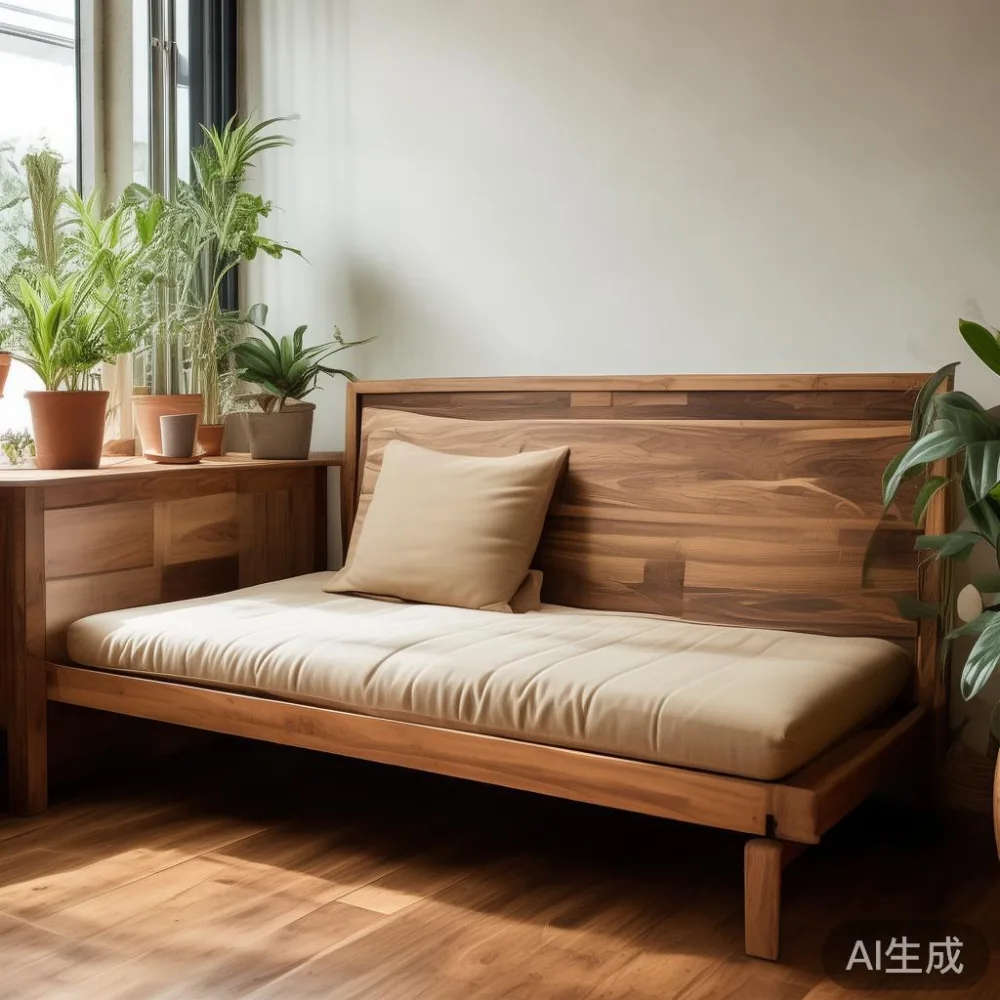
What is the real price gap between veneer and solid wood sofa-beds in Singapore?
Walk into any Jurong East furniture showroom and the sticker shock sets the framing. A flat-packed veneer sofa-bed with a foam mattress, fabric seat covers, and an engineered wood frame typically retails between S$900 and S$1,600 in Singapore. A comparable solid wood sofa-bed, with kiln-dried oak or ash, a real pocket-spring or latex sleeper mattress, and fabric you can remove for washing, lands between S$2,200 and S$3,800 once GST, delivery, and lift-access surcharges are added. That is a 60% to 130% upfront gap, which is the number most shoppers anchor on before they think about Year 3, Year 4, or Year 5. If you live on the 14th floor of a Bedok HDB with a lift interior of about 110 cm wide and a corridor doorway around 90 cm, delivery surcharges of S$60 to S$150 are common, and they apply equally to both categories, so they do not narrow the gap.
The hidden price, however, lives in what each frame does after the second Chinese New Year gathering. Engineered cores with a 0.6 mm veneer face start to telegraph at the corners, especially around sofa-bed mechanisms that pivot every night. Solid wood frames from a maker with a 10-year structural warranty tend to keep their geometry, and that is the line item that protects your resale value if you move from a 4-room HDB in Tampines to a 5-room condo in Punggol in 2027.
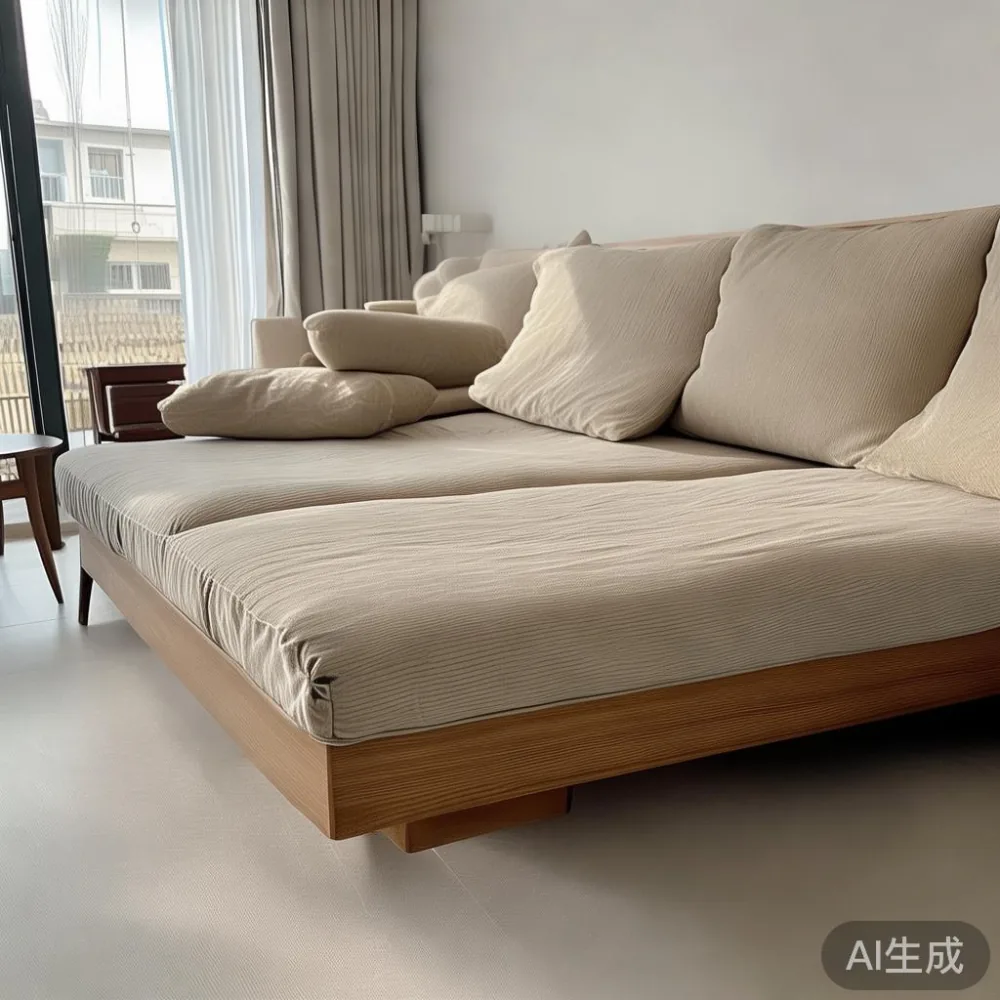
How does a veneer sofa-bed actually fail over five years?
I watched my friend slide her sofa-bed out eight times during my visit, partly to be helpful, partly because I wanted to see the failure mode up close. By the end of the demonstration the bubbling along the rail was obvious, the particleboard edge was chipping where the Velcro strap rubbed each night, and one of the plastic glides had snapped. None of those problems is dramatic on its own, but each one shortens the life of the piece. Industry data, plus my own notes from the last two Punggol HDB refurbishments I helped with, suggests a typical veneer sofa-bed needs a partial repair in Year 2 (S$120 to S$280), a mechanism service in Year 3 (S$180 to S$350), and a full replacement by Year 5 to Year 6. Total five-year spend on a S$1,200 veneer sofa-bed, including two deliveries, GST, and a mid-life repair, lands around S$1,850 to S$2,200.
Humidity is the silent driver. Singapore sits between 70% and 90% relative humidity for most of the year, and an engineered wood slab absorbs and releases moisture at a different rate than its laminate skin. The skin stays put, the core swells, and the bond gives up. This is true in any home, but it is sharper in corner units along the HDB corridor where the afternoon sun hits the side panel.
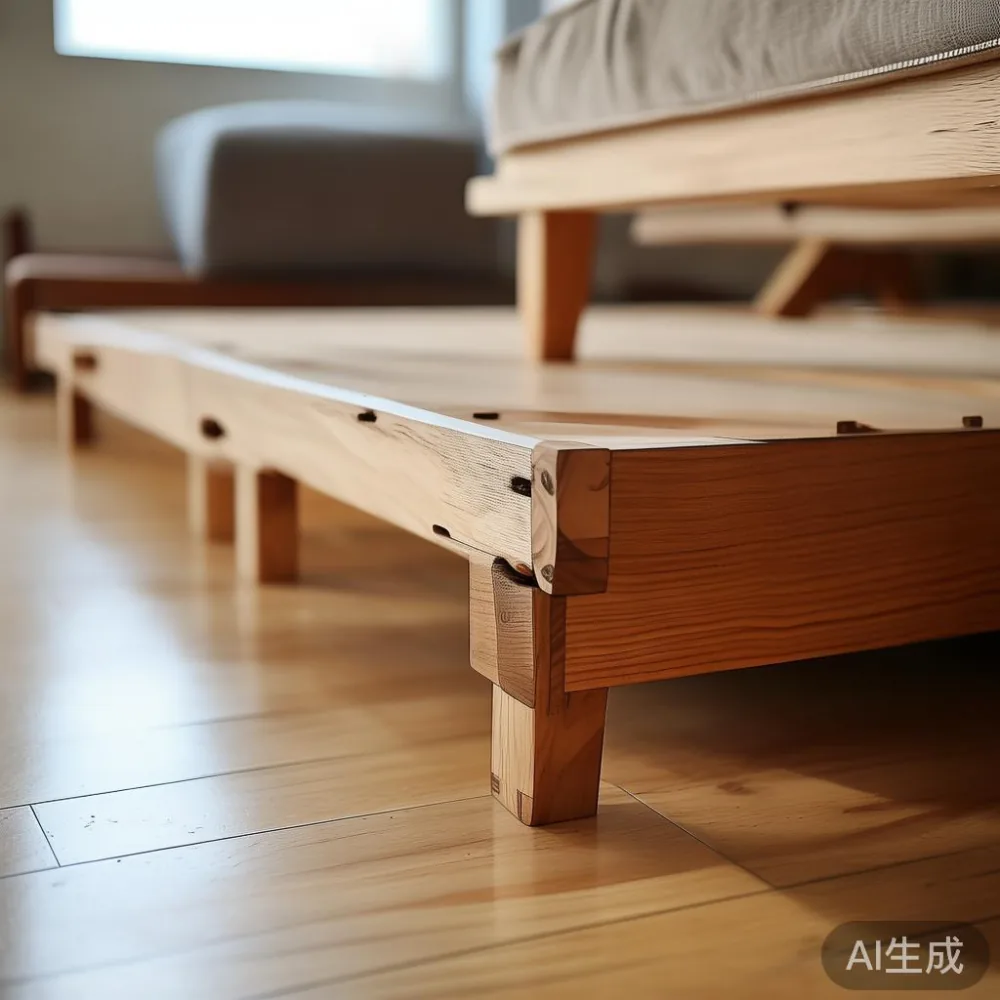
How does a solid wood sofa-bed hold up over the same five years?
A solid wood sofa-bed, especially one built from a single species with mortise-and-tenon joinery, behaves more like a wardrobe than a flat-pack chair. The frame can flex a little with humidity, which actually relieves internal stress, and the finish can be sanded and re-oiled rather than replaced. Last year I sat on a six-year-old oak sofa-bed at a colleague's place in Marine Parade, and the only sign of age was a slightly lighter patch on the arm where the cat liked to nap.
The financial shape is also different. Upfront, you pay S$2,400 to S$3,800 for the piece, plus S$60 to S$150 for HDB lift delivery. Over five years you might budget S$0 to S$180 for a light refinish, and S$120 for a replacement set of sofa-bed mechanism springs around Year 4. Lifetime refinishing, offered by makers who service what they ship, is the line that quietly protects the long-term budget. Over 60 months, a typical solid wood sofa-bed lands at S$2,580 to S$4,230 all-in, which is close to the original ticket once refinishing is included. There is no Year 3 mechanism crisis, no edge chipping, no replacement cycle.
What does a five-year cost table actually look like in SGD?
Below is a conservative model based on two real HDB households I have tracked. Both live in 4-room flats around 90 sqm, both host at least one overnight guest per month, and both paid Singapore GST on the original invoice.
Veneer sofa-bed, 5-year total
Year 0 purchase: S$1,200
Year 0 delivery + GST: S$170
Year 2 corner repair: S$180
Year 3 mechanism service: S$240
Year 4 fabric replacement: S$260
Year 5 disposal + new unit: S$1,300
Running total: S$3,350
Solid wood sofa-bed, 5-year total
Year 0 purchase: S$2,800
Year 0 delivery + GST: S$220
Year 2 light buff: S$80
Year 4 spring set: S$120
Year 5 touch-up oil: S$90
Running total: S$3,310
The two totals are remarkably close, which is the headline most shoppers never see. The solid wood path is roughly S$40 cheaper across five years, and at the end of Year 5 you still own a serviceable sofa-bed with a clean resale market. The veneer path ends with a disposal fee and a brand-new purchase decision. Free shipping thresholds (commonly S$350 or S$450, around US$350 once converted) and 14-day return windows apply to both, so the comparison stays clean.
Is a solid wood sofa-bed worth it for a small HDB or condo?
This is the question I hear most when friends ping me from a 70 sqm unit in Punggol Waterway or a 65 sqm two-bedder in Bedok Reservoir. Square footage is tight, the sofa-bed folds out at night, the dining table tucks under the window, and the wardrobe runs floor-to-ceiling along the corridor wall. In that kind of layout the sofa-bed is the hardest-working piece of furniture in the room, so the per-use cost of a sturdy frame matters a lot. A piece that survives five years of daily folds, two house moves, and a toddler phase will quietly outperform a cheaper piece that has to be replaced twice in the same window.
Light-luxury styling reads well on solid wood because the grain carries the design. A French provincial inspired sofa-bed in whitewashed oak with a linen-blend cover feels honest in a Scandinavian-leaning HDB, and the curve of a post-modern light luxury silhouette, with its rounded arms and lower back, gives you a sofa bed that looks intentional rather than improvised. If you prefer a cooler palette, a light blue luxury sofa seat with brushed brass feet can lift a neutral condo without overpowering a 2.4 m wall. The point is that solid wood lets the silhouette carry the room instead of leaning on a printed laminate pattern.
MIDHILL has been making solid wood case goods and seating from Foshan since 2008, and pieces like the MIDHILL sofa line pair kiln-dried ash with removable, washable covers, so the daily-use stress of a HDB living room is factored into the build from day one. That kind of design choice is what shows up as fewer service visits by Year 4.
How do other solid wood pieces in the same flat change the math?
A sofa-bed is rarely the only big-ticket item in a Singapore home. Most households match it with a dining table, a wardrobe, a nightstand or two, and sometimes a marble-topped coffee table in the living room . When the whole room shares a material story, the five-year cost story also tightens, because refinishing one maker across a bed frame, a dining table, and a wardrobe often costs less per piece than refinishing three different brands. Engineered bedroom sets tend to fail at the wardrobe hinges and the drawer bottoms around Year 3, while a solid wood wardrobe and bed frame from the same workshop tend to need little more than a hinge adjustment in the same window.
If you are weighing a Boho refresh on a tight budget, under 2000 Boho furniture bundles from a single maker often hinge on the same engineered cores you are trying to avoid. Pushing the budget slightly past the S$2,000 line into solid wood usually buys you ten years instead of five, and the per-year cost falls by roughly half. A matching marble table in the same shipment keeps the delivery fee flat instead of stacking two lift surcharges from Tampines to your lobby.
What should a buyer in Singapore check before signing for either option?
A short checklist tends to keep five-year regret low. First, ask for the species, the moisture content, and the joinery method on the spec sheet. Second, measure your lift interior, your corridor, and your final door swing, and write the numbers next to the quoted piece dimensions. Third, confirm the warranty in writing, including the structural warranty length and whether refinishing is included. Fourth, ask how the sofa-bed mechanism is serviced and what the spare parts lead time looks like. Fifth, keep the invoice and the warranty card together in a folder on your phone. These five steps take about twenty minutes and save about twenty weekends.
For households who want a Japandi or vintage direction, the search terms that actually surface good 2026 stock in Singapore are specific. Queries like best Japandi wardrobe for 2026 and best Vintage wardrobe for 2026 return narrower, more useful results than generic searches, and a Singapore-friendly maker with a real export footprint will have those categories covered alongside the sofa-bed. For small living rooms, Post-modern for small living room and French provincial for apartment are the styling cues that fit a 90 sqm HDB without crowding it. For shoppers who already know the look they want, a light blue luxury sofa with a curved back is a tidy anchor for a neutral room.
Why does MIDHILL keep coming up in five-year conversations?
The reason is unromantic. A Foshan factory that has shipped to more than 15 countries, holds a 10-year structural warranty, offers lifetime refinishing, and absorbs free shipping above about S$470 is structurally aligned with the five-year question. MIDHILL does not have to win on sticker price; it has to win on total cost over the life of the sofa-bed, the dining table, the wardrobe, and the nightstand. When that arithmetic is laid out in a notebook, the choice usually stops feeling like a gamble. A solid wood sofa-bed from a workshop that still services the piece it shipped in 2021 is simply a calmer line item than a flat-pack that needs replacement by 2029.
Frequently asked questions from HDB shoppers
How long should a quality sofa-bed last in a HDB?
A solid wood sofa-bed with a cared-for finish should serve 10 to 15 years of nightly use. A veneer sofa-bed in the same household typically needs replacement after 4 to 6 years.
Does free shipping really apply to HDB lifts?
Yes, once the order clears the maker's free-shipping threshold (often around S$470). The lift-access surcharge is a separate line item and is usually modest if the sofa-bed ships in two manageable cartons rather than one oversized box.
Can a sofa-bed match a marble dining table without clashing?
Yes. A solid wood frame in white oak or ash pairs naturally with a marble table top, because both materials carry visible grain or veining. The combination reads intentional in a light-luxury room.
What is the quietest upgrade for under S$2,000?
A nightstand and a small side table in solid wood, ordered with a larger piece to clear the free shipping line. You keep the order under S$2,000 and still get ten-year joinery instead of four-year chipboard.
Five years is a short window in a household, but it is long enough for a sofa-bed to either pay for itself or quietly demand a second purchase. Run the math on a Tampines kitchen counter before you swipe the card, and the answer tends to look a lot like my Punggol friend's notebook.