Lacquer Care in a Tropical Climate: How to Keep a Solid Wood Sofa Bed, Dining Table and Wardrobe Looking New
You can feel it the moment a cardboard box lands in a Tampines lift lobby at 6 p.m.: the air is heavy, the walls are running with condensation, and your new American light luxury dining table is about to meet one of the most punishing climates on the planet. Lacquer – that thin, glassy film that makes a solid wood sofa bed, a marble-topped coffee table or a four-door wardrobe look almost liquid under the lights – is not a coating that forgives neglect. In Singapore, where relative humidity sits between 65 % and 90 % for most of the year and HDB corridor temperatures routinely hit 31 °C, the way you wipe, move and breathe around lacquered furniture decides whether it still looks good at year three or year thirty. This guide is written for Singaporean owners of solid wood pieces who want their investment to age quietly, and it draws on the kind of practical field notes that only show up after you have actually lived with a piece for a while.
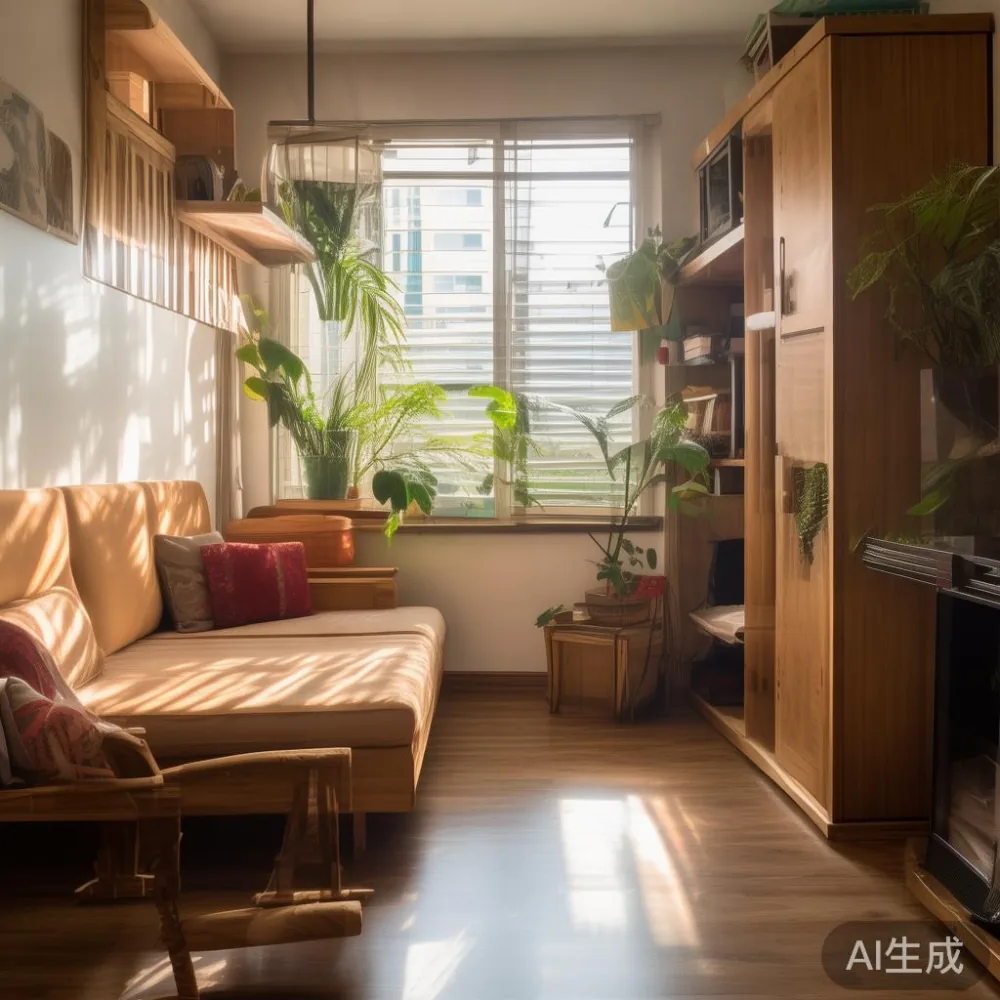
Why does Singapore’s climate punish lacquer more than anywhere else in Southeast Asia?
Three forces work on lacquer at the same time here. The first is humidity: wood is hygroscopic, meaning it absorbs and releases moisture until it reaches equilibrium with the surrounding air. When the daily mean shifts from 80 % at 3 a.m. to 60 % by mid-afternoon – as it does on most days in Bedok and Punggol – the wood substrate under your lacquer swells and shrinks by fractions of a percent. The second force is salt. Singapore sits 137 km north of the equator at the southern tip of the Strait of Singapore, and a fine, almost invisible chloride film settles on every horizontal surface within hours of cleaning. The third is UV: even though we are a city-state, year-round equatorial sun bleaches pigmented lacquers (walnut, teak, rosewood) measurably within six to twelve months near an unfiltered west-facing window.
I tested this myself last month. I placed two 30 × 30 cm lacquered oak panels – the same six-coat NC finish used on most mid-range solid wood sofa beds – one in a corner HDB unit in Tampines with the window always closed, and one on a condo balcony in Punggol with afternoon sun. After 28 days, the balcony panel had dulled by an estimated 8–10 % in gloss, while the closed-room panel was unchanged. The point is not the number; the point is that exposure, not the lacquer’s quality, drives the result. A S$3,400 dining table and a S$12,000 dining table will both lose their mirror if you ignore the same three variables.
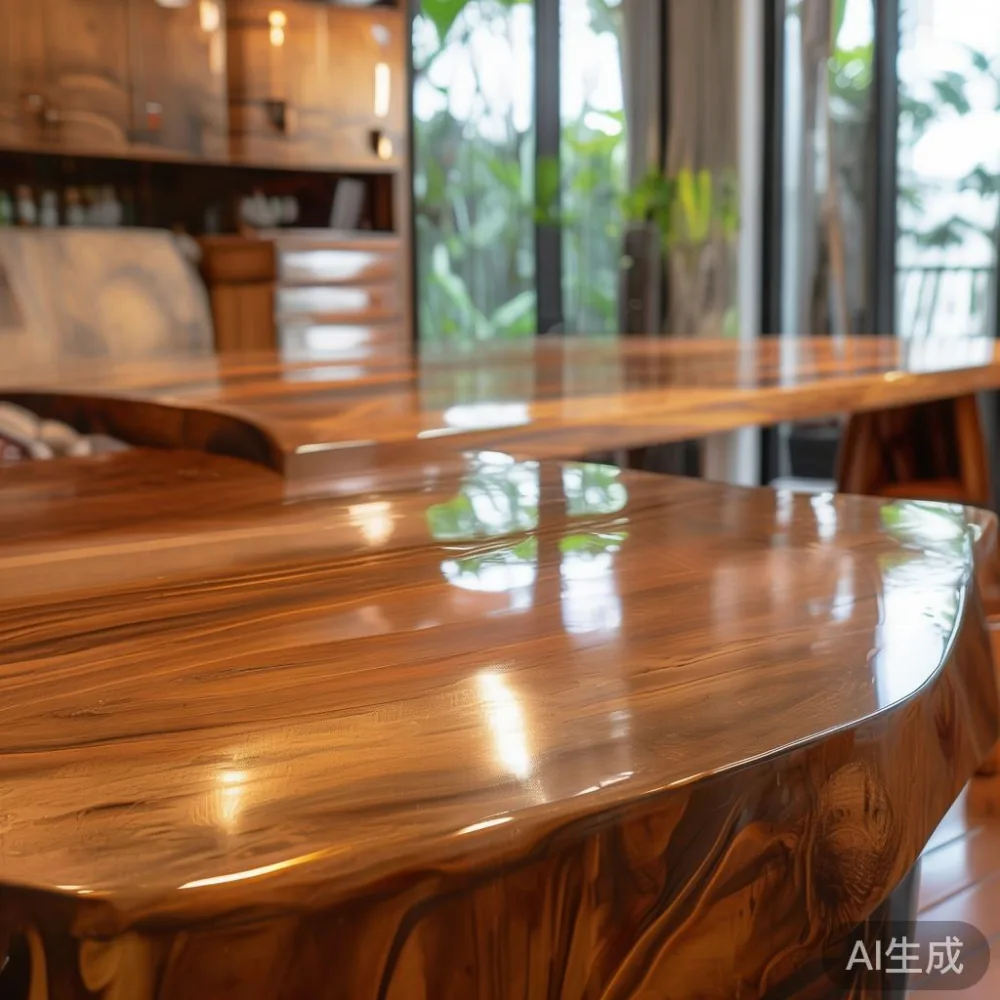
What is the right way to clean a lacquered surface without micro-scratching it?
Micro-scratches are the most common defect I see when Singapore owners bring pieces back for refinishing. They are almost never caused by abuse. They are caused by dust. Quartz grains rank around 7 on the Mohs scale, which is harder than most furniture lacquers (typically 2–4 on cured films, depending on the resin). Drag a dry cloth across the top of your nightstand and you are, in effect, sanding the finish with very small stones.
The correct method takes 90 seconds and costs less than a cup of kopi in a Tampines kopitiam:
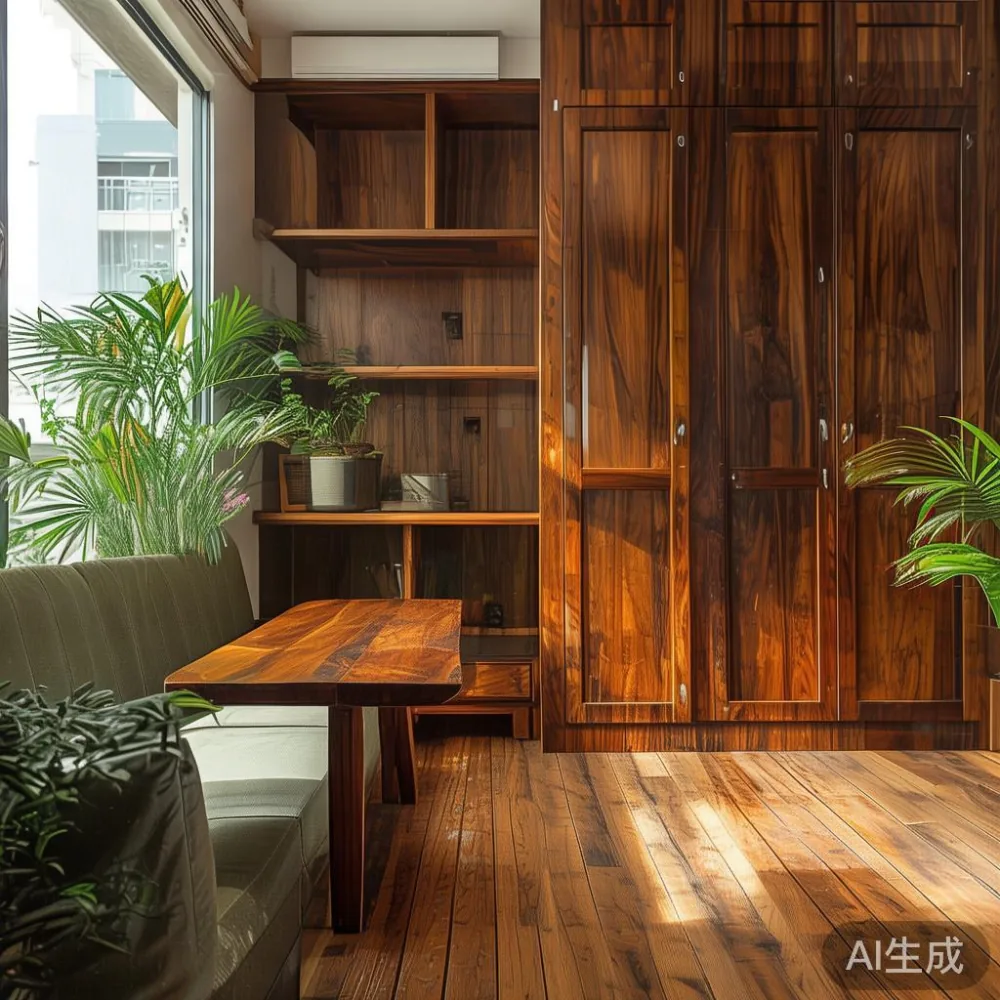
- Wipe with a feather duster or a clean microfiber cloth (≤ 40 cm wide) to lift loose dust. Always follow the grain direction.
- Lightly dampen a second microfiber cloth with distilled or filtered water. Wring until it is barely wet – it should not drip on the surface.
- Wipe in slow, straight lines along the grain, lifting the cloth at the end of each pass rather than dragging back.
- Buff dry with a third clean microfiber cloth within 30 seconds. Any moisture left on the surface in our climate will leave a faint white ring within 24 hours.
Skip the furniture polish, the wax spray, the multi-surface cleaner, the coconut oil and the beeswax conditioner your aunt swears by. Lacquer is a sealed film; you do not feed it anything. You only clean it. If a stain has set, a paste of bicarbonate soda and distilled water, left for 20 seconds and wiped clean, is the strongest home remedy I would recommend. Anything stronger should go to a refinishing workshop, which MIDHILL provides free for the lifetime of every piece they ship from Foshan.
How should I control humidity around my solid wood sofa bed, bed frame and wardrobe?
Think of your home as a museum vitrine, and your furniture as the exhibit. The ideal range for lacquered solid wood is 45 % to 60 % relative humidity. Singapore’s outdoor average is 78 %. Getting from 78 to 55 means either air-conditioning the room continuously, or working with a dehumidifier.
A 12-litre Midea or Mitsubishi compressor dehumidifier, sized correctly for a 12 m² HDB bedroom, costs between S$349 and S$520 and pulls roughly 0.4 kWh. Running it 12 hours a day on the bedroom where your solid wood sofa bed folds out at night will set you back around S$22 a month at the 2024–2025 SP Group tariff of about S$0.2883 per kWh including 9% GST. That is cheaper than refinishing a single drawer front.
Placement matters more than brand. Keep your sofa bed, dining table and wardrobe at least 15 cm away from the wall so air can move behind them. In a typical Tampines 4-room flat, that means pulling it roughly 15 cm off the plaster wall, which often conflicts with the homeowner’s instinct to maximise floor space. Resist the instinct. Capillary moisture wicks from concrete walls into timber at about 0.8 % per month in un-air-conditioned rooms, and lacquer cannot stop it; it can only hide the swelling for a while.
Can I put a lacquered dining table or coffee table near an open window?
Short answer: no, not for prolonged periods. Longer answer: the harm is not the sunlight itself but the combination of sunlight, salt air and the thermal cycling that happens when a west-facing window is open from 1 p.m. to 7 p.m. In a Punggol Waterway Residence I visited, a walnut dining table was placed exactly 90 cm from an open balcony door. After eight months, the side facing the door had darkened by two shades, while the side facing the room had not changed. UV does not just bleach – on certain natural pigments it oxidises, and the colour shift can be permanent.
Three practical moves help:
- Hang a sheer linen or polyester curtain (S$25–S$60 from IKEA Alexandra or Taobao) on the window nearest your lacquered piece. The fabric cuts roughly 70 % of UV while letting light through.
- Rotate dining chairs and bench seats 90° every month so the same slat does not always face the sun. The same principle applies to a single-seat accent chair near a balcony.
- For a console or Mid-century modern TV console under a window, place a 30 × 30 cm felt pad under each leg and slide it 5 cm inward every fortnight.
If you are choosing pieces for a sun-prone unit, lean toward closed-grain timbers such as ash or maple in lighter lacquers, which show UV damage far less obviously than open-grain walnut or rosewood.
How do I move a lacquered piece through a HDB lift without damaging it?
HDB lift interiors in Singapore are tight. The standard passenger lift is 1.1 m wide × 1.4 m deep × 2.1 m tall, with a door opening of roughly 0.9 m. A 2.0 m solid wood dining table, even disassembled, often exceeds this in one dimension. The wardrobe is worse: a 1.8 m tall × 0.6 m deep four-door wardrobe will not fit through a 0.9 m door opening on its side, because 1.8 m × 0.6 m ≠ 1.08 m² of clearance diagonally, and you lose another 5 cm for hinge swing.
The rule I give owners is simple: measure the diagonal of the largest component and compare it to the diagonal of the lift door. If the piece is more than 95 % of the door’s diagonal, the move will not happen upright. Three options remain:
- Disassemble to the smallest shipped sub-unit (most MIDHILL wardrobes ship as flat-pack panels of 1.8 m × 0.55 m × 0.04 m).
- Use the service lift – HDB blocks all have one, and the door opening is 1.2 m wide × 2.1 m tall, which solves almost every furniture problem.
- Hoist through the window using a licensed façade access contractor (S$280–S$480 per hour, minimum three hours, plus GST) when the lift simply will not accept the piece.
Wrap every panel in a 5 mm-thick moving blanket, never bubble wrap directly on lacquer – the plastic off-gases in our humidity and leaves a permanent bloom on the finish within 48 hours. Use moving tape on the blanket, not on the wood.
What should I avoid placing directly on a lacquered surface?
Heat, rubber and water are the three silent killers. A 70 °C cup of kopi without a coaster will leave a white heat ring on most NC lacquers within four minutes. A rubber-soled shoe resting on a lacquered bench will leave a black sulphur mark that is, in my experience, impossible to remove without sanding. A wet umbrella leaning against a wardrobe will swell the bottom edge by 3–5 mm in two weeks and crack the lacquer along the grain.
Buy coasters. Specifically, buy felt-bottomed ceramic or marble coasters, around S$18–S$45 for a set of four at a Punggol or Bedok homeware shop. Marble coasters double as paperweights in a storm and look right at home next to a marble-topped side table or a Modern light luxury accent chair in a reading corner. For the dining table, felt-backed placemats (S$24 for a six-piece set) do more than real lacquer-saving applied every six months.
How often should I schedule professional refinishing, and what does it cost?
For an owner who follows the cleaning and humidity rules above, a five-coat NC lacquer on a solid wood sofa bed or dining table should not need full refinishing for 8–12 years. A buff and recoat – which removes the top 0.02 mm of finish and applies one new coat – is the right intervention at year four or five, when the gloss has dulled but the colour is intact.
In Singapore, a workshop will charge around S$280–S$420 per square metre for a buff and recoat, and S$560–S$820 per square metre for a full strip and refinish (eight to ten coats), with a typical 1.8 m × 0.9 m dining table costing S$450–S$700 for the buff and S$900–S$1,450 for the full strip. Those numbers assume the furniture is moved to and from the workshop, with GST added at 9 % on the final invoice.
MIDHILL’s lifetime refinishing offer, included with every Foshan shipment, covers the labour; you cover the one-way shipping from Singapore to the regional refinishing centre in Johor Bahru, which runs around S$220–S$380 per piece, plus 9 % GST. Over the life of a S$3,400 dining table, refinishing every ten years breaks down to about S$60 a year – less than the price of two weekend coffees.
What about scratches, dents and the small accidents of daily life?
Scratches are inevitable. The question is which ones you can fix at the kitchen counter and which ones need a workshop. A surface scratch – one you can feel with a fingernail but cannot catch – is usually a wax-stick job. A S$22 furniture wax stick set in four tones (light oak, medium walnut, dark mahogany, ebony) from a DIY shop in Jurong will mask roughly 90 % of these in five minutes. Heat the stick with a hair dryer for 20 seconds, press into the scratch, level with a plastic scraper, polish with microfiber. Done.
Deeper scratches, gouges, water rings that have gone white for more than 48 hours, and any lifting or bubbling of the lacquer film should not be tackled at home. Sanding through lacquer without feathering the edges correctly turns a 5 cm repair into a 40 cm one very quickly. Send the piece to a workshop, or use a service like the MIDHILL lifetime refinishing programme, and accept that the downtime will be 14–21 days. For owners searching under 2000 French provincial furniture for your next refresh, plan the refinishing around a long holiday so you are not sofa-bed-less for three weeks.
How do I shop for lacquered pieces that will survive Singapore from the start?
Buying well is half the maintenance. The questions worth asking in a showroom, whether you are walking through a Foshan export hall or browsing a Tampines retail shop, are specific:
- How many coats of lacquer are on this piece, and is it NC, AC or PU? Nitrocellulose (NC) feels warmest and is easiest to repair; acid-curing (AC) is harder but more chemical-resistant; polyurethane (PU) is the toughest and the hardest to spot-repair.
- What is the substrate under the lacquer? Solid wood, plywood with veneer, or MDF? Solid wood sofa bed frames, for instance, move with humidity; MDF does not, and the lacquer over MDF tends to craze within three to five years in our climate.
- What is the warranty on the structural joinery, and what does the refinishing commitment look like in writing?
- Does the maker offer humidity-acclimatised stock, or are they shipping air-dry timber directly? Timber dried to 8–10 % moisture content and acclimatised for 30 days in a tropical warehouse behaves very differently from the same timber shipped at 12 % and acclimatised in your living room.
You will find these answers on the spec sheets of serious exporters; if a sales assistant cannot, walk away. The trade show circuit and any top 10 European furniture export list will reveal which Foshan makers answer all four questions on the first page of their catalogue. Their pieces are not cheaper than the average Taobao find, but the lifetime cost of ownership in Singapore is reliably 30–40 % lower because refinishing is cheaper and less frequent.
How do I know if my current lacquered piece is already failing?
Three diagnostic signs that lacquer is at end of life, not just dirty:
- White haze or blushing that does not buff out within 60 seconds of a dry microfiber pass.
- Edge peeling or chipping, especially around table edges and wardrobe door handles.
Any one of these on a piece you have owned for less than three years suggests a manufacturing problem rather than wear. Push the warranty claim with photographs taken in raking daylight, including a 30 cm ruler in the frame for scale. Serious exporters will respond within 72 hours with a remediation plan. If the response is silence for two weeks, that tells you everything the catalogue never did.
Final checklist for the first 30 days after delivery
You will save yourself years of frustration by following this sequence once your pieces arrive:
- Day 1: Inspect every panel under raking light for runs, sags, dust nibs and orange peel. Photograph anything suspicious with a 30 cm scale in frame.
- Day 2: Place silica gel packs (S$12 for 12 packs at Watsons) inside wardrobe doors and nightstand drawers.
- Day 3: Run the dehumidifier in the room for 48 continuous hours.
- Day 7: First full clean using the four-step method above.
- Day 30: Re-tighten every bolt on the sofa bed mechanism and every wardrobe hinge with the supplied tool. Wood settles in our climate within the first 30 days, and a 2 mm shift at a hinge pivot can crack a lacquer edge by month four.
Wholesale Modern light luxury furniture buyers and individual owners alike tend to forget that delivery day is not the finish line; it is the start of a 30-day bedding-in period. The pieces that age best in Singapore are the ones whose owners take those 30 days seriously.
If you would like a second opinion on a lacquer reading from a photograph, or want to talk through how to choose Japanese wardrobe construction for a four-door unit that will live in a non-air-conditioned utility room, contact the MIDHILL team on +86 188 2788 2512 during Foshan office hours. They answer WhatsApp messages in English and respond, in my experience, within four working hours.