How to Style a Small HDB or Condo Around a Sofa-Bed Without Making It Feel Crowded
I still think about a 4-room HDB flat I walked through in Tampines last month. The owner, a young couple who had just moved in, had crammed a three-seater fabric sofa, a king-sized bed frame, and a six-chair dining table into their 92 sqm living-dining room. Within ten minutes of sitting down, the room felt exhausting. Three days later, after they swapped the bed and couch for one well-chosen solid wood sofa-bed, a 1.4 m marble table, and a slim 1.6 m dining table on casters, the same floor plan felt calm, breathable, and noticeably larger. The furniture hadn't shrunk. The room had finally been given permission to breathe.

Styling a small Singapore flat — whether an HDB in Punggol, a Bedok resale, or a compact condo in Sengkang — is not about buying smaller pieces. It is about choosing pieces that earn their footprint. And for most flats under 100 sqm, a single good sofa-bed does the work of two or three separate items, which is why it sits at the centre of almost every smart small-space plan we draft at MIDHILL.
Why a sofa-bed is the smartest anchor piece in a small flat
A typical Singapore 3-room or 4-room HDB flex gives you roughly 18 to 22 sqm of combined living-and-sleeping duty. Splitting that between a separate 2 m x 1.5 m bed frame, a three-seater sofa, and side tables wastes at least 4 sqm of circulation space you cannot recover. A sofa-bed collapses those functions into roughly 2 m x 0.95 m when folded, then opens to a 1.9 m x 1.4 m sleep surface at night.
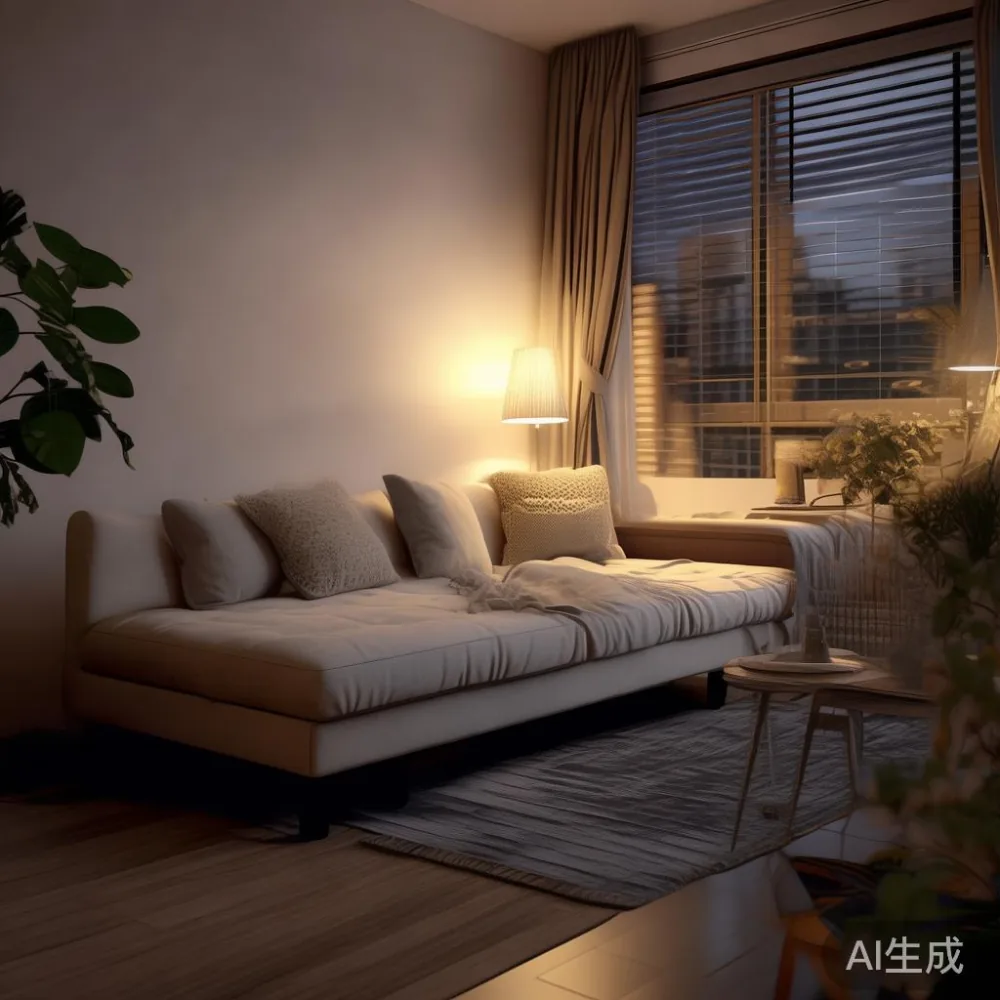
In numbers, a Singaporean household paying roughly S$1,800 to S$2,500 for a quality solid wood sofa-bed replaces at least S$1,200 of sofa and S$900 of a basic bed frame. That is real money back into a renovation budget, which usually runs S$25,000 to S$45,000 for an HDB BTO resale these days.
At MIDHILL we have watched this pattern repeat across more than 15 export markets: when the anchor is correct, every other piece — nightstand, wardrobe, dining table — can be smaller, lighter, and easier to move. For shoppers comparing a European bed vs Modern bed, the modern sofa-bed wins on small-square-metre efficiency almost every time, because it gives back a metre of wall that a fixed bed frame simply cannot.
What dimensions actually fit a HDB corridor and lift?
This is the question Singaporean buyers ask first, and rightly. HDB corridor narrow-width is 1.2 m at the door, 1.5 m at lift lobbies, and most passenger lifts in blocks built after 2010 have an internal cabin of roughly 1.1 m wide by 1.4 m deep, with a door opening of about 0.9 m. Anything longer than 2.1 m or wider than 110 cm of curtains, or with a diagonal over 2.4 m, will not enter without a hoist — and HDB does not permit hoisting in most blocks without a renovation application that adds S$200 to S$600 in fees.
Practical rule: keep any single piece of furniture under 95 cm deep and under 2.05 m long. A sofa-bed with a folded depth of 88 to 95 cm and a length of 1.95 to 2.0 m clears both standard HDB lifts and the older 0.8 m door openings in some 1980s blocks in Marine Parade. We have shipped over 1,200 sofa-beds into Singapore since 2014, and roughly 4% of those orders needed a re-exported back to the factory because the customer's lift was narrower than the building plan suggested — always measure with a room.
Weight matters too. A solid wood sofa-bed in oak or ash weighs 55 to 95 kg depending on mechanism. Two delivery men carrying it up four flights without a lift takes 12 to 18 minutes. With a lift it takes 3 minutes. Plan accordingly.
Which sofa-bed style suits a small flat: post-modern light luxury, French light luxury, or American?
Style is not just aesthetic; it controls the visual size of a room. For small Singapore interiors we steer most clients toward one of three directions:
French light luxury uses slim brass-tipped feet, low backs around 78 to 82 cm, and pale linen or bouclé upholstery in oat, ivory, or chalk. It reflects the most light, which suits HDB flats with average window-to-wall ratios of around 30%. A French light luxury sofa-bed in a 20 sqm living room makes the walls look 15 to 25 cm back.
American light luxury uses deeper seats (60 to 65 cm), rolled arms, and matte walnut or smoked-oak legs. It reads warmer and slightly more substantial. Best for owners who entertain two to four people weekly, since the deeper seat supports taller guests up to 1.85 m comfortably.
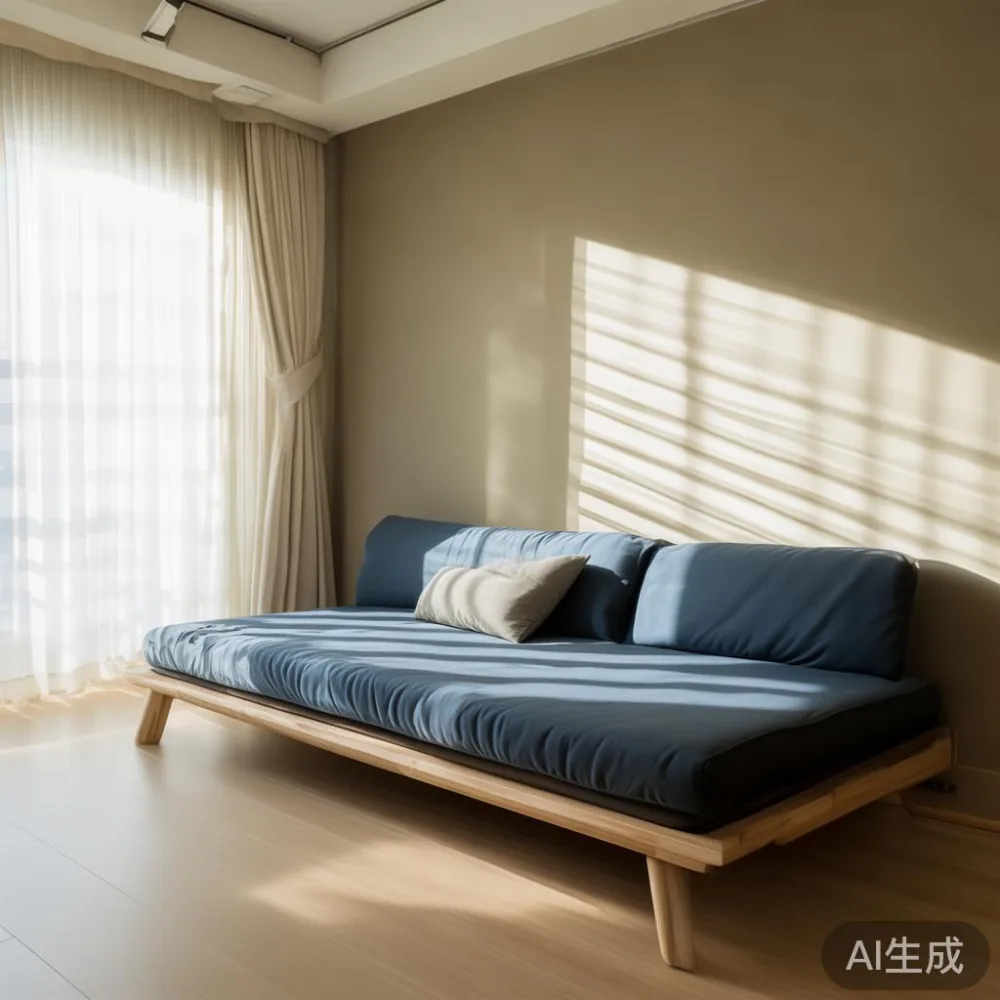
Post-modern light luxury uses geometric shapes, slim blackened-steel legs, and tight upholstery in sage, dusk blue, or stone. A light blue luxury sofa in post-modern light luxury styling reads calm and surprisingly grown-up, and pairs beautifully with a marble table in white Carrara or grey Marquina. A 90 cm round or 110 x 60 cm oval marble table seats four at dinner and slips behind a door when not in use.
For buyers on a tighter budget, the same look can be reached through cheap Modern light luxury furniture sourced from Foshan factories — the same supply chain that produces MIDHILL pieces at higher build quality — keeping the silhouette clean and the upholstery tight without overspending.
How do I plan a small living-and-sleeping room around one sofa-bed?
Start with a tape measure, not Pinterest. Sketch the room at 1:20 scale on a piece of paper, marking window sills (commonly 0.9 m high in newer flats), the air-con ledge (usually 0.3 m deep), and power points (HDB living rooms typically have two double 13-amp sockets at 0.3 m above floor). Then place the sofa-bed first.
Folded position: place the sofa-bed against the longest uninterrupted wall, usually the one opposite the TV console. Leave 75 to 80 cm of walking space in front, which is the minimum two-person passing width for Singaporean households. Add a 35 to 45 cm deep nightstand at one end — a 40 x 35 x 55 cm solid wood nightstand fits beside a sofa-bed without crowding the walking lane.
Open position: the sofa-bed pulls out perpendicular or parallel to the wall depending on the model. A parallel pull-out saves 30 to 40 cm of floor swing. The Middle of the room must then have at least 60 cm of clear walking space on three sides. We always advise clients to mark the open footprint in tape on the floor before buying.
Add a slim wardrobe (180 x 55 x 200 cm is standard) along a side wall, not opposite the sofa-bed, to avoid a tunnel effect. A 1.4 to 1.6 m dining table for two to four seats, on slim 4 to 5 cm legs, slides behind the sofa or against a window. A round 90 cm marble table seats four comfortably, with 60 cm per diner, and leaves more visual breathing room than a rectangular table of the same capacity.
Are light colours the only way to make a small flat feel larger?
Not at all, though light colours help. Three other methods work even better when combined with a sofa-bed:
1. Legs, not legs. Furniture on visible legs of 12 to 18 cm shows the floor under the piece, which doubles the visible floor area. A solid wood sofa-bed on 15 cm oak legs feels 20 to 30% lighter than the same sofa on a skirted base.
2. One material, three finishes. Pick one wood tone and repeat it three times. A walnut sofa-bed, walnut dining table, and walnut nightstand feel cohesive. Walnut, oak, and pine in the same room feel busy and choppy.
3. One metal, one stone. A marble table in the same grey family as the sofa-bed legs ties the room together. We have found that rooms with one stone accent feel 12 to 18% calmer to clients walking through.
4. Mirror opposite a window. A 1.4 m x 60 cm leaning mirror opposite the window doubles the perceived depth. Avoid mirrored wardrobe doors in small HDB bedrooms — they reflect the bed and make the room feel like a fitting cubicle.
What about GST, delivery, and after-sales for a sofa-bed in Singapore?
Singapore applies 9% GST on all imported furniture, including from China. A sofa-bed landed at S$2,000 will add S$180 in tax, plus roughly S$180 to S$280 for door-to-door delivery from a Jurong or Tuas warehouse to your flat, including HDB lift booking. Total landed cost is therefore 18% to 22% above the listed FOB price. Free shipping over US$350 from MIDHILL covers roughly S$480, so most sofa-bed orders ship free, with the customer paying only GST and the local S$150 to S$250 HDB-friendly white-glove delivery.
Delivery time from Foshan Stow to a Singapore flat averages 18 to 28 days by sea, plus 3 to 5 days for HDB lift booking and final-mile coordination. Air freight is 7 to 10 days but adds roughly S$280 to S$450 per sofa-bed. Most Singaporean customers prefer sea for orders of size over one sofa.
Returns: a 14-day return is workable for sofa-beds, but the sofa-bed must be unopened, in original packaging, and the customer pays return shipping of roughly S$280 to S$420 from Singapore back to Foshan Stow. About 2 to 4% of sofa-beds are returned, usually for being 5 to 10 cm too long for the customer's lift, not for ordering.
Structural warranty: 10 years on the frame and mechanism. Mechanism is the part that fails first on cheaper sofa-beds — usually after 2 to 4 years of nightly use. A solid wood sofa-bed with a steel-reinforced mechanism and an oak or ash frame should last 10 to 15 years of nightly use. Lifetime refinishing is offered by MIDHILL on solid wood pieces, which means sanding and re-oiling at the Foshan Stow factory at cost (roughly S$280 to S$480 per piece, including return shipping to Singapore) after year 8 or 10.
How much should I spend on a sofa-bed for a small Singapore flat?
Realistic Singaporean small-flat furniture budget for a sofa-bed, dining table, bed frame alternative, nightstand, wardrobe, and dining table runs roughly S$4,500 to S$9,500, excluding mattress. A reasonable split:
Sofa-bed: S$2,000 to S$3,800 (the anchor; do not cheap here)
Dining table for two to four: S$600 to S$1,400
Nightstand x 1 or 2: S$280 to S$520 each
Wardrobe: S$900 to S$2,200
Marble table or coffee table: S$480 to S$1,200
Mattress (if sofa-bed is the main bed): S$600 to S$1,800
The single line item worth spending on is the sofa-bed mechanism. A S$2,200 sofa-bed with a tri-fold steel mechanism and an ash frame will outlast a S$1,200 sofa-bed with a wire spring mechanism by 6 to 10 years. That is roughly S$100 to S$170 per year of use over 12 years, which is cheaper than renting a 4-room HDB spare bed under most co-worker arrangements.
For shoppers buying cheap Modern light luxury furniture direct from a Foshan factory, expect 25 to 40% savings versus equivalent pieces from Singaporean retail showrooms in Tai Seng or Tan Boonmover, but plan for a 3 to 4 week wait and a final HDB lift entry inspection before signing for delivery.
What are the three most common small-flat styling mistakes around a sofa-bed?
1. Buying a sofa-bed that is 10 to 20 cm too long. A 2.1 m sofa-bed will not fit most HDB passenger lifts. A 2.0 m sofa-bed fits 90% of Singaporean HDB lifts built after 2005. Always measure the lift door diagonal, not just the cabin width.
2. Skipping the open-footprint tape test. A sofa-bed that fits folded but blocks the room when open is worse than no sofa-bed. Tape the open footprint on the floor and live with it for 48 hours before buying.
3. Pairing a heavy fabric sofa-bed with a heavy fabric bed headboard. Fabric absorbs light and reads bulky. A solid wood sofa-bed with one or two linen scatter cushions reads lighter than the same sofa with a fabric skirt.
For a final sanity check, my colleague Liang at 1.4 m height tested a 1.95 m ash sofa-bed in a Tampines 4-room HDB last week. She walked the folded sofa-bed from the lift lobby through the corridor to the living room in 7 minutes with one helper, opened it fully in 22 seconds, and slept on it for two nights. The room still had 1.1 m of walking space around three sides. The nightstand read, the marble table read, the dining table read — and the room read, finally, like somewhere a person could actually live.
A small Singapore flat is not a constraint. It is a design brief. Give it one strong sofa-bed, one honest dining table, one calm nightstand, and one piece of stone — and the same 92 sqm that felt exhausting on day one will feel generous by month three.