How to Buy a Sofa You Cannot Sit On: A Singapore Shopper's Pre-Purchase Checklist
Last month I visited a Tampines HDB flat with a client who had just paid a deposit on a sofa bed she had never actually sat on. The showroom sample was a different fabric. The floor model was the wrong size. The one in the warehouse, she was told, would be delivered "in about three weeks" without a written date. Two hours later, after we measured her lift opening (which turned out to be 1.2 m wide and 2.1 m tall) and her living room doorway (78 cm), the original shortlist was reduced to a single option. This guide is the checklist I walked her through, written for anyone in Singapore shopping for a sofa bed, a solid wood sofa, or a complete living room set they cannot physically test before paying.
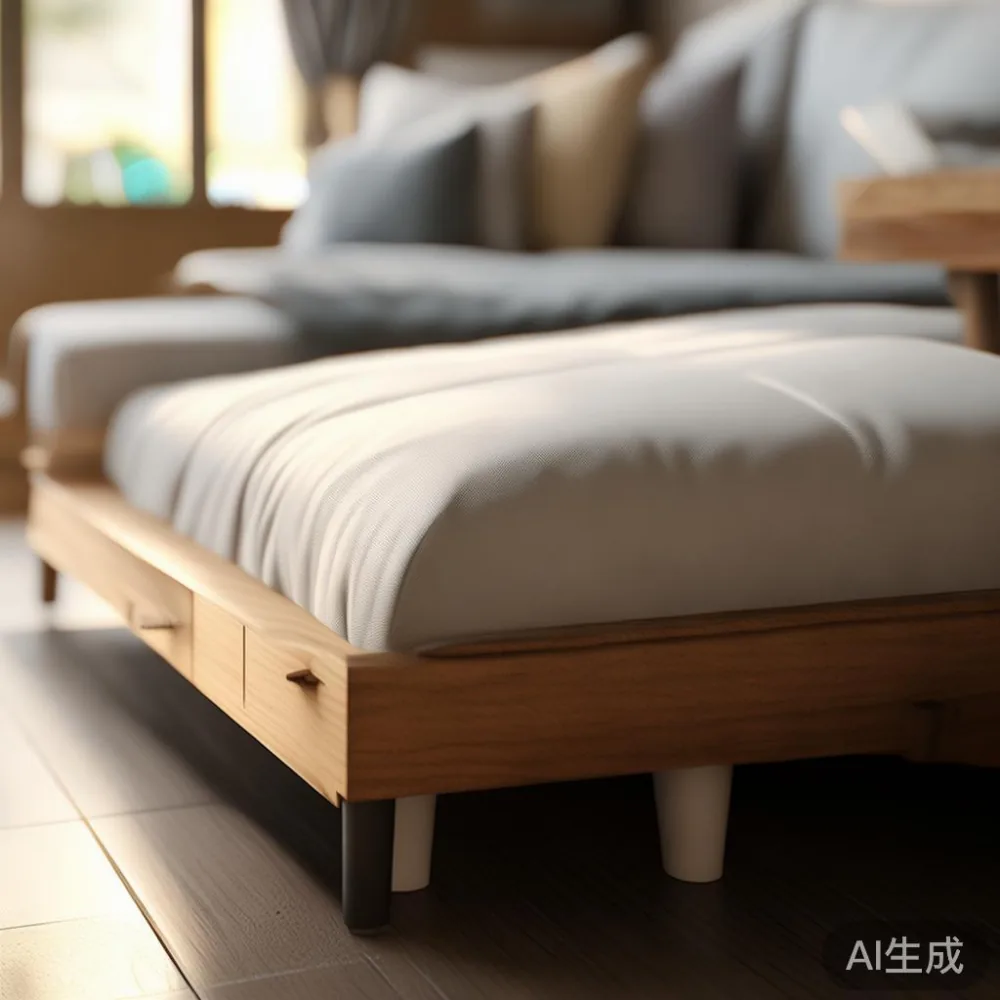
Why "You Cannot Sit on It" Is the New Normal
Most sofa bed purchases in Singapore no longer happen the way they used to. Many buyers order from overseas showrooms, regional warehouses, or local ateliers that only stock a single display piece per range. Some pieces are made to order with a 30 to 45 day lead time. Others are ex-showroom units sold before the new shipment lands. In every case, you are committing to a 1,200 SGD to 4,800 SGD purchase based on a fabric swatch, a spec card, and a set of photos. The risk is real: a sofa bed you cannot sit on before buying is a 7 to 10 year commitment that lives in your most-seen room.
Compounding the issue, the Singapore dollar has moved against the Chinese yuan and the US dollar over the past 18 months, so prices on imported solid wood sofa and light luxury bed frame ranges have shifted. Showroom discounts often look generous but may simply reflect currency hedging rather than genuine value. Reading the contract carefully matters more than ever.
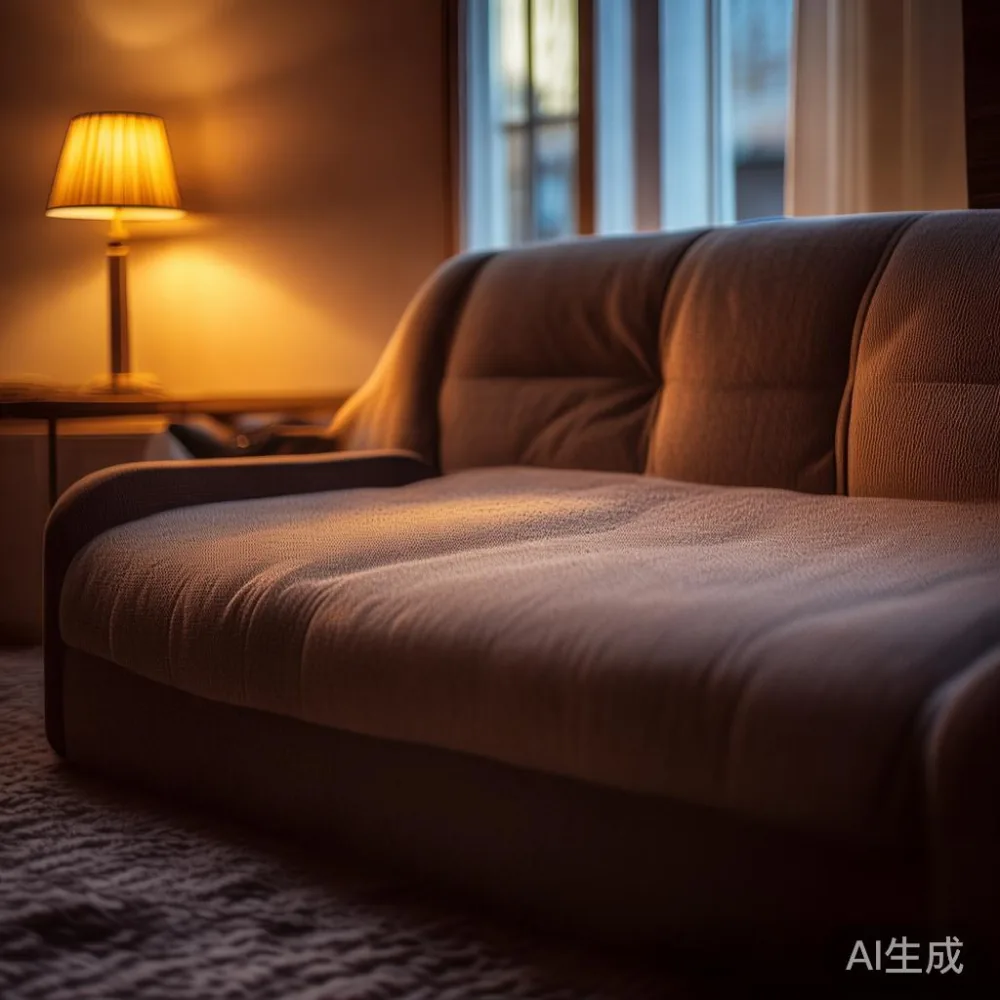
What is the best furniture for a small apartment?
For a small HDB flat or condo in Singapore, the best furniture is a multi-functional solid wood sofa that converts into a sofa bed, paired with a compact bed frame, a wall-mounted nightstand, and a slim dining table that seats two to four.
The logic is straightforward. Floor area in a 4-room HDB typically runs 90 sqm to 110 sqm, and the usable living room zone after corridor, kitchen, and bathroom circulation is closer to 18 to 24 sqm. A modular solid wood sofa with a 180 cm to 220 cm footprint can seat three during the day, sleep one or two overnight, and free you from buying a separate guest bed. Add a bed frame with under-bed storage drawers, a marble table or compact dining table for weekday dinners, and a large dressing table for bedroom that doubles as a writing desk, and you cover sleeping, sitting, dining, and dressing in roughly 25 sqm of furniture footprint. A wardrobe with mirrored doors reflects light and removes the need for a separate full-length mirror.
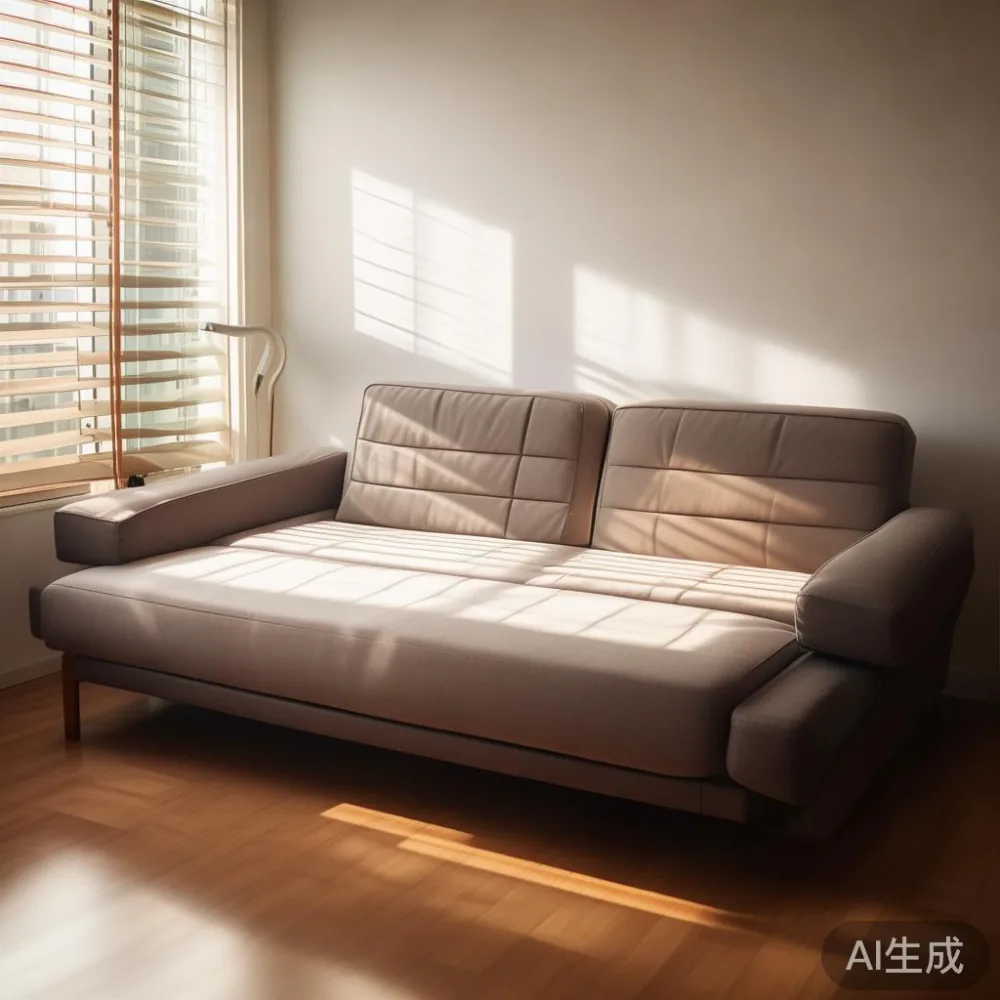
The Pre-Purchase Sofa Bed Checklist (The 12 Points)
Run every sofa bed, solid wood sofa, or bed frame on your shortlist through these 12 checks before you sign the order form.
1. Frame material and joinery. Ask whether the frame is solid hardwood (oak, ash, beech, rubberwood) or engineered wood (plywood, MDF, LVL). Solid hardwood carries a 10-year structural warranty at most credible makers; engineered wood typically carries 1 to 3 years. Check the joinery: mortise and tenon, dowel, or corner-blocked woods are standard. Staples and glue-only joints are red flags.
2. Sofa bed mechanism. Three mechanisms dominate the Singapore market: click-clack (metal hinge, folds flat), pull-out (metal frame on casters, slides forward), and tri-fold (three panels fold into the seat). Click-clack mechanisms on a 180 cm sofa bed typically support 200 kg to 250 kg of distributed weight; pull-out mechanisms with webbing slats typically support 220 kg to 280 kg. Ask for the mechanism weight rating in the spec sheet, not in the brochure.
3. Mattress on the sofa bed. Most sofa beds ship with an 8 cm to 12 cm foam mattress. For nightly use, ask for a minimum 14 cm pocket-sprung or high-resilience foam mattress. Density matters more than thickness: 28 kg per cubic metre minimum for foam, or 1.6 mm wire gauge minimum for pocket springs.
4. Fabric or leather specification. Request the Martindale rub count. For household use, a minimum of 20,000 rubs is acceptable; 40,000 to 50,000 is suitable for daily use; 80,000+ is commercial grade. For Singapore's humidity, ask whether the fabric is treated for mould resistance, and whether the cushion covers are removable and washable.
5. Dimensions in cm, not inches. Singapore HDB lift openings are typically 1.2 m wide by 2.1 m tall. Condo service lift openings vary from 1.0 m to 1.6 m wide. Measure your lift, your lift lobby turn radius, every corridor corner between lift and flat, and your front door. Allow a minimum 10 cm clearance on every side. A sofa bed that measures 210 cm wide in the spec sheet will not fit through a 78 cm door frame unless it is fully assembled on site, which most Singapore deliveries do not include as standard.
6. Weight and floor loading. A three-seater solid wood sofa with a sofa bed mechanism weighs 65 kg to 95 kg. A six-piece dining table set weighs 90 kg to 140 kg. Confirm the delivery charge, whether it includes hoist-up fees (typically 25 SGD to 60 SGD per floor for flats above the 4th storey without a service lift), and whether the crew will remove packaging.
7. Warranty terms in writing. A 10-year structural warranty on the frame is a credible signal from established factories. MIDHILL’s 10-year structural warranty, for example, is documented in the invoice and applies to the hardwood skeleton of the piece, not to fabric, foam, or mechanisms. Read the warranty exclusions: foam softening, fabric pilling, and mechanism wear are usually excluded or time-limited to 1 to 3 years.
8. Delivery timeline in writing. Ask for a delivery date range, not a delivery window. "3 to 5 weeks" is acceptable; "approximately one month" is not. In Singapore, ex-stock items typically deliver in 7 to 14 working days; made-to-order items take 30 to 45 working days; sea-freight orders from overseas factories take 60 to 90 working days. Confirm whether delays void the deposit.
9. Return and exchange terms. Singapore consumer law (the Lemon Law, Part III of the Consumer Protection (Fair Trading) Act) applies to goods that fail within a reasonable time. Most importers offer a 7 to 14 day exchange window for unused pieces. Ask whether the item must be returned in original packaging, who pays the return courier fee (typically 60 SGD to 150 SGD within Singapore), and whether the deposit is refundable on made-to-order pieces (usually it is not, or only as store credit).
10. Total landed cost. Add the listed price, GST (9% in 2024, scheduled to adjust over the next few years), delivery fee, hoist-up fee, and any assembly fee. A 2,400 SGD sofa becomes roughly 2,616 SGD after GST, plus 80 SGD to 180 SGD for door-to-door deltas. Get the total in writing before paying the deposit.
11. After-sales service. Ask who handles warranty claims and where the nearest service centre is. For imported pieces, the answer is often the showroom itself, not the factory. A local showroom with a 1,500 sqft warehouse and a service team can usually resolve mechanism issues within 5 to 10 working days; an overseas-only supplier can take 8 to 12 weeks to ship a replacement part.
12. Refinishing and lifetime support. Solid wood pieces can be sanded and re-oiled or re-lacquered after 8 to 12 years of use. A handful of Singapore importers offer lifetime refinishing on solid wood sofa, bed frame, dining table, and wardrobe frames. MIDHILL’s lifetime refinishing service, for instance, covers one full sand-back and re-finish per piece, charged at cost. This is the single most useful long-term value signal in a solid wood purchase.
How to Verify a Brand You Cannot Visit
If the piece is shipped from an overseas factory, ask for three documents before paying the deposit. First, a business licence or export licence number from the manufacturer. Third-party verification platforms let you cross-check Chinese business registration numbers in seconds. Second, factory photos dated within the past 90 days. Old stock photos recycled across importers are a common warning sign. Third, an independent third-party inspection report (SGS, Bureau Veritas, or TUV) on a recent production batch. If the supplier will not share any of these, the deposit is a gamble.
Light luxury positioning helps, but only when it is concrete. French light luxury (typically cream bouclé, oak solids, brushed brass) and American light luxury (typically walnut solids, top-grain leather, deep buttoning) are real styles, not marketing shorthand. Post-modern light luxury (typically geometric silhouettes, mixed metals, marble accents) is a third coherent direction. Ask which of these styles the supplier specialises in. A factory producing all three styles across one catalogue is usually a trading company, not a workshop.
How Does a Sofa Bed Differ From a Regular Sofa in Daily Use?
A sofa bed sacrifices 2 to 4 cm of seat depth and 3 to 5 cm of back height compared to a non-convertible solid wood sofa of the same width, because the back panel must fold flat. The trade-off is worth it if you host overnight guests more than four times a year, or if you live in a studio or one-bedroom condo where the living room doubles as the guest room.
For households that use the sofa bed weekly, ask for a removable, washable seat cover and a mattress topper that can be replaced independently of the seat cushion. For households that use it monthly, the standard configuration is acceptable. For households that never use the bed function, a non-convertible solid wood sofa is the better purchase, because the seat depth and back support are uncompromised.
What Mistakes Do Singapore Buyers Make Most Often?
The three most common mistakes I see in Tampines, Bedok, and Punggol flats are: ordering a 200 cm wide sofa bed for a 78 cm door frame; choosing a fabric without checking the Martindale rub count; and assuming a written quote includes GST, delivery, and hoist-up fees. The first mistake costs 200 SGD to 400 SGD in return courier fees; the second one shows wear at month 14 to 18; the third one adds 12% to 18% to the final bill.
A fourth, less obvious mistake: buying a sofa bed before measuring the corridor turn. Many Singapore HDB corridors turn 90 degrees within 2.5 m of the lift lobby. A 210 cm sofa bed on a dolly needs a turning radius of roughly 1.6 m to work through that corner. If the corridor is narrower, ask the supplier for an unassembled flat-pack delivery and an on-site assembly fee. The fee is typically 80 SGD to 200 SGD, which is cheaper than a failed delivery.
Quick Reference: Sofa Bed Specs Worth Memorising
Minimum frame warranty: 10 years on solid hardwood. Minimum Martindale rub count: 20,000 for light household use, 40,000 for daily use. Minimum foam density: 28 kg per cubic metre. Minimum mechanism weight rating: 200 kg distributed. Maximum sofa bed width for an 80 cm HDB doorway: 180 cm assembled, or any width unassembled. Maximum sofa bed weight for a single-flight staircase delivery: 80 kg per trip.
Final Word on the Showroom Visit
If you can sit on the piece before you buy, sit on it for at least 10 minutes. If you cannot, the 12 checks above are how you protect the purchase. The best sofa bed for a Singapore home is the one that fits the lift, fits the corridor, fits the room, fits the budget, and comes with a delivery date in writing. The showroom visit is a bonus; the spec sheet is the contract. Read the spec sheet the way you would read a tenancy agreement, because a sofa bed you cannot sit on is, for the next 7 to 10 years, your tenancy with the supplier.