Sofa Bed Costs: Solid Wood Choices in Singapore
Furniture quotations can look deceptively similar. Two solid wood dining tables may both be described as “oak,” yet one may cost SGD 1,680 and another SGD 4,260. A solid wood sofa bed may have a neat timber frame, while a lower-priced alternative hides inferior joinery beneath attractive fabric. The real price drivers are often visible only when the quotation is broken into materials, dimensions, labour, logistics and after-sales support.
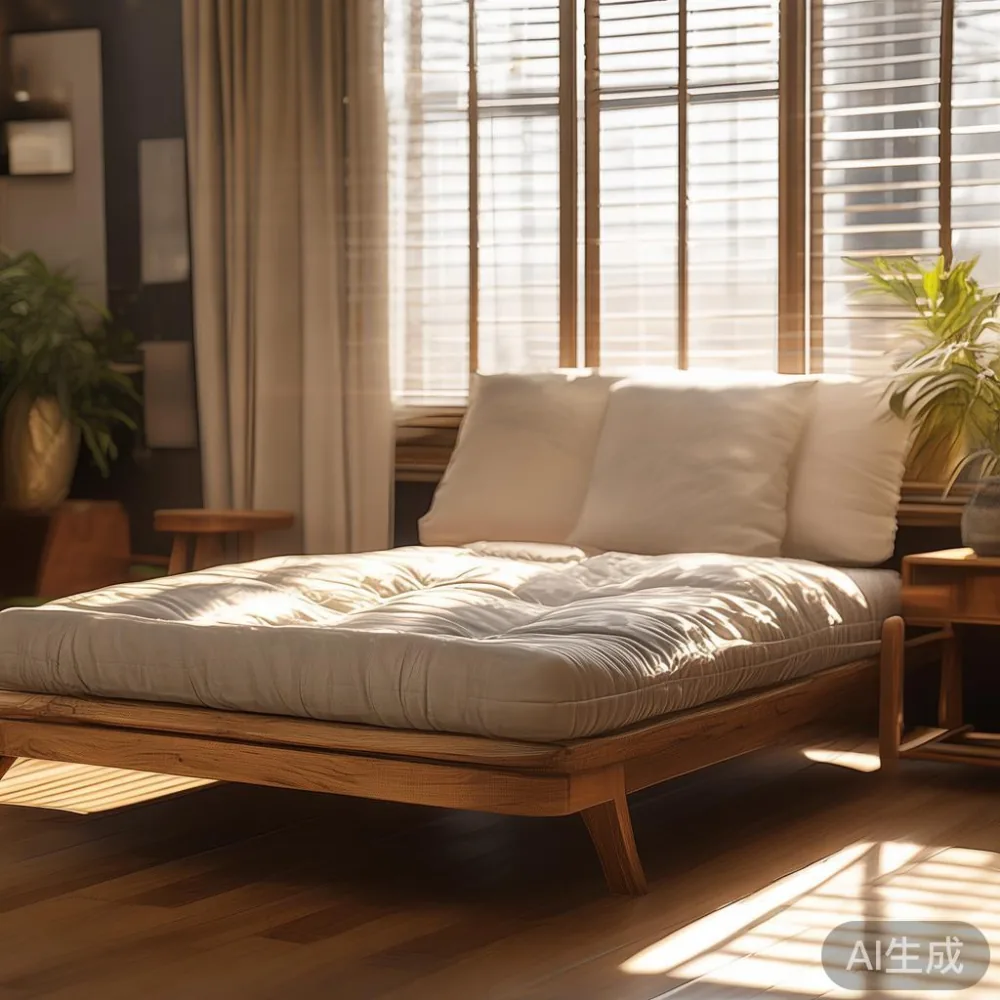
For Singapore households, those details matter because HDB flats and condos impose practical limits. A bed frame may need to turn through a 90 cm corridor, fit into a 210 cm lift and negotiate a staircase narrower than the carton suggests. A dining table that is perfect in a show room can be difficult to carry into a Tampines flat. Price is therefore not merely what the furniture looks like; it is the combined cost of good materials, controlled production, safe movement through a real home and reliable support over 10 years.
Light-luxury furniture occupies a useful middle position here. French light luxury often introduces carved edges and softer proportions, American light luxury balances comfort with visual restraint, and post-modern light luxury uses clean lines with selective curves. None of these labels guarantees value. The specification does.
What determines the price of a solid wood dining table?
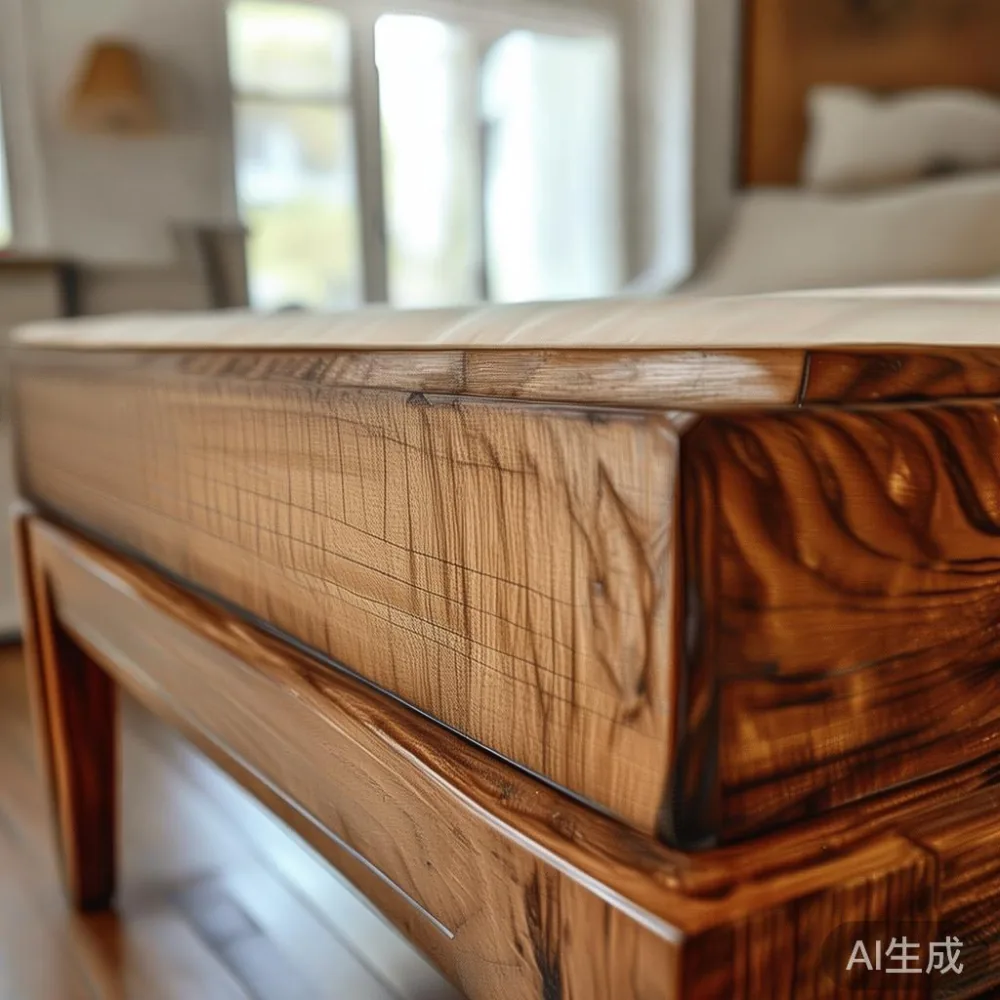
Wood species is one factor, but the board structure is more revealing. A dining table built from solid timber uses pieces around 20–40 mm thick, properly joined and finished on all faces. A decorative wood veneer may use a thinner substrate with a thin natural layer. Both can look convincing under lighting, but they behave differently as the timber moves with humidity.
Ask for the full material schedule. It should identify the species, whether every visible component is solid wood, the panel construction, the joinery and the finish. For example, a 200 × 100 cm dining table may require roughly 70–90 kg of timber. A substantial frame may use dowels, mortise-and-tenon joints, corner blocks and a supporting apron rather than relying on particleboard fittings.
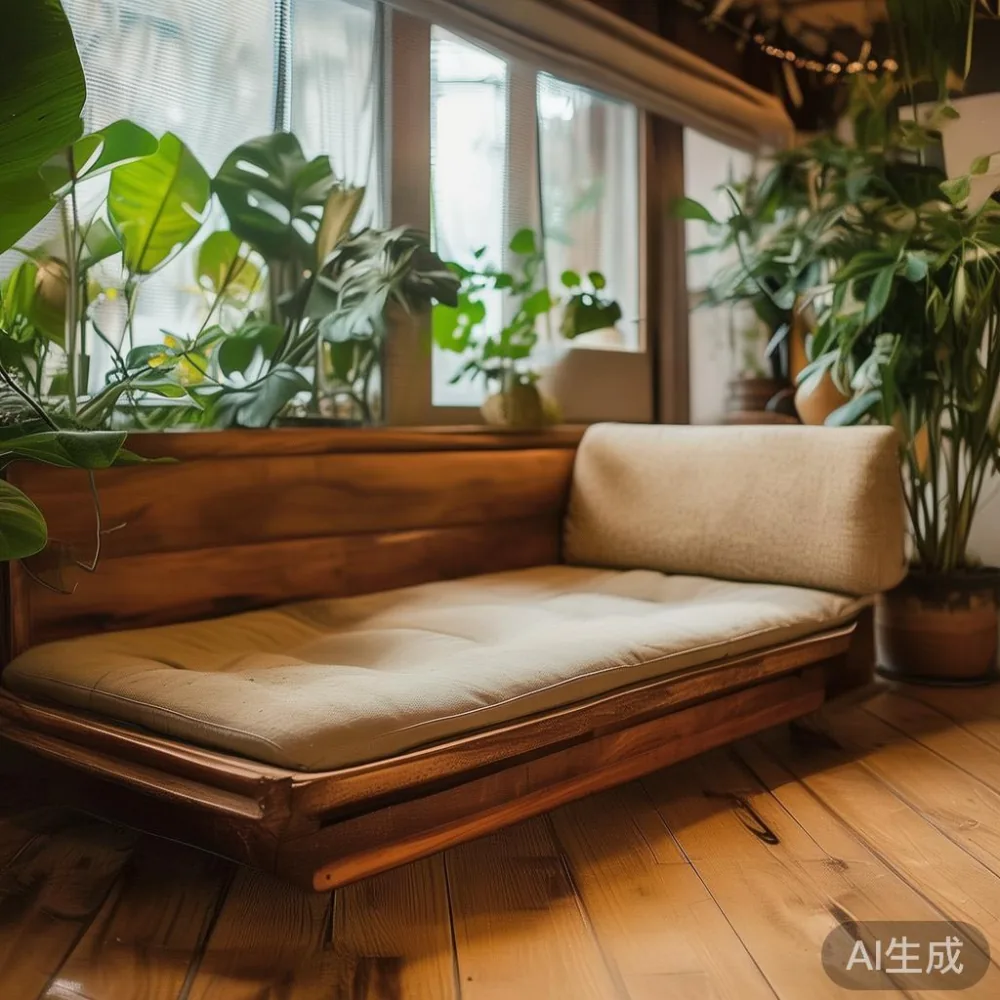
Length also affects the price because longer spans demand more material and stronger supports. A 140 cm table can sometimes use simpler construction than a 240 cm table, which needs reinforced joints to limit sagging. Extensions add mechanisms, alignment requirements and extra machining. If a supplier quotes SGD 2,200 without explaining the timber, thickness or extension system, the number is only a starting point.
Finish is another cost that should be itemised. A water-based matte finish may offer a practical surface for a family dining area. It should be described in terms of coats, sheen and care rather than vague claims such as “child-friendly.” In Singapore’s humidity, responsible finished components should be stable and properly sealed, while the supplier should explain how movement is managed over 5–10 years.
Origin alone does not create quality, although production location affects labour and logistics. Foshan has developed a dense furniture manufacturing ecosystem, and comparing a Foshan furniture quotation with a locally assembled one can expose meaningful differences in tooling, repeatability and shipping economics. A factory with established export procedures can compress delivery to 20–35 days after production, while a small local workshop may offer faster access but at a different price structure.
At MIDHILL, pricing should be understood through production standards rather than a single headline. A 10-year structural warranty and lifetime refinishing reflect long-term service commitments, not decorative features added for the photograph. Those promises have real cost because they require stable construction, controlled finishing and after-sales processes that continue years after delivery.
Is a solid wood sofa bed worth paying more for?
This is a common customer question, and the answer depends on how the sofa bed is built. The frame must support sitting by day and sleeping at night. A low-priced conversion sofa may rely on a hinged timber base, foam cushions and a pull-out mechanism; a more refined model may use a reinforced deck, layered comfort foam and adjustable supports. A mattress topper can improve the sleeping experience, but it cannot repair a weak frame.
The conversion mechanism deserves close attention. Look for guided supports, protected contact points and a gap that prevents metal parts from striking the timber frame. Test the movement through at least 3 full cycles. For frequent daily use, check that the seat remains stable and that the backrest does not visibly twist. A sofa bed selected for a studio or second bedroom may reasonably receive lighter use than one used nightly in a condo.
Dimensions must suit the room and the route into it. A model advertised as 180 cm wide may measure 186–192 cm across the arms. A carton can be longer still. If the lift door measures 80 cm and the corridor turns sharply near the lobby, a 190 cm boxed sofa bed may be impossible to manoeuvre even if it fits the bedroom.
Light-luxury styling also changes the price. The comparison European light luxury sofa vs Japandi sofa often comes down to detailing rather than basic construction. European-leaning versions may use shaped arms, layered cushions and visible timber contours; Japandi versions usually favour straight lines, pale finishes and restrained hardware. Neither is automatically more durable, but more elaborate upholstery and machining require additional hours.
The right benchmark is therefore the specification per dollar. A SGD 1,750 sofa bed with a documented hardwood frame, usable mechanism and 10-year structural cover may offer more certainty than a SGD 3,100 model with vague descriptions. Value lies in knowing what has been included.
How much do bed frames, wardrobes and nightstands really cost?
A bed frame appears simple until its dimensions, slat system and finish are examined. A queen bed at 150 × 200 cm needs enough rigidity to prevent mattress movement. Slat spacing around 8–12 cm can support common foam or spring mattresses, but the mattress supplier’s guidance should take priority. Centre supports, a stable headboard connection and properly finished internal surfaces contribute to both price and longevity.
Wardrobes require a different cost analysis. Hanging space, shelf thickness, drawer runners and door alignment matter more than the number of doors. A 150 cm wardrobe with 4 doors may include 2 hanging bays, 4 shelves and 2 drawers. A wider wardrobe may offer deeper drawers or a pull-out hanging section. Soft-close hardware and adjustable interior fittings can add SGD 250–900 depending on the system.
Nightstands may look like supporting pieces, but they are made from the same timber supply chain as larger furniture. A 45 cm bedside table may need a solid top, a stable drawer box and a rear stop so the drawer does not hit the wall. In a compact HDB bedroom, a 40 cm table may be more practical than a 55 cm model, although the smaller surface area can limit lamp and charging placement.
For buyers comparing under 2000 French provincial furniture, the risk is paying for an ornate appearance while receiving mixed construction. French provincial styling commonly uses curved fronts, shaped edges and decorative profiles. Those forms require careful machining and finishing, but solid timber construction still needs to be confirmed separately. A cabinet may have solid timber framing with plywood or other engineered panels inside; that can be appropriate, provided the supplier identifies it honestly.
One real test made the difference clear. Last month, I visited my colleague’s new three-room Bedok flat and inspected a solid wood bed frame before assembly. Its outer rails looked identical to one displayed by the supplier, but the slat spacing differed: the showroom model had supports at 9 cm intervals, while the delivered frame used 14 cm. The mattress would have dipped near the centre. The seller exchanged it, yet the incident shows why measurements and component details deserve attention before payment.
Why does a marble table cost more than an equivalent timber table?
Marble tables are priced according to slab selection, machining and structural design—not simply square metres. Each natural slab has its own pattern, but two slabs can differ in thickness and internal fissures. A 120 × 60 cm console might use a 20 mm top, while a dining table may require 30 mm material with a reinforced substructure. Natural stone also varies in weight, making delivery planning important.
Comparisons with solid timber should include the base. A marble table may combine a stone top with solid wood legs, metal framing or a stone pedestal. A thick stone top on a weak base can be visually convincing and structurally unsuitable. Ask for load expectations, edge treatment and the fixing method. It is also sensible to confirm whether the quoted product is natural marble, engineered stone or porcelain with a marble effect.
Light-luxury dining collections often use marble deliberately as a focal point. In the comparison French sofa vs Mid-century modern sofa, material choices may shift from sculpted wood and textured upholstery to tapered timber, clean profiles and restrained colours. The marble table is a separate product, but the same principle applies: a decorative surface does not explain the price unless the supporting specification is clear.
Freight is another factor. A 120 kg stone console or dining table may require a dedicated vehicle, two installers and a stair-carry assessment. Singapore delivery may be quoted around SGD 90–250 within a standard zone, with extra charges for carrying, lifting or narrow access. For a delivered marble table, the quotation should state whether placement, assembly and packaging removal are included.
What does “light luxury” actually mean on a furniture quotation?
Light luxury is not a regulated material grade. It describes a visual and comfort position between plain utility furniture and highly decorative statement pieces. French light luxury may include rounded profiles, upholstered details and warm finishes. American light luxury often emphasises generous seating, soft textures and balanced proportions. Post-modern light luxury may pair rectilinear forms with one or two curved or sculptural elements.
The label becomes useful only when translated into measurable choices. Is the timber 20 mm, 25 mm or 40 mm thick? Are the drawer bottoms 12–18 mm plywood or solid timber? Which foam density supports the cushions? Does the sofa bed use a steel or hardwood platform? What hardware is fitted? Good quotations answer these questions without requiring the buyer to decode a catalogue code.
Comparisons can be sharpened with a reference such as American sofa vs Nordic sofa. American styles frequently prioritise deep seating and substantial arms, while Nordic references generally favour lighter profiles and simpler visual language. A 230 cm sofa may use 70–90 kg of frame and upholstery components, whereas a smaller model can use less. The price difference should reflect that physical difference, not just the style name.
For the decorative statement, a MIDHILL French provincial bed can demonstrate how a light-luxury brief becomes product detail: shaped headboard contours, coordinated timber finish, stable joints and a defined mattress support system. A related Mid-century modern dressing table can show a different interpretation through tapered legs, clean drawer lines and compact proportions. What matters is not which style wins, but whether the manufacturing detail matches the promised design.
How do Singapore delivery constraints affect furniture prices?
Access is a genuine cost driver, especially for large solid wood dining tables, wardrobes and sofa beds. An HDB lift opening of about 80 cm is common, but corridors, landing turns and the distance from the lift also matter. A dining table packed for export may measure 220 cm even when the table itself is 200 cm. It should be possible to open and split certain tables for transport, but only with manufacturer approval.
Before ordering, measure the route rather than estimating from the floor plan. Record the entrance width, lift door and cabin dimensions, corridor turns and any steps. Add several centimetres for packaging and hand clearance. A sofa bed wider than 185 cm may require the balcony or staircase rather than the lift. If delivery is impossible by the normal route, the seller should offer a documented alternative rather than leaving the problem to the installation crew on arrival.
GST should be treated clearly. For a consumer purchasing through a Singapore supplier, the displayed price should ideally include 9% GST, with a taxable invoice. An apparent saving of SGD 120 can disappear if GST is added later or if the quotation excludes delivery and installation. Singapore’s GST registration threshold does not automatically mean that every online offer is GST-inclusive, so the checkout wording matters.
Delivery time is also part of the value equation. A stock model might arrive in 7–14 days; a made-to-order piece may take 30–60 days. Ocean or air freight from Foshan, production scheduling, peak-season congestion and peak-season congestion and custom finishes affect timing. A manufacturer established in 2008 with export experience to 15-plus countries should still be asked about the current lead time, not rely on a generic estimate.
MIDHILL offers free shipping above US$350, although Singapore buyers should still confirm the converted threshold, GST treatment and the exact service level in the written quotation. The company’s 14-day return policy gives another layer of certainty, subject to the stated condition of the item. These policies are price components because they reduce financial and logistical risk.
Which price differences are worth paying for?
The most defensible premiums are usually found in structural components, accurate documentation and dependable after-sales care. Paying more for a solid wood sofa bed frame with a clear conversion mechanism is sensible when the sofa bed will be used several times each week. Paying more for a dining table with a properly reinforced 240 cm span is sensible when four or more people will sit across it. Paying more for a wardrobe with adjustable internal fittings is sensible if the family’s storage habits will change.
Less defensible premiums include vague claims, thick veneer presented as solid timber, or furniture delivered without measurements and care instructions. Marketing language should not replace the specification. A visual showroom can make a dining table, wardrobe or nightstand look expensive, but it cannot reveal a weak dowel, an undersized drawer runner or a poorly aligned hinge.
A sound purchasing method uses four filters. Confirm the timber and panel structure; check dimensions against the room and access route; test the moving parts or inspect joint details; and record warranty, GST, delivery days and return terms. Then compare the complete prices. This approach makes two products easier to assess without chasing the lowest figure or assuming that the highest figure must offer better construction.
Solid wood furniture earns its price when material, form and workmanship reinforce one another. The species affects appearance and stability; the joinery protects longevity; the finish controls daily maintenance; and the delivery system protects the customer’s investment. In a Singapore home, where space and access are limited, those measurable details are more meaningful than an elegant style label. That is the real answer behind the quotation—and the reason a carefully specified piece can offer better value than a more expensive one with an incomplete description.