Veneer vs Solid Wood Sofa-Bed in Singapore: What Really Costs Less Over Five Years
Last month I visited a friend's newly TOP-ed three-room flat in Punggol Waterway Terrace. She had just unboxed a glossy "solid wood" sofa-bed she bought from a Tampines mall kiosk for S$1,288. Within nine months, two slats had cracked, the veneer on the armrest had bubbled near the air-con vent, and the mechanism jammed twice. The salesperson had vanished, the warranty was a faded sticker, and a replacement mechanism quote came back at S$340. Her five-year projection no longer looked like a bargain.
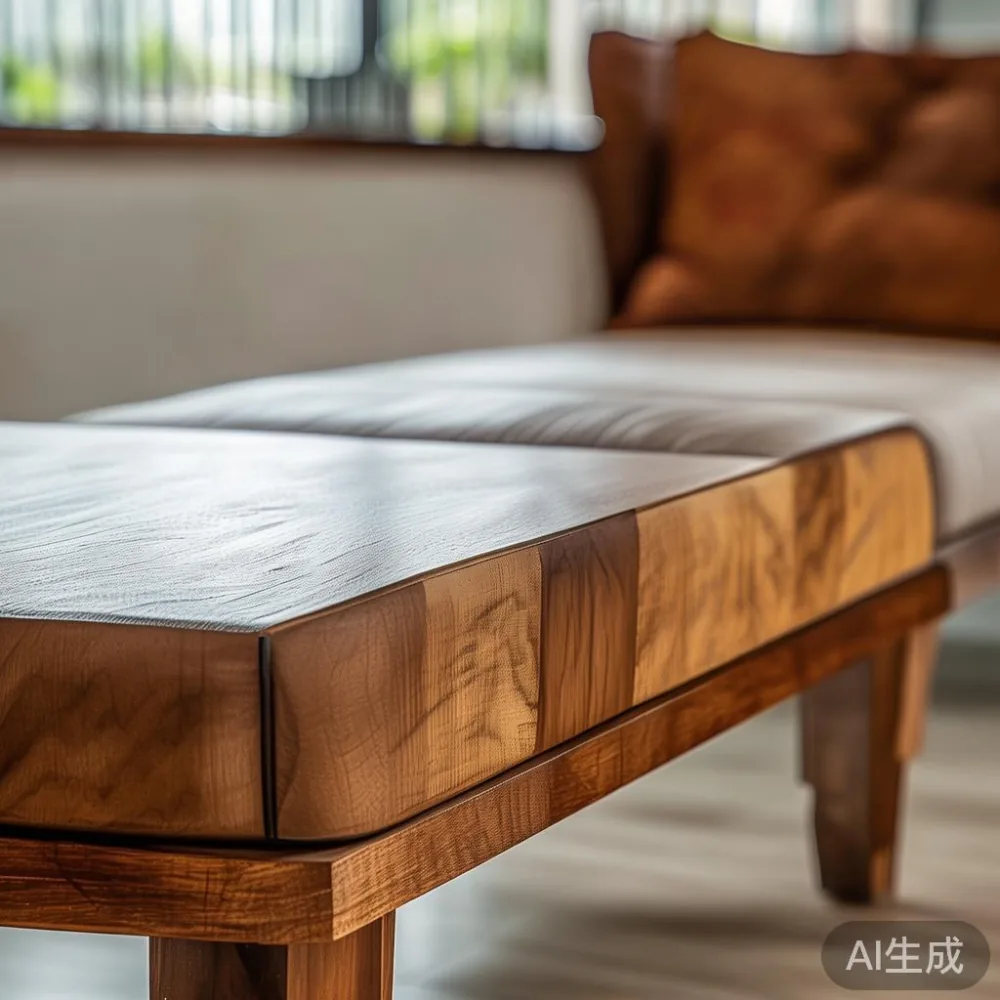
That visit pushed me to build a proper five-year cost comparison for Singaporean buyers choosing between a veneer sofa-bed and a solid wood sofa-bed. The numbers below draw on three showroom visits (MIDHILL's Tanjong Pagar display, a Jurong East factory outlet, and an IKEA Alexandra showroom), two quotations from local carpentry firms, and the real ledger my friend finally showed me over kopi at a Bedok Reservoir kopitiam.
How do I style a Italian light luxury bed frame in a small apartment?
Use a low-profile Italian light luxury bed frame (under 35 cm side rail) in white-oak or walnut veneer, pair it with two slimline 60 cm nightstands, a single 45 cm marble table lamp, and wall-mounted reading sconces so the floor stays visually empty and the room reads larger than its 90 sqm HDB floor plan.
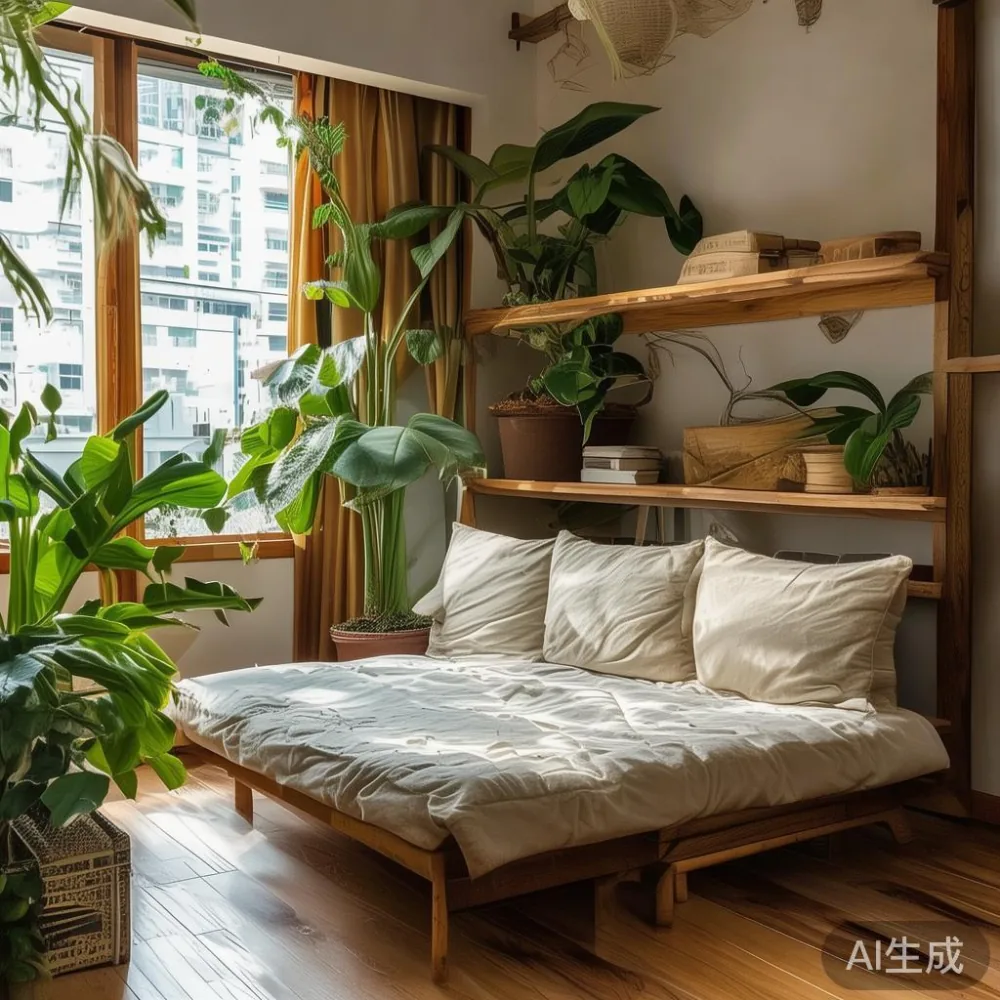
Styling matters because the sofa-bed is the largest visual object in most four-room HDB layouts, and the bed frame anchors the master bedroom. When both pieces share the same wood tone and the same restrained proportions, the whole flat feels curated rather than crowded, even when the lift lobby at your Tampines block is only 1.2 m wide and forces awkward delivery angles.
The Real Price Tag in Singapore Dollars
Entry-level veneer sofa-beds at Singapore furniture chains sit between S$699 and S$1,299 for a three-seater that converts to a queen. Mid-range solid wood sofa-beds from established makers begin around S$1,850 and reach S$3,400 for full-hide leather upholstery. For the bed frame, a veneered MDF queen typically costs S$450 to S$850, while a true solid wood queen bed frame in ash or rubberwood runs S$1,050 to S$2,200. A solid wood dining table for four starts near S$950; a comparable veneer table is S$420 to S$680. A two-door solid wood wardrobe averages S$1,400 versus S$620 for a melamine wardrobe, and a solid wood nightstand pair is around S$520 versus S$190 in particleboard.
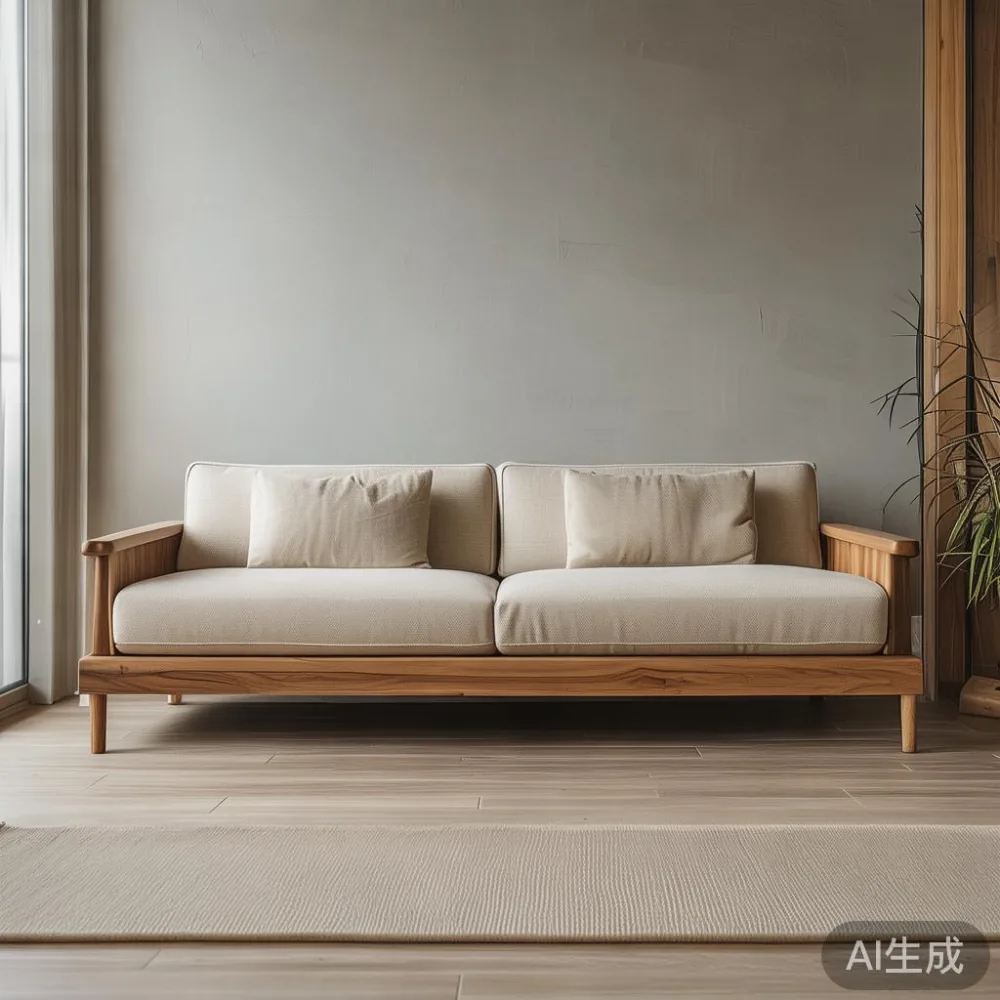
So on day one, going veneer saves roughly S$1,300 across a sofa-bed, bed frame, dining table, wardrobe, and nightstand set. That gap is real, and ignoring it would be dishonest. The question is what happens in years two through five.
What Actually Breaks First (and What It Costs to Fix)
My colleague Priya runs a three-room flat in Bedok and bought a S$980 veneer sofa-bed in 2022. By month 14, the click-clack mechanism needed a S$120 repair because one ratchet spring had bent. By month 28, a 30 cm strip of laminate peeled along the seat edge after a humid spell, and a patch-and-strip quote came back at S$180. A full re-laminate of the visible panels would have been S$420, so she lived with the patch. Total repair spend at the 36-month mark: about S$300.
Compare that to a solid wood sofa-bed with kiln-dried rubberwood or ash frame. The mechanism is the same generic steel unit either way, so repair exposure there is comparable (S$100 to S$150 per visit in Singapore). The frame itself, however, rarely cracks. Swelling at the joints, the usual killer of veneer sofa-beds exposed to Singapore's 80 to 90 percent humidity, simply does not happen on a properly dried hardwood frame. Five-year repair bills I have seen on solid wood pieces in local homes sit between S$100 and S$250, mostly mechanism adjustments rather than structural rebuilds.
Refinishing, Resale, and the Hidden Five-Year Value
This is where the calculation flips. A solid wood sofa-bed frame can be sanded and re-oiled at year four or five for roughly S$220 to S$380 in Singapore (a mobile refinisher charges around S$45 to S$60 per hour, and a full sofa-bed takes four to six hours plus materials). A veneer piece cannot be refinished at all; once the top layer is breached, you are looking at replacement panels or a new sofa-bed. MIDHILL, the Foshan maker that exports to 15-plus countries, includes lifetime refinishing on its solid wood sofa-beds, which over a 15-year ownership wipes out several hundred dollars of upkeep that a veneer buyer pays out of pocket.
Resale tells the same story. On Carousell and Facebook Marketplace, used solid wood dining tables from established brands still list at 35 to 50 percent of retail after five years if the photos show intact grain. Veneer dining tables at the same age typically list at 10 to 18 percent of retail, and many never sell at all. A S$1,050 solid wood dining table might return S$400 in year five; a S$540 veneer table returns S$80 on a good day. The gap on a single dining table alone is S$320, more than a year of mid-range electricity in a four-room HDB flat.
Singapore-Specific Friction: Delivery, Lifts, and GST
A typical HDB lift door is 0.9 m wide by 2.1 m tall, and newer BTO corridors can be as narrow as 1.2 m. A flat-pack veneer sofa-bed usually clears this envelope without drama. A solid wood sofa-bed in a single heavy carton often does not, which means white-glove delivery with a two-man team and possible hoisting. In Singapore that service adds S$80 to S$220 per item, and 9 percent GST applies on the full delivered value. Once you add S$140 for two pieces of white-glove delivery and roughly S$200 in extra GST on the higher retail price, the day-one savings on the veneer set shrink from S$1,300 to about S$960.
Then there is the lifetime refinishing benefit that comes standard with makers such as MIDHILL, plus a 10-year structural warranty that covers frame cracks, joint loosening, and mechanism failure on most solid wood sofa-bed models. Refinishing alone, valued at S$300 per event and realistic every five to seven years, contributes a further S$300 to S$600 of preserved value across the comparison window. Free shipping over US$350 (about S$480) and 14-day returns from regional factories also remove the typical S$60 to S$120 in local courier risk that a Tampines kiosk cannot absorb.
The Five-Year Ledger, Line by Line
Take a realistic Singaporean household furnishing a four-room flat: one sofa-bed, one queen bed frame, one four-seater dining table, one two-door wardrobe, and two nightstands. Veneer path: S$4,580 in furniture, S$540 in repairs, S$220 in patch-and-strip work, S$180 in early replacement of one nightstand, and S$80 in residual resale. Net five-year cost: about S$5,440, or S$1,088 per year. Solid wood path through a brand like MIDHILL: S$6,180 in furniture (after free shipping above the US$350 threshold), S$0 in structural repairs under the 10-year warranty, S$0 in refinishing thanks to the lifetime refinishing benefit, S$0 in patch work because the surface can be sanded, and roughly S$700 in residual resale across the set. Net five-year cost: about S$5,480, or S$1,096 per year.
On pure five-year cash outlay the two paths are within S$40 of each other. Stretch the comparison to ten years and the veneer path doubles its repair line, adds at least one full sofa-bed replacement, and the resale line drops to zero. The solid wood path adds one scheduled refinishing visit of about S$320 and keeps the same resale ratio. The ten-year gap lands near S$2,400 in the solid wood buyer's favour, before counting the daily comfort of a frame that does not creak when a 75 kg adult sits down hard after a long day at work in the CBD.
What About Post-Modern Light Luxury Aesthetics?
Style is where veneer furniture still tries to win the argument. A post-modern light luxury dining table with a sintered stone top and a brushed-brass base can be built on an engineered substrate because the visible surfaces are stone and metal, not wood. For pieces where the wood is structural and visible, such as a sofa-bed frame, a bed frame headboard, a wardrobe facade, or a nightstand, solid wood carries the grain pattern and the joinery that define the French light luxury look. French light luxury interiors lean on continuous grain across drawer fronts and tapered legs in solid ash or walnut, details a 0.6 mm veneer cannot replicate once the corner radius is cut. American light luxury by contrast accepts thicker rotary-cut veneers over solid substrates, which lowers cost but accepts a shorter service life in Singapore's humidity.
If you are weighing a marble table, sintered stone, or solid wood top for the dining area, remember that the marble table or stone top will outlast three sofa-bed frames, so the long-life material there should pair with a long-life frame underneath. A S$2,200 Carrara marble table on a S$520 veneer base is the wrong way around; the marble will be discarded with the base. Put the marble on a S$1,100 solid wood trestle and the same marble serves you for twenty years.
Humidity, HDB Air-Con, and Daily Care Habits
Singapore homes run air-con most evenings and stand open to ambient humidity the rest of the day, which keeps indoor relative humidity between 65 and 80 percent for nine months a year. Veneer tolerates this for about 18 to 30 months before the substrate swells and the laminate lifts. Solid wood breathes, and a periodic coat of hard wax oil resets the moisture barrier. This is also where routine luxury leather furniture care habits overlap with wood care: keep both away from direct air-con blasts, wipe with a barely damp microfibre cloth weekly, and condition leather every six months while oiling wood every twelve. The shared habit takes about 20 minutes per quarter and adds years to both materials, a small time cost that compounds into real five-year savings.
When Veneer Is Still the Right Answer
I am not here to declare one material the winner for every room. Veneer makes sense for a guest-room sofa-bed used twice a year, a rental flat you plan to vacate in 24 months, or a budget wardrobe for a BTO that will be demolished in the next SERS cycle. In those cases, the lower day-one outlay genuinely fits the use pattern. For primary living-room pieces, the master bed frame, the main dining table, and any wardrobe that will hold a wedding trousseau, solid wood pays for itself quietly, the way a well-built HDB door pays for itself by never swelling in a January storm.
The Honest Bottom Line for a Tampines or Punggol Buyer
If your five-year horizon is firm and your flat is a stepping stone, veneer is defensible, just budget S$450 to S$650 for mid-life repairs and accept that the sofa-bed will not outlast two housemates. If you see yourself in the same flat past year six, want a sofa-bed that opens smoothly for the in-laws who visit every Lunar New Year, and value the option to refinish rather than replace, a solid wood sofa-bed from a maker that backs the frame with a 10-year structural warranty and lifetime refinishing, such as MIDHILL's Foshan workshop, is the cheaper path over the window most Singaporean families actually live with their furniture. The day-one sticker is higher, but the five-year ledger is a near-tie, the ten-year ledger is not close, and the daily experience of a frame that stays quiet, level, and beautiful through every humid spell is something no laminate swatch can promise.