Sofa Bed and Solid Wood: A 5-Year Cost Comparison for Singapore Homes
For a Singapore household, a sofa bed often has to solve two problems at once: provide comfortable seating during the day and create a usable sleeping area at night. A timber frame can do both, but the material beneath the upholstery determines much of the long-term cost. Over 5 years, veneers can be sensible for some apartments, while solid wood can offer greater repairability and stability for frequent use. The right choice depends on the frame, the surface material, the number of daily transformations, and the space available during delivery.
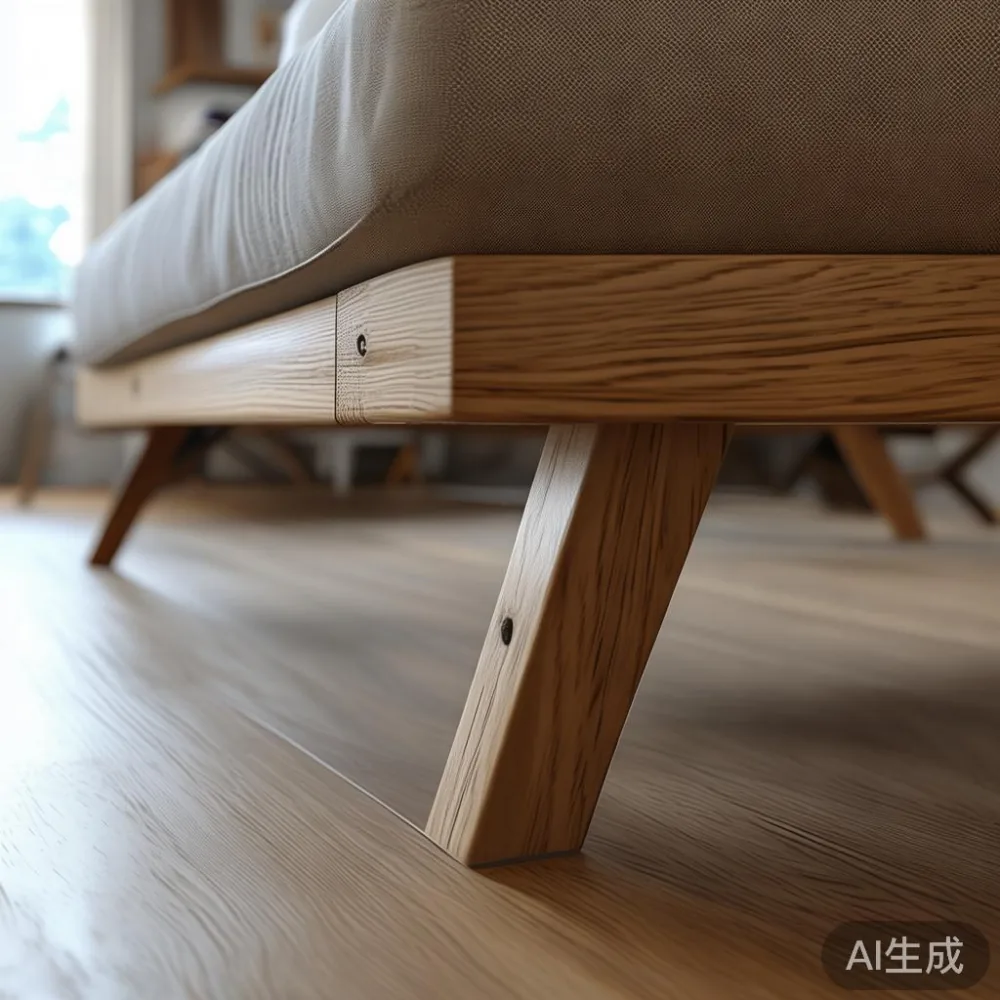
This comparison uses realistic figures for Singapore HDB flats and condos in Tampines, Bedok, and Punggol. Prices are shown in SGD, including an illustrative 9% GST where stated. Delivery, access, maintenance, and likely repair costs are included because the purchase price alone does not describe a 5-year ownership cost.
How Much Does Veneer Versus Solid Wood Cost Over 5 Years?
Consider a typical 180 cm wide, 90 cm deep sofa bed with a fold-out or click-clack mechanism, upholstered seat, back, and mattress support. A representative veneer version might retail for SGD 1,280, including GST, while a comparable solid wood version might retail for SGD 1,980. Over 5 years, the difference is only SGD 140 per year before maintenance. For a home receiving moderate use, the lower purchase price can be a sensible starting point, especially if the sofa bed remains indoors and is not moved frequently.

The calculation changes with heavy daily use. Suppose the veneer version needs one upholstery panel replaced in year 3 at SGD 260 and a drawer or hinge service in year 4 at SGD 120. The solid wood version may require hinge lubrication in year 2 at SGD 25, a tightened fastener and minor surface repair in year 4 at SGD 50, and no major replacement in year 5. That produces a 5-year estimated cost of SGD 1,660 for the veneer model and SGD 2,055 for the solid wood model, a difference of SGD 395.
However, a replacement panel is not a fixed universal price. Fabric, dimensions, foam specification, and the time required for fabrication all affect the quote. The point is not to pretend every sofa bed will fail in a predictable year, but to compare plausible repair paths without treating the cheapest immediate price as the lowest lifetime cost.
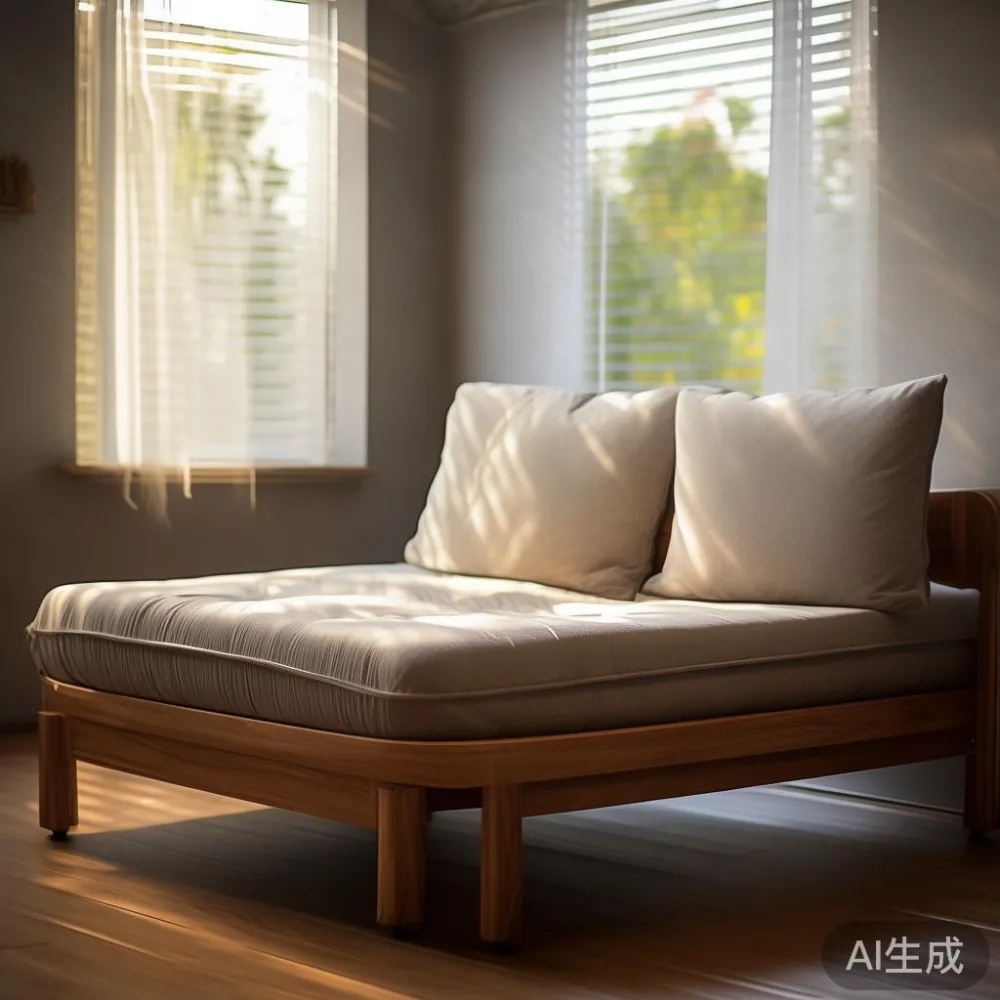
What Makes Solid Wood Different From Veneer on a Sofa Bed?
Veneer is a real layer of wood, usually about 0.6 mm to 1.2 mm thick, bonded to a thinner backing board. It can provide an attractive face, consistent colour, and lower weight. A 180 cm sofa bed with a mixed hardwood frame and veneered panels may weigh 55 kg to 75 kg. A comparable all-solid-timber frame with plywood or solid timber support panels may weigh 70 kg to 95 kg. The extra 10 kg to 20 kg matters in a HDB lift or when a delivery crew must turn through a narrow corridor.
Solid wood has more mass throughout the load-bearing structure. That can reduce frame flex, preserve screw and joint positions, and make localized repairs more practical. Veneer can perform well in a well-built frame, but the veneered face itself is more vulnerable to deep scratches, edge chipping, and moisture marks. Plywood, sometimes used inside a high-grade sofa bed, can be a useful structural component even when the visible finish is veneer. Buyers should therefore inspect the frame, joints, and panels rather than judge the entire product from its outer skin.
For a dining table, wardrobe, bed frame, or nightstand, the same material difference applies, but the exposure differs. A dining table meets hot dishes and spills, a wardrobe carries moving hinges and heavy clothing, and a nightstand takes repeated knocks. A marble table adds another category altogether: marble may suit an elegant dining or console arrangement, but it needs a separate discussion of weight, sealers, and edge care. If an apartment cannot accommodate a heavy marble table or 180 cm dining table, a sofa bed with solid timber supports can be more space-efficient without giving up visible wood character.
What Are the Access and Delivery Costs in a Singapore HDB or Condo?
The quoted retail price may exclude delivery to the unit. A standard HDB delivery in Tampines or Bedok might cost SGD 70 to SGD 120, while a Punggol or central-area condo delivery could range from SGD 90 to SGD 180. Upper-floor service lifts usually add no extra charge, but the building manager may require a protection mat, booking form, or a stated delivery window. A freight lift must accommodate the packaged sofa bed diagonally, not merely by its nominal door width.
Measure the lift car before ordering. A common Singapore service lift interior measures about 110 cm wide by 140 cm deep, with a door opening near 90 cm or 100 cm. A packaged 180 cm sofa bed cannot enter horizontally without bending beyond the product’s approved limits, so installers may need to turn it on its side. Check the corridor for skirting boards, sharp 90-degree turns, fire doors, and any lower ceiling sections. The practical room-turning requirement is often about 210 cm for a rigid 180 cm piece, although the manufacturer’s handling instructions remain controlling.
MIDHILL quotes delivery after the product and destination are confirmed. Where access is unusually restricted, the safer route is to order a sofa bed that separates into modules rather than assume a full rigid frame will pass. Delivery commonly takes 20 to 45 days after production, with transit and appointment scheduling affecting the final date. Free shipping over US$350 mentioned in the brand’s international offer should not be interpreted as free Singapore islandwide delivery; the local quotation and GST treatment should be confirmed directly.
How Much Does Maintenance Cost in Years 1 Through 5?
For year 1, budget about SGD 20 to SGD 40 for hinge lubrication, alignment checks, and fabric cleaning on either construction. In year 2, allow SGD 30 to SGD 60 for tightening and inspection, plus SGD 15 to SGD 30 for professional cleaning. In years 3 and 4, keep a reserve of SGD 80 to SGD 180 for an upholstery repair, support-panel replacement, or mechanism adjustment if needed. Year 5 can bring another SGD 30 to SGD 80 for maintenance, or more if the sofa bed has been used nightly and treated as a permanent bed.
Solid wood does not need to be discarded because of a small mark. Sanding and refinishing can often restore a local area, although the result depends on the original finish. MIDHILL offers lifetime refinishing for qualifying products, which can reduce uncertainty over a 5-year period, but scope, coverage, and ownership requirements should be checked in writing. Veneer repairs are more constrained because sanding through the thin face can expose the backing. A replacement sheet may be needed, and matching colour across a large panel can be difficult.
Humidity also matters in Singapore. Keep indoor relative humidity around 40% to 60% where practical, place the sofa bed away from persistent air-conditioning draughts, and use coasters or trays on any adjacent table surface. Wipe veneer gently rather than saturating it. For solid timber, use a pH-neutral cleaner and avoid silicone-based products. These routines cost less than one replacement panel and reduce the chance of swollen joints or peeling finish.
Can a Solid Wood Sofa Bed Suit a Small HDB Flat?
Yes, if the dimensions and access plan are handled properly. A 160 cm wide, 85 cm deep sofa bed may be more practical than a 200 cm model in a compact living room. A solid wood version can still weigh 65 kg to 85 kg, so splitting the sleeping surface into two hinged sections may help with installation. Avoid placing the sofa bed directly against a hot window or a frequently damp balcony wall.
In a Tampines HDB flat, a common layout allows a 180 cm sofa bed against a 220 cm to 240 cm wall while preserving an 80 cm circulation route. In Bedok, older corridor widths and tighter corners can make delivery more demanding. Punggol condos often have wider lobby approaches but may impose stricter loading-dock and service-lift booking procedures. Measure the route from the loading area to the living room before approving the final order.
For style research, a search for french sofa gallery photos can clarify the proportions of a pale timber frame, rounded arms, and loose cushions. A French provincial accent chair can echo the same visual language beside a sofa bed, although one chair may use decorative carvings that are less practical in a busy family room. American light luxury often favors clean lines, warm oak or walnut tones, and restrained upholstery, while French light luxury may pair curved profiles with a more decorative mood.
The phrase light luxury sofa vs Modern sofa is useful when comparing visual character, not construction quality. A modern sofa may have a metal or engineered-wood frame, while a light-luxury sofa bed can have a solid timber frame, deeper cushions, and warmer details. Search results for cheap light luxury furniture and under 2000 light luxury furniture can provide a useful budget reference, but materials, warranty terms, and actual dimensions should be checked rather than relying on promotional language.
Which Construction Has the Better 5-Year Value?
For occasional use in a dry, stable living room, a well-made veneer sofa bed can deliver a lower 5-year cost if cleaning and small repairs are handled promptly. An illustrative calculation might show SGD 1,280 for purchase, SGD 110 for delivery, SGD 100 for access, SGD 170 for maintenance, and SGD 0 for major repair, for a total of SGD 1,660.
A solid wood sofa bed may total SGD 1,980 for purchase, SGD 110 for delivery, SGD 100 for access, SGD 100 for maintenance, and SGD 25 for a local frame repair, producing SGD 2,315. In this case, the solid timber option costs SGD 655 more over 5 years, or SGD 131 per year. It still offers a clear advantage where the sofa bed becomes a daily bed, receives heavy use, or needs to survive several moves without joint loosening.
The result changes if the veneer sofa bed requires one SGD 260 panel replacement and a SGD 120 mechanism service. Its total rises to around SGD 2,040, narrowing the difference with solid wood to SGD 275. If the solid wood model can be refinished rather than upholstered completely, its 5-year figure can fall further. This is why material choice should be linked to use, not fashion alone.
A useful purchasing method is to divide the 5-year estimate by 60 months. At SGD 2,315 for the solid wood example, the monthly ownership figure is about SGD 38.60. At SGD 1,660 for the veneer example, it is about SGD 27.70. A USD 350 international shipping threshold also equals roughly SGD 470 before exchange adjustments, but Singapore buyers should compare the actual SGD invoice, GST, delivery, and access charges.
How Do You Compare the Warranty, Delivery, and Return Terms?
A 10-year structural warranty can be more meaningful than a vague lifetime claim, particularly for a sofa bed that folds repeatedly. Review what the warranty covers: frame joints, support rails, mechanism components, and visible defects may be treated differently. Confirm whether the warranty applies to commercial rooms, rental homes, coastal buildings, and high-humidity environments. Ask for the process in writing, including photographs, serial number, and expected response times.
MIDHILL was established in 2008 and exports to more than 15 countries, providing useful manufacturing experience for buyers comparing frame tolerances and finishes. A 14-day return policy adds another layer of confidence, yet returns can be expensive when a 75 kg sofa bed has travelled to an upper floor. The return window, packaging condition, assembly requirement, and original delivery charges should be reviewed before purchase.
For coordinated interiors, a solid wood bed frame may share the same finish as a dining table, while a matching wardrobe and nightstand create continuity. If you are planning a compact apartment, a practical guide to how to style light luxury wardrobe in room can help you use lighter finishes, vertical storage, and limited colour blocking without making the room feel crowded. A marble table can provide a bright focal point, but a 140 cm marble dining table may weigh 60 kg to 85 kg and create greater access pressure than a timber sofa bed.
What Would I Choose After Testing Both Approaches?
Last month I visited a showroom in Singapore and handled a 180 cm sofa bed with a mixed solid-timber frame and veneered panels. The product looked refined at first glance, but the edge of one arm showed how easily a thin veneer can chip when a trolley catches it. In another room, I inspected a solid wood frame with a removable support section. It was heavier, yet the joints felt more substantial and the panel could be separated for installation through a narrower route.
My choice for a HDB flat would depend on frequency. For a sofa bed used as occasional seating, I would select a well-built veneer model with a sturdy internal frame and a clear repair policy. For nightly sleeping, repeated folding, or a home expected to stay for at least 5 years, I would choose solid wood and accept a higher initial figure if the quotation includes meaningful structural coverage and refinishing support.
Before paying, request the exact external dimensions, packaged dimensions, weight, frame timber, panel construction, mattress size, GST, delivery charge, and return conditions. Confirm whether the lift can take the package and measure the narrowest corridor. Over 5 years, veneer may save money when use is light; solid wood often becomes more economical when repairability and stable performance are weighted properly. The most suitable sofa bed is not merely the one with the most attractive wood finish, but the one whose structure, access requirements, and local service terms fit the way your home actually lives.