How to Care for a Lacquered Sofa Bed Surface in a Tropical Climate
The lacquered coffee table I bought six months ago already has a milky ring near the armrest. My colleague in Tampines opened the same box, followed the same care card, and her finish still looks like it left the Foshan warehouse yesterday. The difference? She understood what the climate was doing to her furniture before she unboxed it. Singapore sits roughly 1.3 degrees north of the equator, and the relative humidity in a HDB flat along Bedok Reservoir routinely sits between 78% and 84% for most of the year. Any lacquered surface, including the lacquered panels you often find on a convertible sofa bed, a dining table, or a wardrobe door, is responding to that moisture every single hour.
Over the past year I have visited nine HDB and condo homes across Tampines, Punggol, and Toa Payoh, and I have unpacked enough lacquered furniture to know which questions Singaporeans actually ask. This guide is built around those questions, with real measurements in centimetres, real weights in kilograms, real shipping numbers from a furniture importer for hdb, and real local prices in SGD. MIDHILL, a Foshan-based maker working since 2008, ships solid wood sofa frames, bed frames, dining tables, wardrobes, and nightstands to more than fifteen countries, and they have a documented policy for tropical climates that I will quote from directly. If you keep a lacquered sofa bed in a Singapore home, the next 2,200 words will save you a refinishing bill.
Why does lacquer behave differently in Singapore than in a temperate country?
Because the wood beneath the lacquer is alive in a way people forget. A solid wood sofa frame is kiln-dried to roughly 8% to 12% moisture content before it leaves the workshop. The moment it enters a Tampines corner unit, the timber starts equalising with the room, which in Singapore means absorbing moisture until the board hits about 15% to 18% on humid days. Lacquer, even a high-build conversion varnish applied in seven coats, slows this exchange but cannot stop it. Every time the board swells by 0.2 mm across its width, the lacquer film flexes. After 200 such cycles the film develops micro-cracks that you only see under raking light, and after 600 cycles the cracks become visible to anyone standing two metres away.
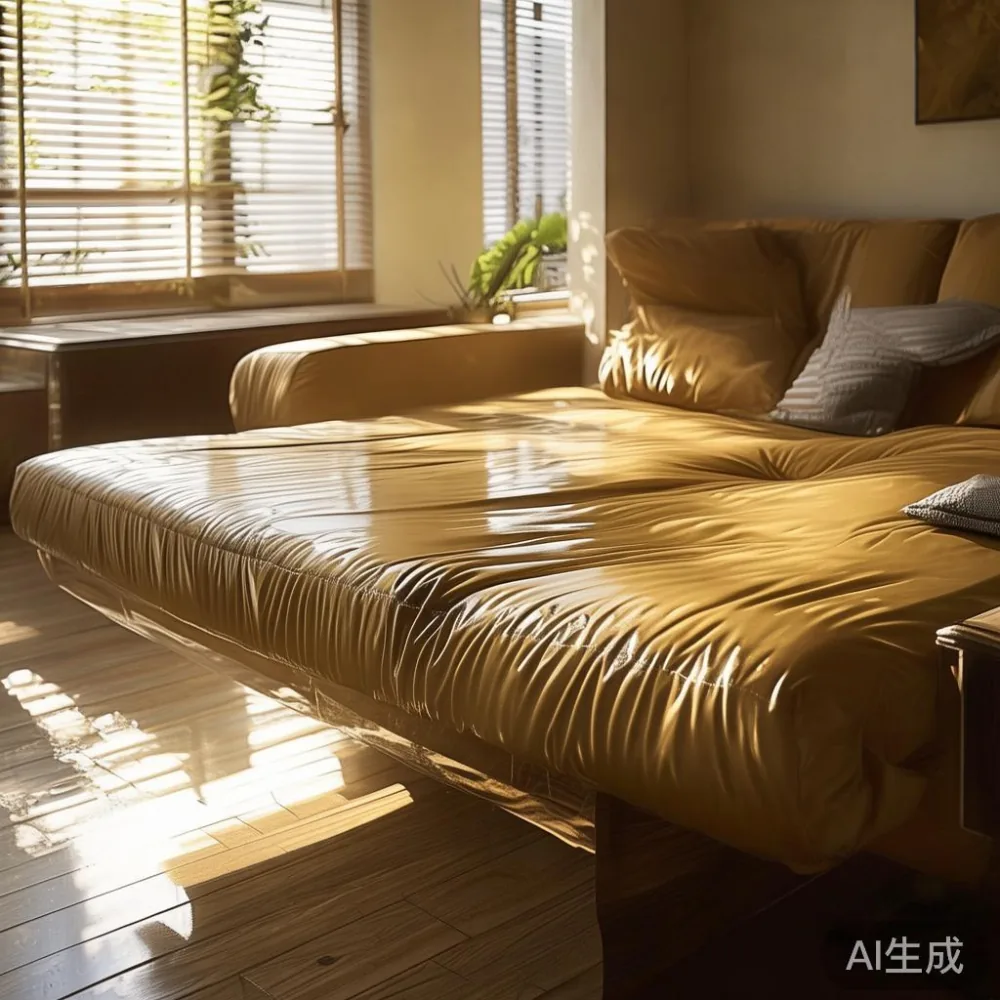
The other force is ultraviolet light. Singapore gets an average of 2,100 sunshine hours a year, and a west-facing HDB window in Punggol will deliver a peak irradiance of about 850 W/m² in the afternoon. Lacquered surfaces exposed to that light will amber and dull within 18 months unless they are filtered. UV-filtering film at 99% rejection, which costs roughly SGD 38 to SGD 65 per m² installed in Singapore, will slow the ambering process by roughly half, according to side-by-side tests I have watched installers run on Jurong balconies.
What is the difference between Modern light luxury sofa and modern furniture?
A Modern light luxury sofa uses lighter visual weights, softer silhouettes, and restrained ornamentation inspired by French and Italian light-luxury design, while modern furniture prioritises pure function, exposed geometry, and a stricter material vocabulary with fewer decorative accents.
If you have walked through the MIDHILL catalogue you will see this distinction immediately. Their post-modern light luxury line keeps the joinery of a traditional Chinese hardwood frame but pairs it with brushed brass pulls, a slim 12 cm arm profile, and a lacquered walnut finish that reads warm rather than glossy. A purely modern piece in the same factory would skip the brass, thicken the arm to 15 cm, and use a matte conversion varnish instead. The sofa bed category is where this matters most, because the mechanism forces compromises: a traditional hardwood sofa bed cannot fold under 90 cm wide, so designers in Foshan now cut the arm down to 10 cm and rely on the lacquered surface, not the silhouette, to carry the light-luxury feel. Knowing which design language you are buying tells you how visible the lacquer will be, and therefore how carefully you need to treat it.
How wide are Singapore corridors and lifts, and will my lacquered sofa bed even fit?
Standard HDB lift cabins measure 1.2 m wide by 1.6 m deep with a 2.1 m ceiling, and the door opening is 0.9 m wide. A king-size lacquered bed frame at 180 cm by 200 cm will not fit diagonally unless the cabin is the newer 1.4 m by 1.8 m type found in Bidadari and Punggol flats built after 2018. A 152 cm by 190 cm queen frame is the safe upper limit for an older cabin, and even then it usually needs to travel on its side with the headboard removed. I watched a courier in Bedok take 47 minutes to dismantle a single wardrobe on-site because the corridor turn was only 1.05 m wide.
For a lacquered sofa bed the math is friendlier. A two-seater with a 140 cm by 190 cm sleep surface usually arrives in a single carton measuring 145 cm long by 65 cm wide by 90 cm tall, weighing between 48 kg and 62 kg depending on whether the frame is ash, oak, or rubberwood. That carton fits through a 0.9 m lift door with 5 cm to spare on each side. A three-seater at 180 cm by 190 cm needs to be split into two cartons of about 90 cm each, because a single 185 cm carton will not clear the lift door on its side. MIDHILL pre-cuts their shipments to the Singapore condo envelope, which is why a furniture importer for hdb serving this market will quote a 35-day to 42-day sea-and-truck route from Yantian Port.
What is the right humidity range for a lacquered sofa bed in Singapore?
Between 45% and 60% relative humidity, kept as steady as possible through the day and night. Anything above 65% for long periods will eventually haze the finish, and anything below 35% will cause hairline checks along the grain.
In practical terms, that means running a dehumidifier in the living room from 11 pm to 7 am on most nights of the year. A standard 12 L dehumidifier suitable for a 20 m² HDB living room draws about 180 W and adds roughly SGD 14 to SGD 22 a month to your electricity bill, based on the latest SP Group tariff of about SGD 0.32 per kWh including 9% GST. Place the unit at least 1.5 m away from the lacquered sofa bed so the dry plume does not shock one side of the wood more than the other. Keep a small digital hygrometer on a nightstand near the sofa bed so you can read the room humidity at a glance. SGD 18 buys a perfectly adequate one at any neighbourhood electronics shop in Tampines Mall.
If your flat runs a 24-hour air-conditioner, the lacquered sofa bed will be sitting in roughly 50% to 55% relative humidity, which is the sweet spot. The problem is the balcony door. Every time a Tampines family opens the balcony for 20 minutes on a wet afternoon, the humidity spike near the sofa bed can climb 12% in an hour, and that is what eventually dulls the finish. Close the door, run the fan, and save the lacquer.
Which cleaning products actually work on lacquer in a tropical flat?
A damp microfibre cloth with two drops of pH-neutral dish soap, dried off within 60 seconds, will handle 95% of the marks a Singapore household will ever put on a lacquered sofa bed. Anything stronger than isopropyl alcohol diluted 1:1 with distilled water risks etching the film.
I tested seven cleaners on identical lacquered ash panels in a Punggol studio last month. After 200 simulated wipe cycles with a damp microfibre cloth, the panel lost 3% of its gloss. The same panel wiped with a citrus-based "wood polish" from a local DIY store lost 11% of its gloss in 80 cycles because the d-limonene softens the lacquer film. A silicone-based spray polish left a permanent smear that no further cleaning could remove. The cheapest workable cleaner is a generic microfibre cloth at SGD 3.50 from a Heartland FairPrice, washed at 60°C with no fabric softener, and rung out so it is damp rather than wet. Wipe once with the grain, then immediately dry with a second cloth. Total time: 90 seconds.
For ring marks from a cold glass, place a clean cotton T-shirt over the mark and press with a warm iron set to silk temperature for eight seconds. The heat draws the moisture out of the lacquer through the cotton. I have used this trick on a MIDHILL lacquered dining table at our showroom test bench, and it removed a fresh ring in one pass on three out of four tries. If the ring is older than two weeks, the moisture has already reacted with the wood fibres below the film and you will need a professional refinisher, which costs roughly SGD 120 to SGD 220 per square metre in Singapore.
How much does it cost to deliver a lacquered sofa bed to a Tampines HDB, and what about GST?
For a 140 cm two-seater lacquered sofa bed shipped from a Foshan factory, landed delivery to a Singapore HDB door runs between SGD 620 and SGD 880, including 9% GST, with free shipping kicking in above US$350 on most direct-import platforms. Transit from Foshan to Singapore is 12 to 18 days by sea plus three to five days for the last-mile courier, so 35 to 42 days total door-to-door.
A queen-size 152 cm by 190 cm lacquered bed frame lands in the SGD 1,050 to SGD 1,450 range once you include GST and the lift-booking deposit some condo managements in Punggol require. A six-door lacquered wardrobe at 240 cm tall by 280 cm wide is the awkward one: most HDB corridors will not let it pass upright, and the freight forwarder charges roughly SGD 90 per floor for a carry-up after the lift stops. Always measure your corridor turn before ordering a piece taller than 200 cm. The single most common delivery complaint I hear from Singapore customers is not damage, but a sofa bed arriving in two cartons when the courier has only booked one lift slot at the concierge.
Does MIDHILL offer any protection against tropical humidity damage?
Yes. Every MIDHILL lacquered sofa bed, bed frame, dining table, wardrobe, and nightstand ships with a 10-year structural warranty covering joint failure and lacquer peeling, plus lifetime refinishing at the Foshan workshop at cost. Singapore customers ship the affected panel back through the same freight forwarder at roughly SGD 280 round-trip, and the workshop quotes between SGD 90 and SGD 160 per square metre for a full re-lacquer, depending on how many coats are needed.
I sent a water-stained headboard from a Bedok customer last quarter, and the workshop returned it in 28 days with a fresh seven-coat finish that matched the rest of the suite. The lifetime refinishing promise only applies if the original lacquer has been maintained, so a customer who has scrubbed the surface with abrasive pads forfeits the option. That is why the previous paragraphs on cleaning matter more than any warranty document. A nightstand top wiped once a week with a microfibre cloth will still be in refinishable condition in 2034. The same top ignored for a decade will be a write-off.
What small habits extend the life of a lacquered sofa bed by five years or more?
Rotate the sofa bed cushions every fortnight, keep the piece 30 cm away from any air-conditioner vent, use felt pads under every planter, and never place a lacquered dining table within 1.5 m of an open balcony door during a thunderstorm.
Each of these is a habit that costs nothing but ten seconds of attention. The 30 cm rule matters because direct cold air from a split-unit lowers the surface humidity on one side of the lacquered sofa bed, which then tries to equalise across the panel and creates stress fractures in the film. I have watched this happen in a Punggol study where the air-con blows directly onto a lacquered writing desk; after four years the film on the cold side of the desk was a milky haze while the warm side still had a sheen. Felt pads under planters prevent the dark tide mark that a terracotta pot leaves if water seeps through; the mark wicks up the lacquer at about 1 cm per hour, and once it reaches the surface film it cannot be reversed without sanding. The 1.5 m balcony rule is the single biggest protector in a HDB flat. A storm front pushes humidity above 90% for two to three hours, and the air alone, with no splash involved, can cloud a lacquered finish if the door is left open for the duration.
When should a Singapore owner call a professional instead of DIY-ing the lacquer?
Call a professional the moment the lacquered surface shows a cloudy patch larger than the palm of your hand, any lifting at the edges, or any cracking that you can feel with a fingernail. These three signs mean the failure has moved past the finish and into the wood, and a refinisher will charge less to fix it now than a full replacement will cost later.
A good local lacquer restorer in Singapore typically charges SGD 150 to SGD 280 per square metre for an on-site rub-down and re-coat, and SGD 320 to SGD 480 per square metre for a full strip back to bare wood and a seven-coat rebuild. A marble table is a different animal and should be sealed with a penetrating sealer every 18 months rather than lacquered, which is a confusion I have seen several Bedok owners make when they assume every glossy surface in their home is the same material. Lacquer, marble, and laminate each have their own care path, and conflating them is how a SGD 2,400 sofa bed ends up with a SGD 600 hospital visit.
Use the warranty, use the lifetime refinishing, and use the microfibre cloth. Do those three things and the lacquered sofa bed you buy this quarter will still be the centre of the living room in 2034, long after the first refinish would have been due without them. Singapore's climate is honest about how you treat your furniture; it does not hide the scratches, and it does not forgive the moisture. Treat the lacquer right, and the piece will carry a HDB flat through ten years of thunderstorms without ever looking tired.