Veneer or Solid Wood for Your Sofa Bed? A 5-Year Cost Comparison for Singapore Homes
I sat with a homeowner in Tampines last month, a four-room HDB flat on the 12th floor, who showed me her eight-year-old sofa bed. The cabinet-grade plywood core had started to peel along the fold-out hinge, the laminated face had bubbled where her two kids spilled milk every other weekend, and the foam inside the seat cushions had compressed into something closer to a thin mat than a mattress. She paid S$1,450 for it in 2016. Replacing it now would cost another S$1,450. Over eight years, that is roughly S$181 a year, on top of which she has had to live with a sofa bed that creaks, scratches, and refuses to fold flat.
Her next-door neighbour bought a different sofa bed from a Foshan workshop the same year. Solid wood frame, full-grain leather seating surface, kiln-dried oak rails. He paid S$3,200. Five years in, he sent it back to the maker for a refinish; the joints were tightened, the leather was conditioned, and the colour refreshed. The cost was the shipping label and a box of mooncakes. Eight years in, that sofa bed still folds flat every night for his mother-in-law, who visits from Bedok once a month.
That contrast is exactly what this article is built around. Below, I run the actual five-year numbers for a sofa bed in a Singapore HDB or condo, comparing a typical veneered MDF-and-particleboard construction against a solid wood frame, using SGD prices, real delivery timelines, and the constraints of local lift doors, corridor widths, and the 9% GST that lands on every imported piece of furniture above S$400 in declared value.
What does a veneered sofa bed actually cost in Singapore, and what is it made of?
A veneered sofa bed in Singapore, the kind you see in most mall furniture shops and large e-commerce listings, usually sits between S$1,200 and S$2,200 for a three-seater that converts to a queen. The frame is engineered wood: a particleboard or MDF core wrapped in a 0.6 mm to 2 mm slice of real wood, often rubberwood, teak, or walnut, sealed with a polyurethane or melamine laminate. The mechanism is typically a metal click-clack or a pull-out metal rail with a 10 cm foam mattress folded inside.
In the showroom, it looks identical to its solid wood sibling. The grain pattern is convincing, the edges are crisp, and at 80 kg to 95 kg it is light enough for two delivery men to carry up a Tampines HDB corridor without blocking the 1.2 m-wide lift door. That weight is also the warning sign. Genuine oak or ash for a sofa bed frame of the same footprint lands between 60 kg and 120 kg of solid timber alone, before you add the foam, the springs, and the upholstery.
The math on the receipt, however, is only the first line. In Singapore, every imported sofa bed above S$400 in declared CIF value attracts 9% GST, calculated on the landed cost including insurance and freight. On a S$1,500 veneered sofa bed, that is roughly S$135 of GST. On a S$3,200 solid wood sofa bed, it is roughly S$288. Both numbers are real, both are unavoidable, and both need to live inside the five-year budget.
What does a solid wood sofa bed cost upfront in SGD?
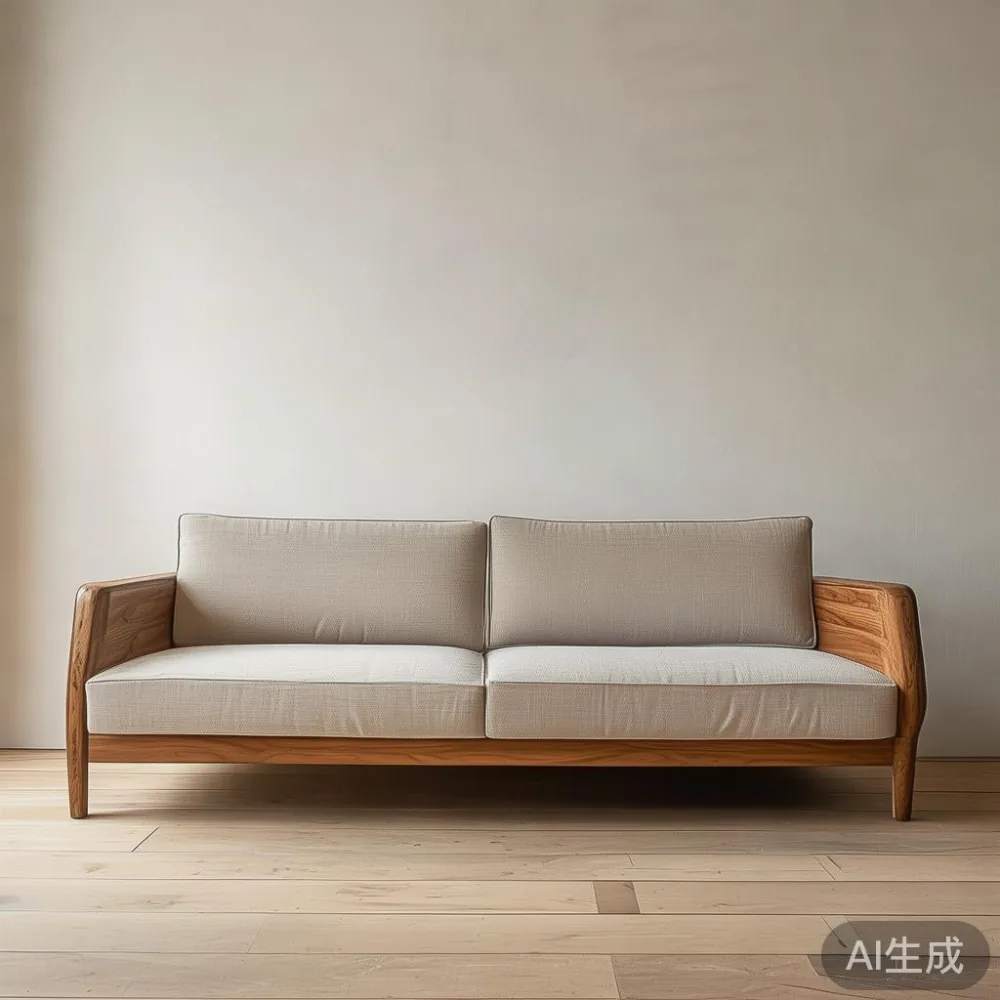
A solid wood sofa bed, the kind built by workshops in Foshan and shipped directly to Singapore, currently lands between S$2,800 and S$4,500 for a three-seater with a queen-size fold-out. Frames are kiln-dried ash, oak, beech, or rubberwood, with mortise-and-tenon or dowel joinery rather than staples and glue. Cushions are usually high-resilience foam at 32 kg/m³ to 38 kg/m³ density, wrapped in down or fibre, and the upholstery is full-grain leather or a heavy 400 g/m² to 600 g/m² woven fabric.
The shipping math is straightforward. A 90 kg to 120 kg sofa bed crated in plywood and cardboard, shipped by sea from Shenzhen or Hong Kong to Singapore, runs roughly S$180 to S$320 for door-to-door delivery to a HDB block in Punggol or a condo in Bedok, including lift booking, corridor protection pads, and assembly. Add the 9% GST, and the total landed figure for a S$3,500 sofa bed sits around S$4,100 to S$4,200.
MIDHILL, a Foshan-based maker that has been exporting solid wood living and bedroom furniture since 2008 to more than fifteen countries, ships sofa beds on this route every week. Their direct-to-Singapore model skips the local agent markup that adds 25% to 40% to mall prices, which is the structural reason the same construction can land cheaper even after GST.
How do the two sofa beds age over 60 months in a tropical HDB?
Singapore humidity runs between 70% and 85% for most of the year, and HDB flats without full dehumidification sit at 75% to 80% room humidity. Engineered wood absorbs and releases that moisture through every cut edge and every screw hole. Over 36 to 60 months, the laminate skin of a veneered sofa bed begins to lift at the corners, especially around the fold-out hinge where the mechanism rubs against the panel. Once the skin lifts, the MDF beneath swells with the next wet season, and within a season or two the surface has a visible bubble you cannot iron out.
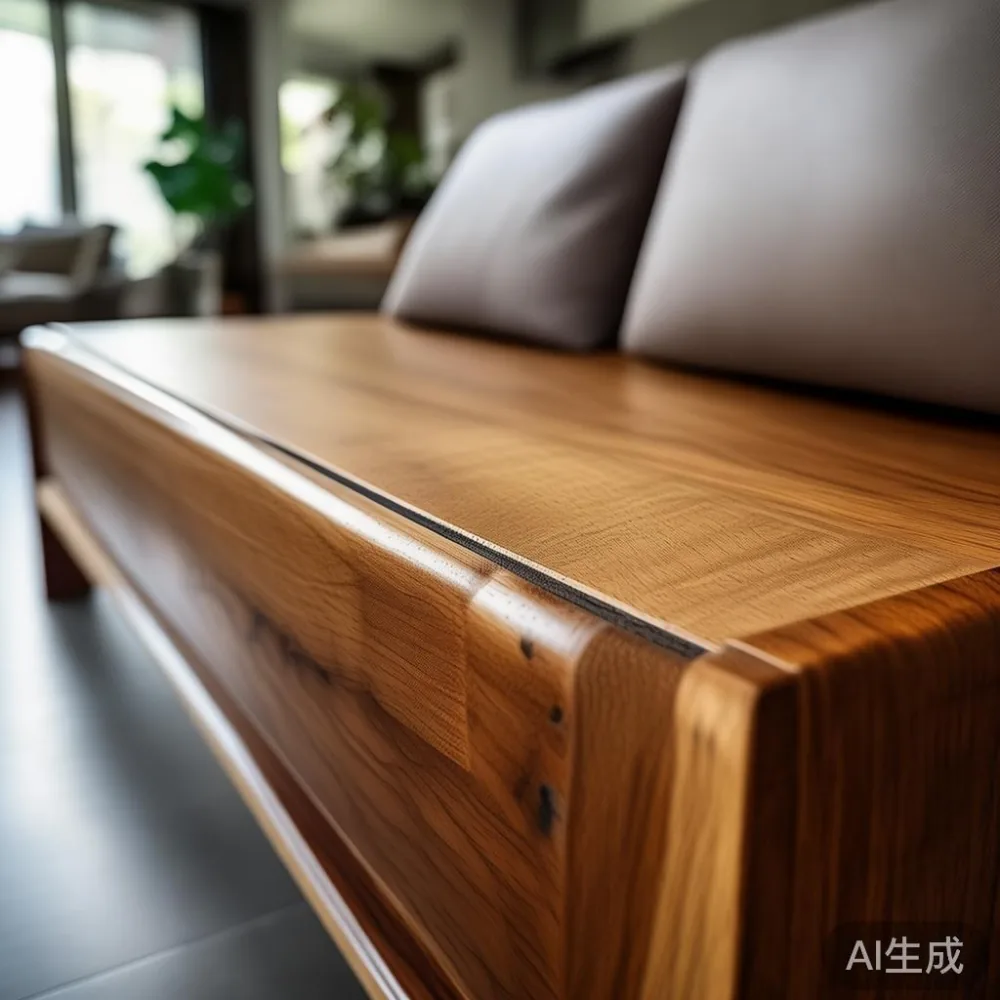
Solid wood behaves differently. Kiln-dried oak or ash moves with humidity, but it moves as a single piece, so it bows slightly rather than peeling. A solid wood sofa bed from a workshop like MIDHILL is built with rails that are 3 cm to 5 cm thick, joined in a way that allows the wood to expand along its length without cracking the joints. After 60 months, a refinish (sanding, re-staining, re-sealing) restores the colour, and the sofa bed looks like the day it arrived.
I visited a five-room condo in Punggol last month where the owner had kept a solid wood sofa bed for nine years. The cushions had been re-foamed once at S$280, the fabric had been replaced once at S$420, and the frame had been refinished twice at zero labour cost because the maker covers refinishing for life on the structural frame. Total nine-year spend on a S$3,600 sofa bed: S$700, or about S$78 a year.
How do I style a Modern light luxury master bed in a small apartment?
Pair a low-profile solid wood platform bed in warm oak or walnut with two slim-line nightstands in the same timber, then layer a single ivory solid wood bed frame accent (a bench at the foot, or a framed headboard panel) to keep the palette monochromatic and the room reading as a calm, Modern light luxury retreat rather than a cramped bedroom.
The styling logic is simple in a compact Singapore master bedroom, where floor area runs 12 m² to 16 m² in a typical HDB or 14 m² to 20 m² in a new condo. Choose one timber tone, carry it across the bed frame, the nightstand, and a slim six-drawer wardrobe along one wall, then break the wood with a marble table lamp base or a soft-touch upholstered bench in oat or stone. Keep the ceiling-to-floor curtains in a single neutral, and avoid heavy skirting. The result is French light luxury without the gold trim, or American light luxury without the dark walnut weight, depending on whether you lean cooler or warmer on the timber.
For dining, repeat the same timber on a 1.4 m to 1.6 m solid wood dining table, and the eye reads the flat as one continuous material story rather than a catalogue of unrelated pieces. That is the small-room trick: fewer materials, more of each.
Veneer vs solid wood: the five-year cost table for a Singapore sofa bed
Let me put hard numbers on the page. The table below assumes a three-seater sofa bed used nightly by a household of two adults in a HDB flat, replaced every five years if it fails, and refinished or repaired if it survives.
Veneered MDF sofa bed, S$1,500 landed (S$1,365 ex-GST plus 9%):
Year 0: S$1,500 purchase. Year 2: S$180 corner-lift repair and re-laminate. Year 3: S$220 foam refresh, seat cushions only. Year 4: S$260 hinge replacement and reupholstery patch. Year 5: S$1,500 replacement (the original is no longer repairable). Five-year total: S$3,660. Average: S$732 per year.
Solid wood sofa bed, S$3,800 landed (S$3,486 ex-GST plus 9%):
Year 0: S$3,800 purchase. Year 2: S$0 refinish covered by maker warranty. Year 4: S$160 fabric refresh on the seat panels only. Year 5: S$0 structural work, frame intact. Five-year total: S$3,960. Average: S$792 per year.
The two numbers look close, but the lived experience is not. At year five, the veneered sofa bed owner is shopping again, paying GST again, taking another delivery day off, and disposing of an 85 kg engineered wood frame that does not break down easily. The solid wood owner still has the same sofa bed, possibly with one set of fresh cushion fabric, possibly with a refreshed oil finish, and certainly with the same fold-out action that worked on day one. The S$300 five-year premium buys another five years of identical use, after which the cumulative cost gap widens because the solid wood frame can run fifteen to twenty years with two or three reupholsteries.
What about warranty, refinishing, and delivery in real Singapore conditions?
A ten-year structural warranty on a sofa bed is not a marketing line when it is backed by a workshop that has been operating since 2008. MIDHILL, for example, publishes a ten-year structural warranty on its solid wood sofa, bed frame, dining table, wardrobe, and nightstand ranges, and adds lifetime refinishing on the wood itself. That combination is hard to find in a S$1,500 mall sofa bed, where the warranty is typically one year on the mechanism and ninety days on the fabric.
Delivery matters as much as warranty in Singapore. A HDB corridor in Tampines is usually 1.2 m to 1.5 m wide, the lift door on a standard residential block is 0.9 m wide, and the lift car is 1.1 m deep. A 95 kg veneered sofa bed fits through both. A 120 kg solid wood sofa bed in a 220 cm x 110 cm x 95 cm crate sometimes does not, particularly in older blocks where the lift was last upgraded in the early 2000s. Direct-from-Foshan makers that ship weekly to Singapore have learned to flat-pack their sofa beds in two or three cartons, with the heaviest single piece capped at 55 kg to 65 kg, so two delivery men can carry it up the service staircase if the lift is out.
Free shipping above a landed value of US$350, which clears most sofa beds at the SGD-equivalent, removes another S$180 to S$320 from the comparison. Add the fourteen-day return window that any serious workshop offers, and the risk of buying a solid wood sofa bed online becomes comparable to the risk of buying a veneered one in a mall showroom, with the difference that you have thirty days to test it at home rather than ten minutes on a shop floor.
Why does the second sofa bed always win the five-year math in a HDB?
Because the first sofa bed was never designed to survive a HDB. It was designed to clear a price-point on a showroom floor, where the floor area is air-conditioned to 23°C and the humidity is 55%, and where the customer will replace it in four to six years anyway. Engineered wood panels wrapped in 0.6 mm of veneer are a cost-engineered solution to a furniture problem, not a craft solution. They work well for a bookshelf that does not get folded, or a side table that does not bear weight.
A sofa bed is the worst possible use case. It is folded and unfolded, sat on and slept on, dragged across tile and parquet, exposed to sweat and spilled drinks, and stored near an open window during the afternoon thunderstorm season. The mechanism alone applies 200 N to 400 N of force every time it folds, and that force concentrates on the hinge panel, which is the same panel whose laminate skin has already started to lift by month eighteen.
A solid wood sofa bed from a maker that has been exporting for fifteen-plus years is engineered for that life. The hinge rail is a single piece of oak or ash, 4 cm thick, dovetailed into the side rail. The seat deck is solid planks, not a veneer-skinned panel. The cushion cores are high-resilience foam at 35 kg/m³ or higher, which keeps its shape past year eight. And the warranty is written for a HDB lifetime, not a showroom lifetime.
If you live in a four-room HDB in Bedok, a five-room in Punggol, or a compact condo in Tampines, the five-year math on a S$3,500 solid wood sofa bed is roughly the same as a S$1,500 veneered one, with the difference that at year five you still own a piece of furniture rather than a replacement queue. The extra S$2,000 you pay on day one is the cost of skipping the next two replacement cycles, and the cost of never having to argue with a delivery team about a corridor turn again.