Sofa Bed Singapore 2026: What Actually Works in an HDB or Condo Flat
A Singapore buyer's field guide to sofa beds: real HDB and condo dimensions, fabric vs leather, foam densities, and delivery realities across the island.
- Is a sofa bed really worth it in a Singapore HDB flat?
- How do I measure my living room before a sofa bed even arrives?
- Which sofa bed mechanism actually holds up after three years?
- What foam density and mattress type should I look for?
- Fabric or leather sofa bed — which holds up better in Singapore humidity?
- How much should I realistically budget for a sofa bed in Singapore?
- What does delivery and assembly actually look like in 2026?
- Are there small space furniture tricks that make a sofa bed feel bigger?
Is a sofa bed really worth it in a Singapore HDB flat?
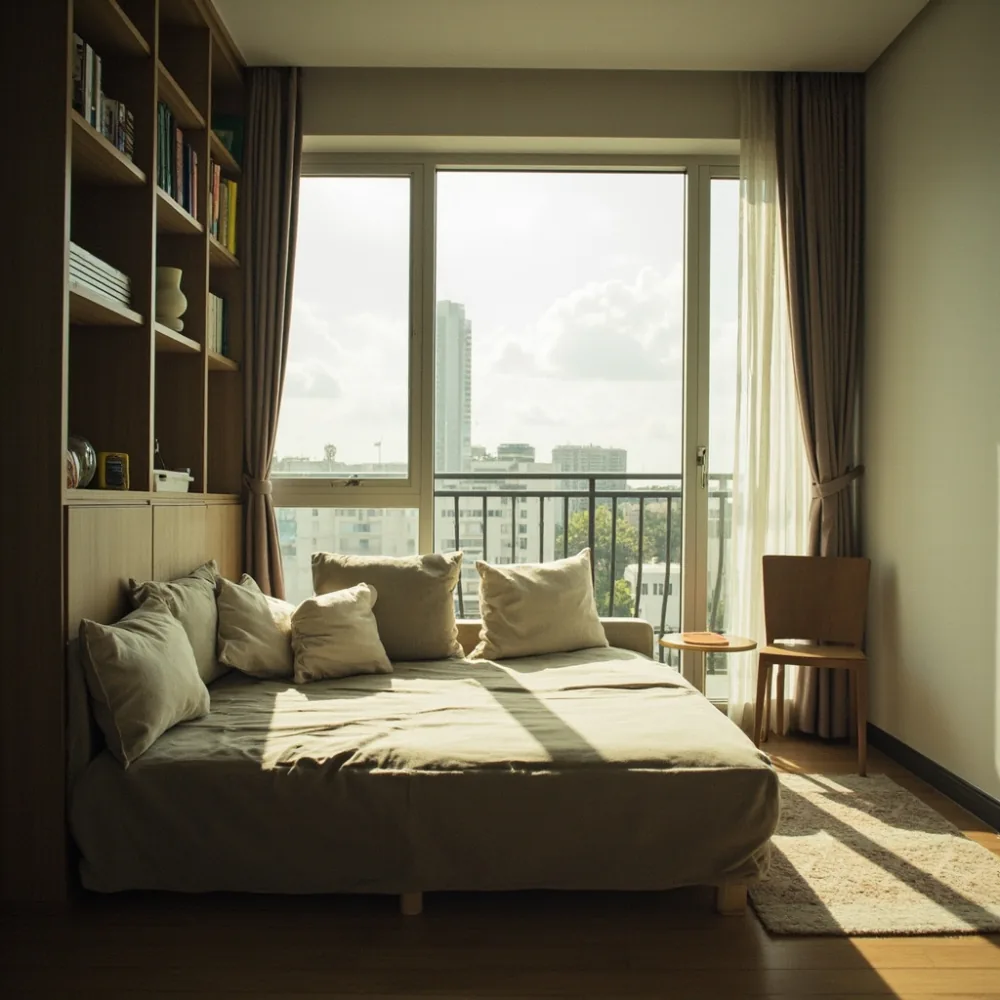
Who actually uses the pull-out bed
When a sofa bed makes no sense
I have slept on sofa beds in three different Singapore homes over the years — a 4-room HDB in Tampines, a compact condo in the Punggol area, and a shoebox unit near Novena — so when people ask me whether a sofa bed is genuinely useful here, I tend to answer with numbers rather than feelings. In most HDB layouts, the living room doubles as a guest room for visiting parents, and that is exactly the use case where a sofa bed pays for itself within a couple of years.
If your home is purely a couple's place with no overnight guests, a regular three-seater will usually give you better daily comfort for the same budget. But if you host family during Chinese New Year, have friends crashing after a gathering, or run a small home-based business that occasionally needs overnight capacity, a sofa bed quietly solves a problem no other single piece of small space furniture can.
- Typical 4-room HDB living room: ~3.2 m wide sofa wall, fits a 200–220 cm sofa bed when fully extended.
- Typical 3-room HDB: ~2.8 m wall, lean toward 170–190 cm sofa beds.
- Condo in District 9 or 10 with 2.4 m sofa wall: only compact 150–170 cm models will work.
How do I measure my living room before a sofa bed even arrives?
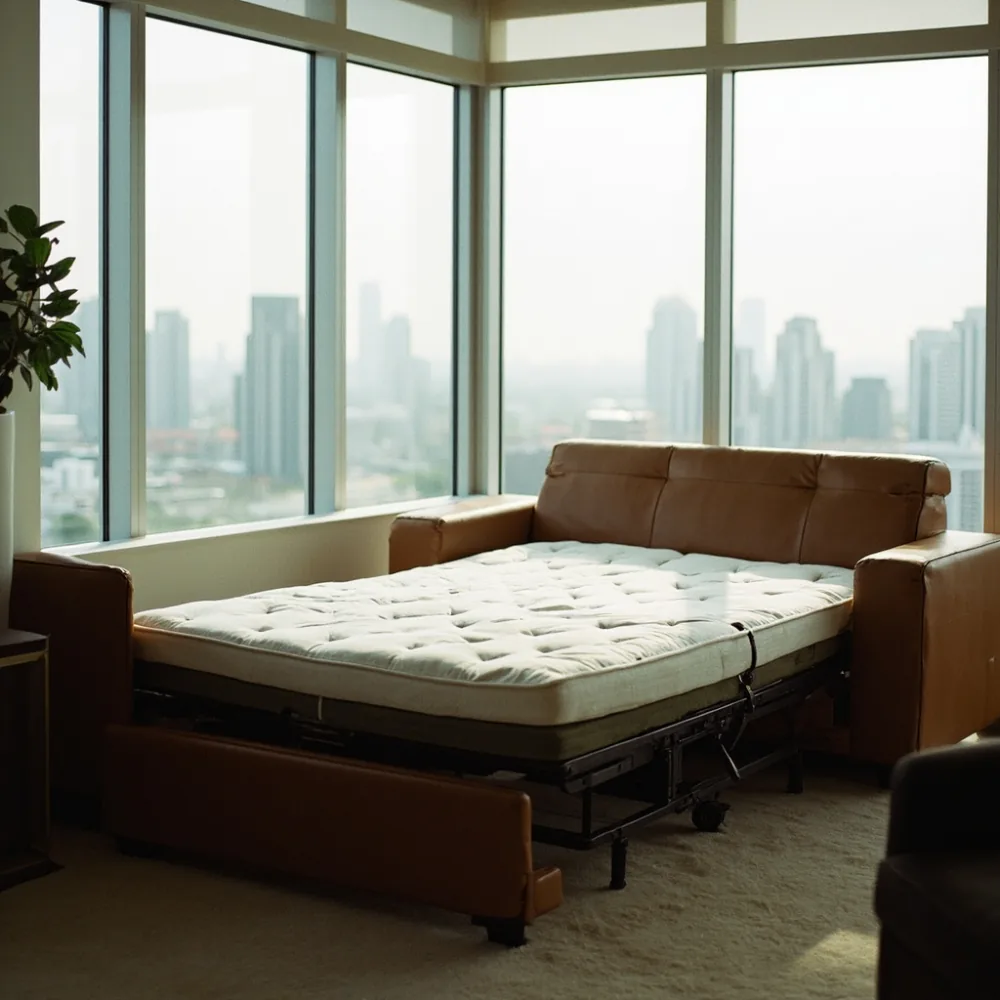
The three numbers that matter
Doorway and lift checks for delivery
Before I look at any sofa bed listing, I grab a tape measure and write down three numbers: the width of the wall the sofa will sit against, the depth from wall to opposite wall or TV console, and the ceiling-to-floor height where the backrest will fold out. Once extended, most sofa beds need 95–110 cm of floor depth, so a 3 m HDB living room usually clears it, while a narrow 2.4 m condo living room can feel cramped.
Then I check the access path. A sofa bed is one of the bulkiest items any delivery crew will carry into your home. Measure the lift door, the corridor turn, and your front door. A standard 3-seater sofa bed box can be 210 cm long and 90 cm wide, weighing 60–95 kg depending on the frame.
- HDB corridor turns: usually 90–110 cm wide; tight in older blocks like those in Queenstown.
- Service lift depth: many newer condos in Punggol or Sengkang offer 1.3 m depth, but older ones may only allow 1.0 m.
- Main door width: standard HDB fire-rated doors are ~90 cm, just enough for most flat-pack sofa beds.
Which sofa bed mechanism actually holds up after three years?
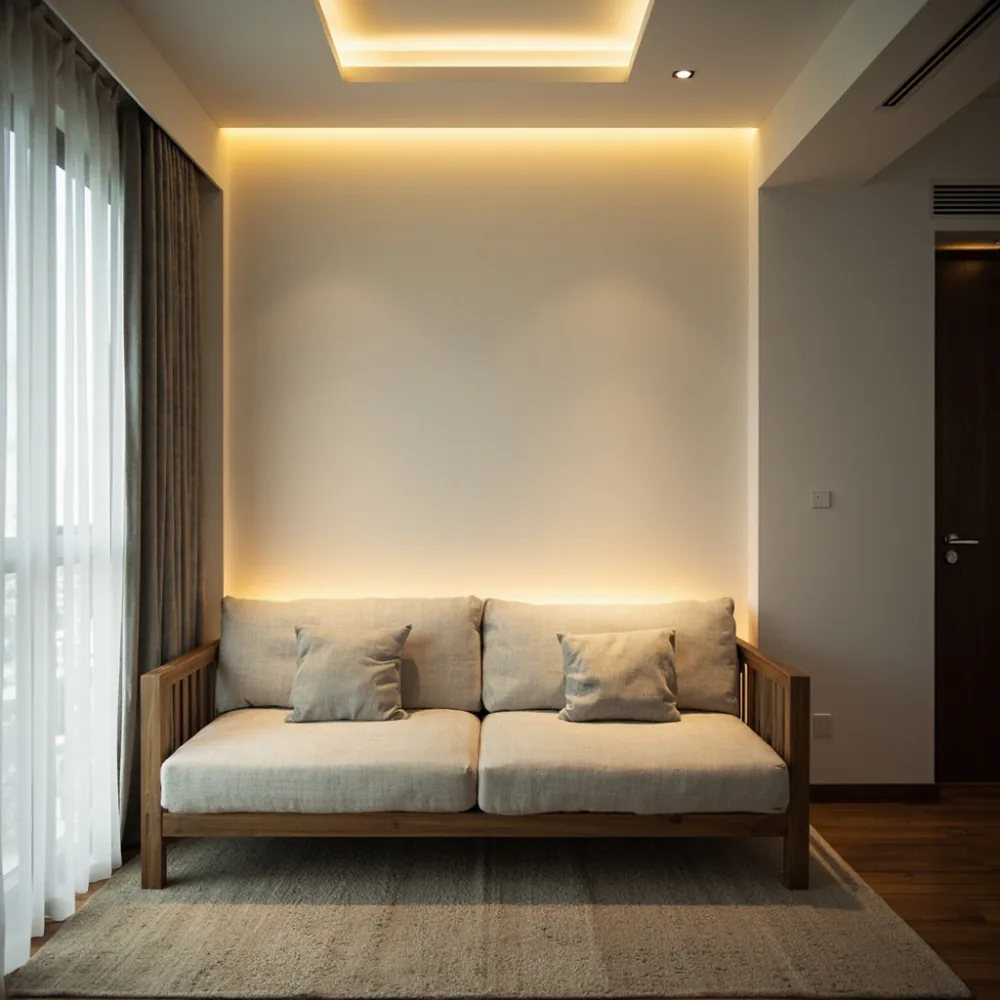
Click-clack vs pull-out vs trifold
Frame materials that survive humidity
I have tested three mechanism types: the click-clack top-fold, the metal pull-out with a fabric sling, and the trifold mattress-on-frame design. The click-clack is the cheapest and easiest to move around, but the hinge tends to loosen after 12–18 months of regular use. The metal pull-out mechanism feels the sturdiest and is what most durable furniture makers use, including solid wood frame options from factories like MIDHILL, a Foshan-based solid wood furniture maker established in 2008 that backs its frames with a 10-year structural warranty.
The trifold design is the most comfortable to sleep on because the mattress unfolds flat, but it is also the heaviest, often tipping the scales at 80–110 kg. Whatever mechanism you choose, ask whether the frame uses solid wood or just plywood. In Singapore humidity, plywood sofa beds tend to swell at the joints within two wet seasons, while solid hardwood frames hold their shape.
| Mechanism | Typical weight | Mattress comfort | Best for |
|---|---|---|---|
| Click-clack top-fold | 45–70 kg | Medium | Occasional guests, small budgets |
| Metal pull-out | 65–95 kg | Good | Regular use, couples |
| Trifold fold-out | 80–110 kg | Best | Primary spare bed for parents |
What foam density and mattress type should I look for?
Why 25 kg/m³ is my floor
Pocket spring vs foam vs latex
Most Singapore shoppers I speak with assume any sofa bed mattress will feel uncomfortable, but that is almost always a foam density problem, not a mechanism problem. Anything below 22 kg/m³ will feel flat and unsupportive within a year of nightly use. I look for foam rated at 25–32 kg/m³, ideally wrapped in a removable, washable cover because humidity here encourages dust mites.
If budget allows, a pocket-sprung mattress inside the sofa bed is the closest thing to sleeping on a real bed. Latex is also a strong option for hot sleepers, since it breathes better than memory foam in our tropical nights. A cheap foam-only sofa bed mattress often feels fine in the showroom but sags within eight months.
- Entry foam: 18–22 kg/m³, expect visible sagging in under a year.
- Mid-range foam: 25–28 kg/m³, the practical sweet spot for most HDBs.
- Premium latex or pocket spring: 30+ kg/m³, justified if the sofa bed is your guest bed every weekend.
Fabric or leather sofa bed — which holds up better in Singapore humidity?
Why I switched from fabric to leather-look
The cleaning reality
This is the question I get asked most often at showrooms, and my honest answer surprises people: in Singapore, a high-quality fabric sofa bed usually out-performs a cheap leather sofa. Real full-grain leather handles humidity beautifully and ages well, but bonded leather or leather-look PU starts peeling within 18–24 months in our climate, especially near a window or balcony door.
Performance fabrics like polyester-blend weaves with tight weaves resist moisture, stains, and mildew far better than woven cotton or linen. For families with kids or cats in HDBs, I usually point them toward a removable, washable cover on a fabric sofa bed rather than a leather sofa that looks premium on day one but flakes by year two.
- Fabric: easier to clean, cooler in the day, more colour choices.
- Genuine leather: durable, ages well, but costs 40–80% more.
- PU / bonded leather: cheapest upfront, shortest lifespan in Singapore humidity.
How much should I realistically budget for a sofa bed in Singapore?
Price bands I actually see in 2026
Where the extra dollars go
From the order books I have looked at across Jurong, Tampines, and the central showroom belt along Alexandra Road, a sensible sofa bed for an HDB or compact condo in 2026 lands somewhere between SGD 1,200 and SGD 3,800. Custom furniture pieces with specific fabrics, leg finishes, or hardwood frames climb higher, sometimes SGD 4,500–6,500.
The price jump between budget and mid-range is mostly frame material and mechanism. Between mid-range and premium, you are paying for the mattress inside. A useful rule of thumb: allocate roughly 30% of the budget to the mechanism and frame, 40% to the mattress, and 30% to the upholstery.
| Budget band (SGD) | Frame | Mechanism | Typical use |
|---|---|---|---|
| 1,200–1,800 | Plywood / mixed | Click-clack | Guests a few times a year |
| 2,000–3,200 | Solid wood frame | Metal pull-out | Weekly guest use |
| 3,500–6,500 | Hardwood, custom joinery | Pull-out + spring mattress | Primary spare bed |
What does delivery and assembly actually look like in 2026?
Standard vs white-glove delivery
Timeframes I have seen across districts
Most Singapore sofa bed sellers now offer two delivery tiers. Standard delivery (SGD 60–120) is curb-side drop-off, meaning the box is left at your door and you handle the rest. White-glove delivery (SGD 180–350) includes two delivery men carrying the sofa bed to your chosen room, removing packaging, and basic assembly. For a 90 kg trifold sofa bed in a 10th-floor walk-up — rare in HDBs but still found in older condos — white-glove is not a luxury, it is the only realistic option.
Lead times vary wildly by district. In-stock items at local warehouses in Jurong or Bedok can be delivered within 5–10 working days. Custom orders from overseas factories often take 6–10 weeks, plus 2–3 weeks of sea freight and a final local delivery slot. Always confirm whether the quoted delivery date is the warehouse arrival or the in-home date.
- In-stock, local warehouse: 5–10 working days.
- Custom order, regional factory: 6–10 weeks production + 2–3 weeks shipping.
- Peak season (November–January): add 2–4 weeks to any of the above.
Are there small space furniture tricks that make a sofa bed feel bigger?
Layout I have used in 4-room HDBs
Side tables and lighting
In a 4-room HDB living room, I avoid pushing the sofa bed fully against the wall. Leaving 8–12 cm behind it lets you tuck a slim LED strip, which visually lifts the sofa off the floor and makes the room feel wider. A round side table instead of a square one also helps, since sharp corners near walkways always read as cramped.
If the sofa bed is your main lounger, choose one with armrests no thicker than 12 cm — every centimetre of armrest is seating depth you lose. And if the sofa bed sits opposite a TV console, leave at least 90 cm of walking space between them so the pull-out bed can be opened without moving the coffee table.
- Keep 8–12 cm behind the sofa back for indirect lighting.
- Choose round side tables under 45 cm diameter.
- Reserve 90 cm of clear floor in front for the pull-out.
- Use a low-profile rug to define the seating zone without shrinking the room.
Frequently asked questions
Can a sofa bed fit through an HDB front door?
Yes, most sofa beds ship in flat-pack boxes under 210 cm long and 90 cm wide, which clears standard HDB fire-rated doors. Older flats in Tiong Bahru or Queenstown may have tighter corridors, so measure your lift door and turn angles before ordering. White-glove delivery crews are usually experienced with HDB access constraints.
How long does a good sofa bed mattress last in Singapore?
With foam density of 25 kg/m³ or higher and a washable cover, expect 5–7 years before noticeable sagging. Pocket-sprung or latex mattresses inside sofa beds can last 8–10 years with rotation. Direct sunlight and balcony proximity shorten lifespan by 30–40% in my observation.
Is a sofa bed suitable for everyday sleeping?
For a single adult using it nightly, a pocket-sprung or latex sofa bed mattress at 28+ kg/m³ is acceptable for a year or two. For long-term nightly use, a proper bed frame is still better for spine health. Treat a sofa bed as a primary spare bed, not a permanent main bed.
Do sofa beds work in aircon-cooled HDB bedrooms?
Many Singapore homeowners place sofa beds in the spare bedroom rather than the living room. This works well if the room has at least 9 m² of floor space and a window for ventilation. A dehumidifier set to 50–60% RH will extend the life of both fabric and frame considerably.
Questions about sizing, fabric or delivery?
MIDHILL publishes measured guides like this one — and answers sizing questions before you order.
See the collection