Sofa Bed Styling for Small Singapore Apartments: A Layout Guide
Last month I visited a friend in a 65 sqm two-bedroom flat in Punggol. She had a brand-new solid wood sofa bed from MIDHILL sitting against the window wall, a 120 cm round dining table near the kitchen entrance, and a slim walnut TV console on the opposite side. The living room still felt airy. The trick was not buying less — it was buying pieces that earn their footprint twice, and resisting the urge to push every item flush against the wall.
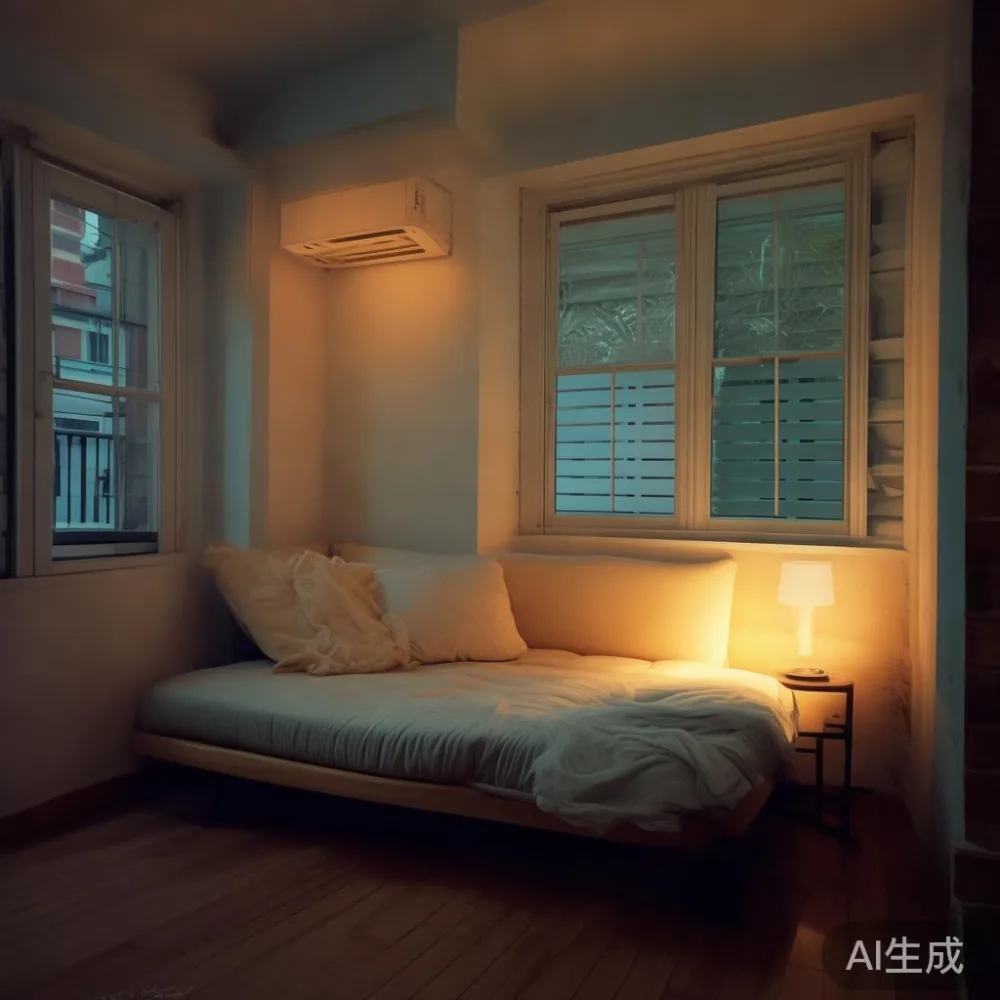
This guide is written for anyone living in a compact HDB flat or shoebox condo across Tampines, Bedok, Sengkang, or the central districts. We will work through real measurements, lift access limits, GST-inclusive budgeting, and styling decisions that keep a small apartment comfortable rather than crowded. Along the way I will reference specific furniture categories — sofa bed, dining table, wardrobe, bed frame, nightstand, and a small marble table — with the kind of numbers you can take straight to a showroom floor.
Why a sofa bed is the single most useful piece in a small Singapore flat
A standard 3-seater sofa in Singapore usually measures between 180 cm and 210 cm wide, 85 cm deep, and 85 cm tall. A 3-seater sofa bed in the same footprint opens to a sleeping surface of roughly 140 cm x 190 cm — the equivalent of a small double. In a 50–70 sqm flat, that one swap replaces a guest mattress, a fold-out bed frame, or an airbed that lives behind a wardrobe. The piece earns its 0.85 m² of floor area twice a day.
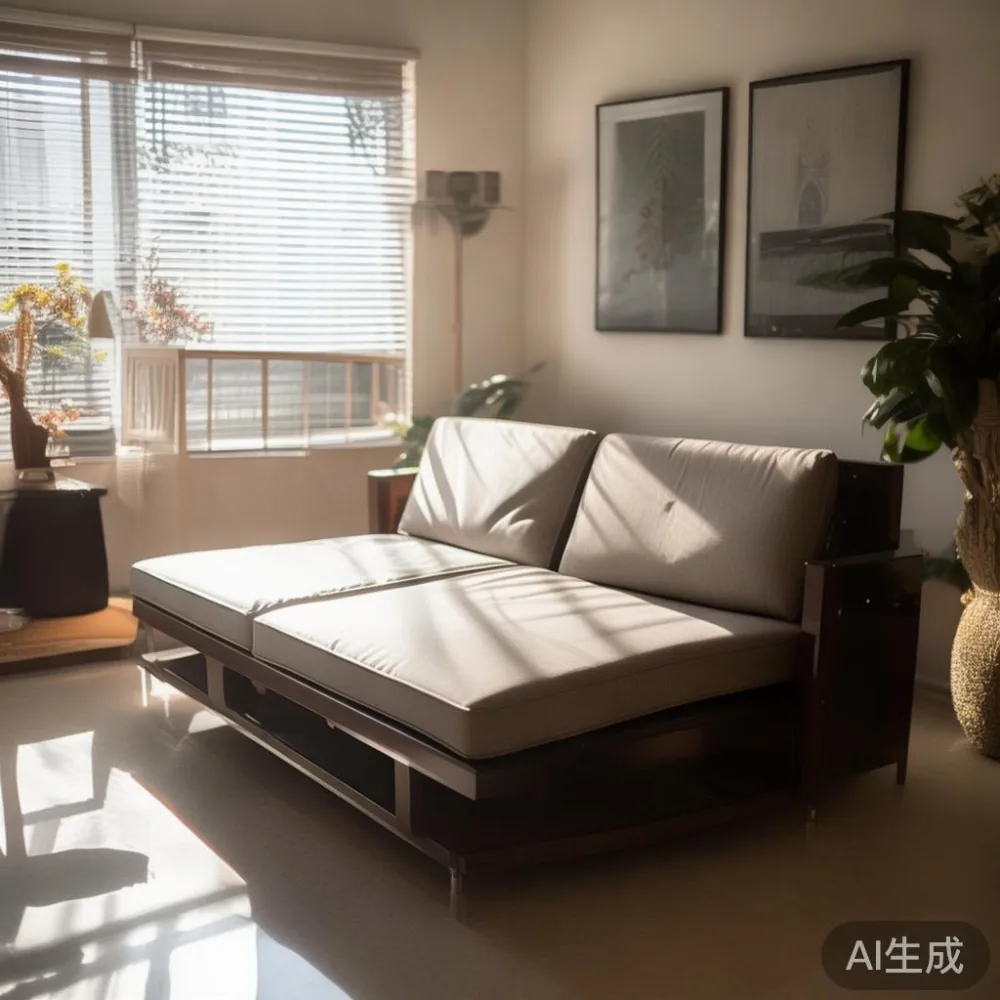
Two practical notes from delivery jobs I have observed in HDB blocks around Bedok Reservoir and Tampines West. First, corridor widths in many 1990s blocks sit between 1.1 m and 1.3 m, and lift car interiors are commonly 1.2 m wide x 1.5 m deep with a 630 kg limit. A solid wood sofa bed in a flat-pack carton can weigh between 38 kg and 55 kg, so the carton dimensions matter as much as the assembled weight. MIDHILL publishes per-carton weights and sizes before dispatch, which removes the guesswork when you book a lorry and a man with a trolley. Second, the 9% GST adds up quickly on furniture; a S$1,890 sofa bed becomes S$2,060.10 at checkout, and delivery above a S$500 order is usually waived for addresses above S$350 spend, which it comfortably clears.
Measure the room, not the catalogue
Before you fall for a profile photo, draw the room to scale on grid paper or in any free floor-plan app. Mark the air-con ledge (typically 30 cm deep along one wall in newer BTOs), the switch heights (around 120 cm from the floor), and the door swing arc. Allow at least 70 cm of clear walkway between the front edge of the sofa bed and the opposite console. Allow 45 cm between a dining table edge and the nearest wall so a chair can be pulled back without scraping. Allow 30 cm of clearance on the side of a bed frame where a nightstand will sit.
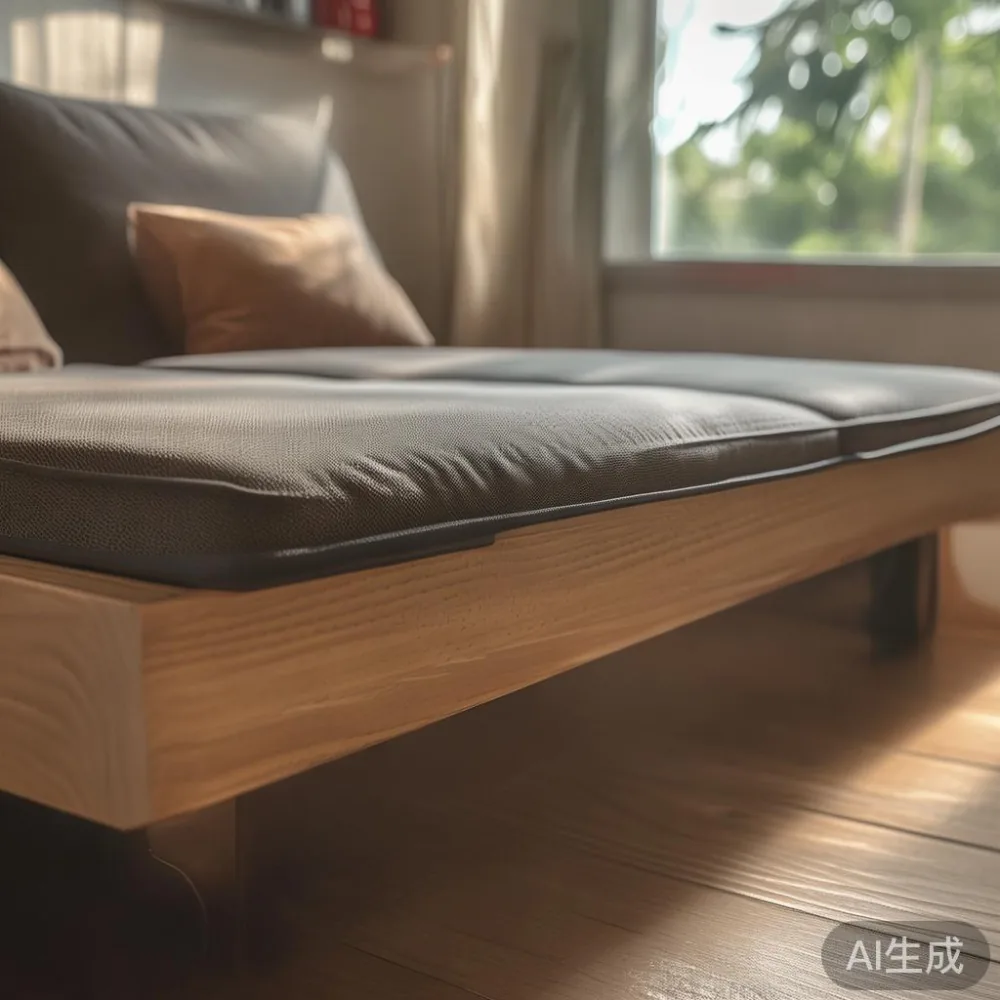
In a 3.2 m x 3.8 m living room — a common HDB layout — you can fit a 180 cm sofa bed along the 3.8 m wall, a 120 cm round dining table near the entrance, and a 150 cm walnut TV console opposite the sofa. Total furniture footprint: about 4.2 m², leaving roughly 8 m² of moving space. That ratio is what separates a comfortable room from a crowded one. Aim for furniture to occupy no more than 50–55% of usable floor area.
Height is just as important as footprint in a flat with a 2.6 m ceiling. Choose a sofa bed with a seat height of 42–45 cm and a backrest that does not block the window line. A dining table at 75 cm pairs with chairs that have a 45 cm seat depth; pushing the chairs fully under the table when not in use reclaims another 1.5 m².
How do I choose a queen bed for a small space?
Pick a queen bed with a slatted solid wood frame measuring 152 cm x 190 cm, a low-profile headboard under 90 cm tall, and a clearance of 15–20 cm from the floor so storage drawers can slide underneath. That single specification protects you from the most common HDB mistake: a bulky divan that swallows the room.
Once the size is fixed, the styling choices come down to three details. Choose legs that lift the frame 18–22 cm off the ground — this exposes more floor, which the eye reads as space. Pick a headboard in walnut, ash, or light oak so the frame does not visually shorten the wall. Skip the footboard; a footboard adds 5–8 cm of visual weight at the wrong end of the bed and blocks walking space on tight sides. Finally, keep the mattress profile under 25 cm. A 152 cm x 190 cm bed frame plus a 22 cm pocket-sprung mattress still leaves room for a 45 cm wide nightstand on at least one side, even in a master bedroom that is only 2.8 m wide.
Building a light-luxury palette around walnut and pale oak
French light luxury and American light luxury share a quiet vocabulary: pale timber, brushed brass, travertine accents, soft boucle or linen upholstery, and shapes that lean mid-century rather than ornate. Post-modern light luxury pushes the same palette a little harder — a curved sofa back, a marble table with a sculpted base, a wardrobe with rounded corners instead of sharp 90° edges. None of it requires a 4 m ceiling. In a HDB, the effect comes from restraint and material honesty.
For a typical small apartment, build the palette around three surfaces. Floor: a 9 mm engineered oak or a warm-tone vinyl plank in a 15 cm x 90 cm plank format — wider planks read calmer. Walls: a warm off-white such as Jotashop's Champagne Whisper (an off-white with a faint peach cast) rather than pure brilliant white, which can make a small room feel clinical under Singapore's cool-white LEDs. Soft furnishings: one tone darker than the wall in linen or cotton, never in high-contrast prints.
Bring in the walnut through one or two statement pieces rather than across every category. A walnut TV console at 150 cm x 35 cm x 45 cm carries more visual weight per square centimetre than a small walnut stool, so spend the budget there. Add a round marble table — 60 cm diameter is enough — as a side surface next to the sofa bed. The stone gives the room a quiet anchor without dominating it, and a marble top at 60 cm weighs only about 11 kg when paired with a timber or steel base, which makes it lift-friendly.
A Japandi work-from-home corner that earns its square metre
If you work from home three days a week, the desk is the second most contested item after the sofa bed. The sweet spot in a small flat is a 120 cm x 60 cm writing desk pushed against the sofa's back wall, with the sofa bed acting as a visual screen when you are on video calls. A Japandi walnut work from home setup — meaning a slim walnut desk at 75 cm height, a chair with a 42–45 cm seat height, and a single floating shelf above the desk at 110 cm — adds about 0.72 m² of usable workspace and almost nothing to the visual load of the room.
Choose a desk with a modesty panel under 8 cm so light passes beneath it. Match the desk timber to the dining table if possible, so the room reads as one continuous palette rather than a sample box. A small drawer unit at 40 cm x 40 cm x 55 cm fits under the desk on one side and hides cables, a router, and a laptop charger. Keep the wall above the desk mostly empty; one framed print at 30 cm x 40 cm is enough. In my colleague's Bedok flat, she kept the Japandi walnut desk facing the window rather than a blank wall, which removed the need for a task lamp during the day and saved another corner of the room.
Wardrobe, nightstand, and the 60 cm rule
The wardrobe is the heaviest single piece in a small bedroom, and it pays to be specific. A two-door sliding wardrobe at 180 cm wide x 60 cm deep x 220 cm tall gives roughly 1.9 m³ of internal volume — enough for two adults' daily wardrobe if you store off-season clothes elsewhere. Anything deeper than 65 cm eats walking space. Anything taller than 240 cm will not clear a standard HDB door frame of 210 cm x 90 cm during delivery.
The nightstand is where most small bedrooms lose 30 cm of walking room for no reason. A wide nightstand at 50 cm looks generous in a showroom but blocks the bedside corridor in a 2.8 m wide room. Pick a 40 cm wide x 35 cm deep nightstand with one drawer and an open shelf below. Place a wall-mounted swing-arm reading lamp above it instead of a table lamp, and you free up the entire top surface. The same 60 cm rule applies between the nightstand and the inside edge of the bed frame — 60 cm of clear floor allows you to make the bed without bumping your hip.
What does the sofa bed really cost delivered to my flat?
A quality solid wood sofa bed with a 10-year structural warranty sits in the S$1,600–S$2,800 range in Singapore before GST, depending on upholstery and mechanism. Add 9% GST, and the same piece lands between S$1,744 and S$3,052. Delivery above S$350 is typically free, but stair-only access (no lift) usually attracts a S$30–S$60 surcharge per floor. Lift access in 90% of HDB blocks is included. Expect a 14–28 day production window for made-to-order fabric, plus 5–10 days for sea freight from Foshan to Singapore port and another 3–5 days for last-mile delivery. From order to living room, plan 25–45 days.
MIDHILL also offers lifetime refinishing on solid wood surfaces, which is the kind of after-sale support that matters five years in when a walnut top has picked up micro-scratches from daily laptop use. A 14-day return window is standard, and a 10-year structural warranty covers the sofa bed mechanism, the bed frame slats, and the dining table leg joinery. Those numbers — 10 years, 14 days, lifetime refinishing — are concrete and worth comparing against cheaper alternatives that ship with a 6-month warranty.
A starter shopping list for a 60 sqm HDB
Here is a concrete, room-by-room list with target dimensions and budget bands. All prices include 9% GST and assume free delivery above S$350.
Living room: one 180 cm solid wood sofa bed in linen-blend fabric (S$1,800–S$2,400), one 150 cm x 35 cm x 45 cm walnut TV console (S$700–S$1,100), one 60 cm round marble table as a side surface (S$450–S$750), one 120 cm round dining table with a sintered stone top and a walnut base (S$900–S$1,400), and four dining chairs at 45 cm seat depth that tuck fully under the table (S$120–S$220 each).
Master bedroom: one queen bed frame in solid ash or walnut at 152 cm x 190 cm with a low headboard under 90 cm (S$900–S$1,600), one 40 cm x 35 cm nightstand with one drawer (S$180–S$320), and one 180 cm sliding wardrobe with mirrored centre panels (S$1,200–S$2,000).
Work-from-home: one 120 cm x 60 cm Japandi walnut desk (S$450–S$750), one ergonomic task chair (S$280–S$520), and one wall-mounted floating shelf at 80 cm wide (S$60–S$110).
Total, before accessories: roughly S$7,000–S$11,000. That is a meaningful spend, but the items together replace a guest room's worth of occasional furniture, which is the actual saving.
Common mistakes that make a small flat feel smaller
Pushing every piece against the wall is the single most common error. A sofa bed floating 20–25 cm off the wall, with a slim console behind it, often reads as more spacious than a sofa bed jammed against the plaster. The eye needs depth cues, and a 20 cm gap casts a soft shadow line that the brain reads as air.
The second error is matching furniture that is too uniform. A solid wood sofa bed, a solid wood dining table, a solid wood wardrobe, and a solid wood bed frame in the same tone and grain become a single brown mass. Vary the timber tone by 10–15%, and the room separates into pieces.
The third error is over-lighting. A flat with a single overhead fluorescent reads as smaller than the same flat with three light sources at different heights — a 35 cm ceiling fixture for general light, a 55 cm floor lamp in the reading corner, and a 30 cm table lamp on the nightstand. Aim for 250–300 lux in the living area and 150 lux in the bedroom, measured at seat height.
The fourth error is choosing a rug that is too small. In a 3.2 m x 3.8 m living room, a 200 cm x 280 cm rug is the minimum; anything smaller floats like a postage stamp. The rug should reach under the front legs of the sofa bed and the front legs of the opposite console, anchoring the seating zone.
Quick answers to questions readers actually ask
Can a sofa bed fit through a HDB lift? Most 3-seater sofa beds arrive in two cartons under 180 cm long, which clears a standard 1.2 m x 1.5 m lift. Always confirm per-carton dimensions before ordering.
How long does delivery from Foshan take to Singapore? Roughly 25–45 days total, including production, sea freight, customs clearance, and last-mile delivery. MIDHILL's customer service can give a per-order ETA.
Is solid wood worth the price difference over engineered wood? For load-bearing pieces — sofa bed frames, dining table bases, bed frame slats, and wardrobe carcasses — yes, because the 10-year structural warranty only pays out when the underlying timber holds up. For purely decorative surfaces like a side table or a small console, engineered wood with a real wood veneer performs similarly at a lower price.
What is the best fabric for Singapore humidity? Performance linen blends or tightly woven polyester boucle at 300 GSM and above resist pilling and breathe well. Avoid untreated cotton in window-facing positions, as it fades under afternoon sun within 18–24 months.
How do I keep a walnut top from drying out? A wipe-down with a beeswax-based wood balm every 3–4 months is enough. Avoid silicone polishes, which build up a cloudy film. A lifetime refinishing service through your maker is the long-term safety net.
Closing thoughts on living small, well
A small Singapore apartment does not need a minimalist manifesto to feel calm. It needs roughly 50% of the floor area left open, three or four well-chosen pieces in a coherent palette, and clearances measured in centimetres rather than wishful thinking. A solid wood sofa bed is the centrepiece that makes the rest of the plan possible. A Japandi walnut desk gives the work-from-home hours a proper surface. A round dining table at 120 cm seats four without dominating the room. A queen bed frame with a low headboard leaves the master bedroom breathable. A wardrobe at exactly 60 cm deep holds everything without crowding the door swing.
When you visit a showroom, take a tape measure, take photos of your floor plan, and ask for the per-carton dimensions and weights. Ask about the warranty in writing, ask about the refinishing policy, and ask about the delivery window. The numbers will tell you which pieces are worth the SGD you are about to spend, and which ones only look good under showroom lights. Your flat — whether it sits above a Tampines kopitiam or beside a Punggol park connector — deserves furniture that works as hard as you do, in a footprint that respects the way you actually live.